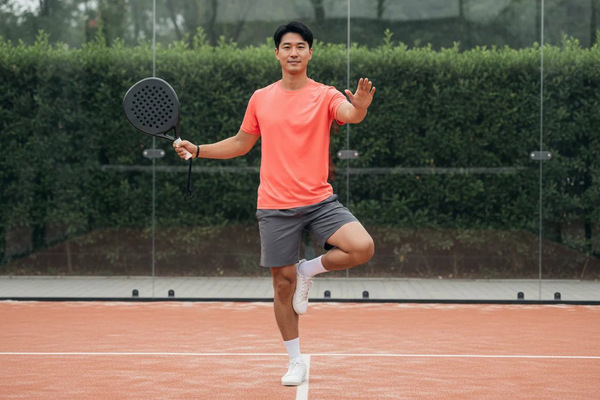
Every padel player has hit a shot while falling backward, reaching too far, or planting the wrong foot. The result is usually the same: the ball goes into the net, long, or nowhere near the target. Padel balance isn't about standing on one leg like a yoga instructor. It's about staying stable at the moment you hit, so your body can deliver the shot you intended. This guide gives you practical tips for staying balanced during padel shots: the ready position, base width for different shots, weight transfer, head position, small steps, and a few drills you can do at home or on court.
Why Balance Matters in Padel
Padel is full of short sprints, sudden stops, and quick changes of direction. Good footwork doesn't just help your shots, it creates the conditions for good shots, and even great technique breaks down when your movement is off. When you're balanced, you can control the ball, generate power from your legs and hips, and recover quickly for the next one. When you're not, your arm tries to fix what your feet got wrong.
Note
This guide is about staying stable in the shot itself. If you want exercises to build balance away from the court, see our guide to improving balance for padel shots.

Start From the Ready Position
Balance starts before the ball arrives. In the ready position, keep your knees slightly bent and your weight evenly spread, with a bit more on the front of your feet, so you can react in any direction. One of the most frequent mistakes is not bending the knees and keeping the weight on the heels, which makes you lose balance as soon as you move.
Match Your Base to the Shot
Your feet are the foundation of every stroke, and the right base depends on the shot.
| Shot | Base | Balance Cue |
|---|---|---|
| Groundstrokes | Feet further apart, allowing a fuller body swing | Shift weight from the back leg to the front |
| Volleys | A narrower base so you can react fast | Quick, small weight shift forward |
| Low balls | Wide and low | Bend your legs, not your back |
| Overheads | Sideways, with cross steps to get under the ball | Be set before you swing, never mid-backpedal |
| Glass and wall balls | Compact and balanced | Short swing, step into the shot |
Transfer Your Weight, Don't Lean
Weight transfer is fundamental to power and stability. On groundstrokes, your weight moves from the back leg to the front, accompanied by rotation of the hips and shoulders. A lack of knee flexion makes this harder, because stiff legs can't load and release smoothly. Avoid the opposite error too: leaning back or reaching forward with your upper body pulls you off balance and shortens your recovery.
Put it to the test with our free padel quiz — quick questions, instant results.
Keep Your Head Still
One of the most repeated tips from coaches is to keep your head stable during the shot. A steady head helps you focus energy on the point of impact, which improves both control and power. Try to keep your eyes on the contact point, and avoid lifting your head early to see where the ball went.
Small Steps, Not Big Lunges
Efficient players take small adjustment steps, stay low and balanced, and move diagonally rather than only sideways. The common inefficiencies are taking too many steps, crossing the feet unnecessarily, overcommitting forward, and recovering too wide. Use small steps to fine-tune your position before you hit. Big lunges make you lose balance, slow your recovery, and increase the load on your joints.
Important
If you're off balance, choose a safer shot. Don't smash while you're still moving backward, and don't go for a risky winner when you're stretched. A bandeja or a lob keeps you in the point and gives you time to recover.

Balance at the Net and at the Back
The two ends of the court ask different things of your balance. At the net, speed is the priority, so keep a narrow, ready base, take small adjustment steps, and shift your weight forward quickly as you punch the volley. At the back, time is on your side, so you can use a wider base, load your back leg, and transfer your weight through the shot. Recognizing which situation you're in helps you choose the right stance before the ball arrives.
When You Lose Balance Anyway
Even good players get caught out sometimes. When that happens, don't try to hit your way out of trouble. Play the safest shot you can, usually a deep lob or a controlled ball through the middle, and use the time it buys to get back to a balanced position with your partner. A quick recovery step after every shot, even a good one, keeps small balance problems from turning into lost points.
Footwear Matters
Shoes designed for padel provide the support and grip you need for quick movements and changes of direction, which helps you stay stable. Check your soles regularly, since worn or dirty ones reduce traction, and replace shoes when the grip or cushioning has gone.
A Five-Point Balance Check
- Knees soft and weight on the balls of your feet before the ball arrives.
- A base that suits the shot: wider for groundstrokes, narrower for volleys.
- Weight moving from back to front through contact.
- Head steady, eyes on the contact point.
- A balanced finish, then a quick recovery step.
Drills to Build Stability
Mirror Shadow Swings
Practice slow swings in front of a mirror and watch your head and posture. Check that your head stays steady and your knees stay soft.
Freeze the Finish
After hitting a feed, hold your finish position for two seconds. If you wobble, you were off balance. It's the simplest test of stability.
Weight Transfer Swings
Without a ball, practice swings that load the back leg and shift forward, with the rotation of your hips and shoulders. It helps you feel the sequence.
Lateral Movement With Hitting
Shuffle sideways and hit feeds on the move, alternating weight loading and unloading. It trains balance in motion.
Reaction Volleys
Have a partner feed fast balls at the net while you work on a narrow base and a quick weight shift. It builds stability under time pressure.
Single-Leg Holds
Stand on one leg for thirty seconds, then add a slow shadow swing. If you have an injury or a health condition, check with a professional first.
Common Mistakes
Weight on the Heels
It makes you late and unstable. Stay on the balls of your feet.
Stiff Legs
Without knee flexion, weight transfer is clumsy. Keep your knees soft.
Lunging at the Ball
Long reaches cost you balance and recovery. Use small steps.
Lifting the Head Early
Looking up too soon pulls your body off the shot. Keep your eyes on contact.
Track Your Balance
Film a few rallies from the side and check your finish. Count how many shots you finish in a balanced position and how often you need a big recovery step. A steady rise in the first number, and a drop in the second, shows your balance is improving.
Advice
For your next practice, pick one cue only, such as holding your finish for two seconds. Working on a single, simple cue will improve your balance faster than trying to fix everything at once.

Staying stable during padel shots comes down to a ready position with soft knees, a base that fits the shot, smooth weight transfer, a steady head, and small adjustment steps instead of lunges. Build those habits, choose safer shots when you're off balance, and your technique will finally have a stable foundation to stand on.