Feeling helpless when the ball comes off the glass on your backhand?
Few moments in padel feel as helpless as watching a ball sail past your backhand side, hit the glass, and come back at you from a strange angle. The good news is that a backhand off the wall is much more predictable than it looks, and a simple routine handles most of it. This guide explains how to play a backhand off the back wall and the side wall in plain steps: how to read the rebound, how much room to give yourself, what to hit, and how to practice. If you're new to the backhand itself, start with our beginner-friendly overview of padel backhand technique, then come back here.

Why Wall Backhands Feel Hard
Three things make them tricky. The ball arrives from behind you after changing direction, so you can't see it travel the whole way. You have less time to turn, because the rebound brings the ball back faster than you expect. And the temptation is to panic and swing at the first moment the ball reappears. Each of these problems has a simple fix, which is why wall backhands are mostly a matter of routine rather than talent.
The Three-Step Routine: Watch, Turn, Wait
1. Watch the Ball to the Wall
Keep your eyes on the ball as it passes you and travels to the glass. Resist the urge to turn your back to the court and face the wall. Instead, stay sideways so you're ready to swing forward the moment the ball returns.
2. Turn Early
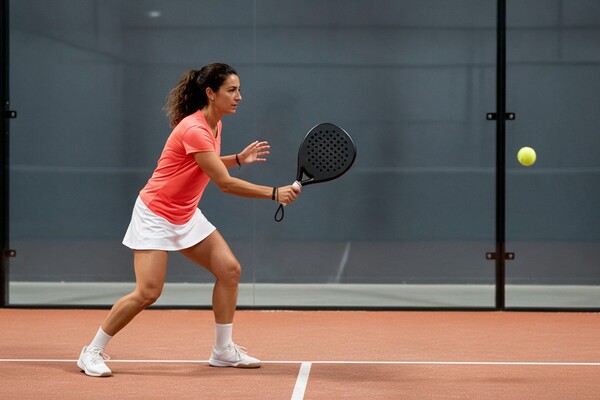
Rotate your shoulders sideways before the ball rebounds, with your hitting shoulder pointing roughly toward the side wall. Take the racket back a short distance, with your free hand on the throat of the racket to help you turn and stay balanced.
3. Wait for the Drop
Don't rush the rebound. Give the ball time to come down off the glass into a comfortable zone, around waist height, and then step in and meet it in front of your body. Hitting at the highest point of the rebound, while the ball is still rising or hanging, is a common cause of mishits.
Note
You don't have to do anything fancy off the wall. A deep, controlled backhand that resets the point and buys you time to recover your position is a win.

Give Yourself Room
Spacing decides whether you can swing at all. Standing flat against the glass leaves no room, and the ball jams you. A useful starting point in drills is to stand about a racket length from the back glass, let the ball rebound, then step forward into the shot. Moving back with the ball toward the wall and then forward after it rebounds lets you take a fuller, more controlled swing. Once the ball has bounced back, resist the urge to keep retreating, since backing away makes you hit it late.
What to Hit After the Rebound
Put it to the test with our free padel quiz — quick questions, instant results.
| Situation | Good Backhand Reply |
|---|---|
| Under pressure, ball comes back quickly | Controlled backhand, deep and cross-court or through the middle |
| You need time to reset | A high, deep backhand lob over the net players |
| Low, skidding rebound | Get behind it, stay low, and play a higher cross-court ball |
| Ball sits up into a comfortable zone | A flat, deep backhand through the court |
| Opponents crowd the net | Lob deep, then move forward with your partner |
Flat or Slice Off the Glass?
Most defensive and glass backhands are played with a slice, because it adds control and keeps the ball low. That makes it a great option when you want to slow the rally down. A flat backhand is better when the ball sits in a comfortable zone and you want to hit through it with depth. As a beginner, start with the flat version so you learn to meet the ball cleanly, then add the slice as a second option rather than a default.
One Hand Matters Here
The one-handed backhand gives you much better reach, which is essential when a ball pops off the glass behind you or you're stretched wide. A two-handed backhand offers stability on balls that haven't bounced off the wall, but it's much harder to use on rebounds. If you prefer two hands, a hybrid approach works well: two hands when you have time and the ball sits up, one hand when you're reaching or playing off the back wall.
Back Wall vs Side Wall Backhands
Back Wall
When the ball bounces deep and heads for the back glass, let it pass, rebound, and come back toward you. Position yourself between the wall and the ball, then step into the shot. This is the classic wall exit, played here on the backhand side.
Side Wall
For balls heading to the side glass, use the same service-line rule as on the forehand: if the ball will hit the glass before the service line, step back and away from the glass, let it rebound, and play it as it comes to you. If it will hit later, closer to the back, cut it off before the glass. Decide early, since hesitation is the main source of errors.
Corner Balls
Balls that hit two walls are the hardest, because the rebound is less predictable. Read the height of the first bounce on the ground: a low, skidding ball means getting behind it and using the wall, while a higher ball gives you a little more time. Keep your swing short and compact, and avoid a big backswing that could hit the glass. Aim for a deep, safe reply rather than trying to win the point.
Important
Don't hit the rebound at its highest point just because it's the first moment you can reach it. Patience is the whole skill: wait for the ball to drop into your comfortable zone, then step in.

Five Drills for Backhands Off the Wall
Drill 1: Drop-Feed Backhand Exit
Stand a racket length from the back glass, drop a ball, let it bounce and rebound, then step forward and hit a backhand cross-court. Do about twenty repetitions, and add targets with cones once the contact feels steady.
Drill 2: Glass Rebound Feeds
Have a partner feed balls past you into the back glass while you practice the watch, turn, and wait routine until it's automatic.
Drill 3: Corner Ladder
A partner feeds toward the corner seam. Work through single glass, double glass, and taking the ball before the wall, about five repetitions each, with a short, compact swing.
Drill 4: Exit and Lob
Play a backhand off the glass, then follow with a deep lob on the next ball, so you practice resetting a point from the back.
Drill 5: Exit and Advance
After a good backhand exit, take two steps forward with your partner, practicing the move from defense back toward the net.
A Simple Three-Week Plan
In week one, focus on Drill 1, building the routine at an easy pace. In week two, add Drills 2 and 3 to work on feeds and corners. In week three, add Drills 4 and 5 and finish with a short game where every ball that comes off the glass has to be played with a backhand exit.
Common Mistakes
Standing Flat Against the Glass
It leaves no room to swing. Give yourself space.
Rushing the Rebound
Hitting too early causes mishits. Let the ball drop.
Turning Your Back to the Court
If you face the wall, you lose sight of your target. Stay sideways.
Swinging Too Big
A long backswing is hard to time and can hit the glass. Keep it short.
Track Your Progress
In drills, count how many of ten backhand exits you return deep and under control. Watch how the number rises over a few weeks, and note how often you reach a balanced position afterwards.
Advice
Ask a friend to film your backhand exits from the side. You'll see quickly whether you're turning early, standing too close to the glass, or hitting at the top of the rebound.

A backhand off the wall comes down to a routine: watch the ball, turn early, give yourself room, wait for the drop, and play a deep, controlled reply. Practice it until it's automatic, and the glass stops being the thing you fear on your backhand side and becomes a source of extra time.