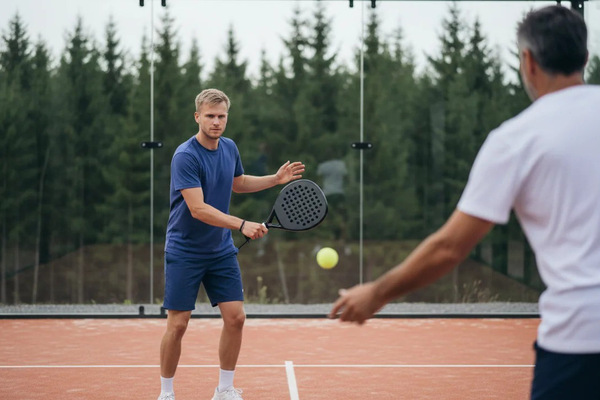
If you're new to padel, the backhand probably feels like the awkward side. You turn the wrong way, the ball arrives too late, and you start running around it. That's normal, and it's fixable. This beginner-friendly guide to padel backhand technique gives you the big picture first: the five building blocks every backhand shares, the four backhand shots you'll actually use in matches, and a simple roadmap that shows what to learn in what order. Think of it as the starting map. When you're ready for more detail, our guides to the one-handed backhand, backhand control drills, and one-handed versus two-handed backhands go deeper.
The Backhand at a Glance
| Building Block | What to Do |
|---|---|
| Grip | Continental grip with relaxed pressure |
| Turn | Rotate your shoulders sideways as soon as you read the ball |
| Free hand | Keep it on the throat of the racket during the takeback |
| Contact | Meet the ball in front of your body with a short backswing |
| Finish and recover | Follow through toward your target, then return to balance |
Why the Backhand Feels Harder
Most beginners find the forehand more natural, which is why many avoid the backhand. The shoulder turn feels less familiar, it's harder to judge where to make contact, and the shot is often played in a hurry, off the glass or while stretched. The upside is that the backhand is built from a handful of habits, and each one can be practiced on its own. Once those habits are in place, the shot stops feeling like a weakness.
Note
Opponents notice weak backhands quickly and will target them. Running around the shot works for a few points, but building a reliable backhand is the faster route to enjoying the game.

The Five Building Blocks
1. Grip
The continental grip, the neutral "shake hands with the handle" grip, is the default in padel and covers almost every shot, including backhand volleys, slices, and lobs. It lets you move between forehand and backhand without changing your hand. Hold the racket loosely, around five out of ten in pressure, and tighten only at contact.
2. Shoulder Turn
As soon as you see the ball heading to your backhand side, turn sideways so your hitting shoulder points toward the side wall. The turn is your main source of power and timing, and a slow turn is the most common reason for late contact.
3. The Free Hand
Put it to the test with our free padel quiz — quick questions, instant results.
Even on a one-handed backhand, place your free hand on the throat of the racket as you take it back. It helps you turn, positions the racket, and keeps you balanced.
4. Contact in Front
Take a short backswing and meet the ball slightly in front of your body, out toward your lead foot, not beside your hip or behind you. A firm wrist at contact makes the shot controlled rather than unpredictable.
5. Finish and Recover
Swing through toward your target, then recover straight away to a balanced position with your partner. A backhand isn't finished until you're ready for the next ball.
The Four Backhand Shots You'll Actually Use
The Drive (Flat Backhand)
The flat backhand is the best first shot to learn. It's your tool for low balls and for hitting through the ball with control. Start cross-court, which uses the longest part of the court and gives you the most room for error.
The Slice
The slice is a defensive favorite, especially off the glass, because it adds control and keeps the ball low. Learn it after the flat backhand feels steady, and don't slice everything: choose the spin for the situation.
The Backhand Volley
At the net, the continental grip stays the same for volleys on both sides. The volley is a short punch, not a swing, with minimal backswing and contact out in front. Most players volley the backhand with one hand, since it gives more reach and a quicker, more compact punch. One guide describes the volley as the most frequently played shot in padel, so it's worth practicing.
The Backhand Lob
A lob from the backhand side is a reliable escape when you're under pressure. The most common lobbing mistake is hitting it too short, so aim deeper than you think and give the ball enough height to clear your opponents.
Important
Learn one backhand shot at a time. Beginners who try to slice, drive, and lob all at once end up with none of them. Make the flat cross-court backhand reliable first, then add the others.

Backhands Off the Glass
A lot of backhands in padel come after the ball has rebounded off the wall. Give yourself room, let the ball come to you, turn early, and hit in front. The one-handed backhand's reach is a big advantage here, which is one reason most defensive and glass backhands are played with one hand. If rebounds feel confusing, spend a session just hitting balls off the wall.
A Backhand Roadmap for Beginners
| Stage | Focus | Goal |
|---|---|---|
| 1 | Grip and early turn with shadow swings | Feel the continental grip and a sideways turn |
| 2 | Easy cross-court rallies | Short swing, contact in front |
| 3 | Targets and wall work | Control depth and direction |
| 4 | Backhand volley and lob | Use the same grip at the net and for escapes |
| 5 | Slice and glass backhands | Defensive options from the back |
| 6 | Game-like feeds and points | Choose the right shot under pressure |
Fixing Common Beginner Problems
| Problem | Likely Cause | Fix |
|---|---|---|
| Hitting the ball late | Slow turn, long backswing | Turn as soon as you read the ball and shorten the takeback |
| Getting jammed | Contact beside or behind the body | Give yourself space and meet the ball in front |
| Weak, arm-only shot | Not using the shoulders and legs | Coil, step in, and transfer your weight |
| Unstable racket | Free hand idle | Keep it on the throat during the takeback |
| Poor control | Tight grip | Relax your grip and tighten at contact |
One Hand or Two?
Most padel players hit the backhand with one hand, and that's the style this guide follows. If you come from tennis and prefer two hands, you can keep them on easy balls, but you'll want a one-handed option for the glass and for balls you have to stretch to reach. Our guide to one-handed versus two-handed backhands helps you test both.
Where to Go Next
Once you've worked through the roadmap, move on to more specific practice. Our beginner-friendly tips for the one-handed backhand cover the swing in detail, our backhand drills for better control give you targets and scoring, and our guides to playing off the side wall and the glass explain how to handle rebounds. Pick the one that matches your biggest problem right now.
Warm Up and Stay Healthy
Backhands load your shoulder, elbow, and wrist. Warm up before you practice, build your volume gradually, and if you feel pain, stop and speak to a coach or a qualified professional rather than pushing through.
Common Mistakes
Running Around the Backhand
It leaves you out of position and lets opponents target your weak spot. Practice the shot instead.
Changing Grips Constantly
Using different grips for each side is too slow at padel speeds. Commit to the continental grip.
Swinging Too Big
A long swing is hard to time. Keep the backswing short.
Skipping the Footwork
Many beginner errors come from foot position, not hand technique. Step into the shot and keep your balance.
Advice
Pick one building block each week and focus on it in every session. A week of early turns, then a week of contact in front, is far more effective than trying to fix everything at once.

Padel backhand technique for beginners comes down to five building blocks, four shots, and a patient order of learning. Start with the continental grip and an early turn, make contact in front with a short swing, and add the slice, volley, and lob one by one. Do that, and the backhand stops being the side you avoid and becomes a shot you can count on.