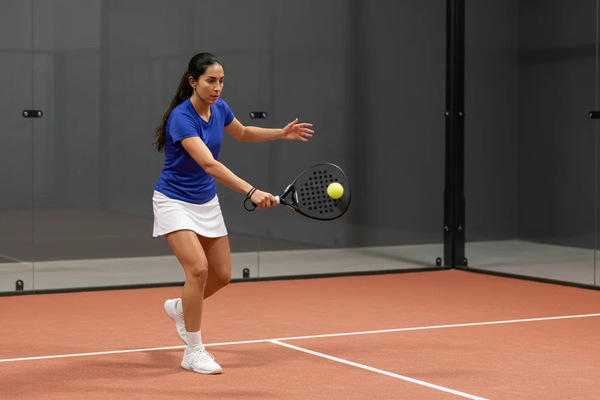
The backhand is the shot most padel beginners try to avoid, and the one that's easiest to fix once you know what's going wrong. Many newcomers run around it, hit it late, or get stuck wondering whether they should use one hand or two. The good news is that the one-handed backhand in padel is simpler than it looks. It uses a short, compact swing, and a handful of habits cover most of it. This guide gives you beginner-friendly tips for the one-handed backhand, from grip and preparation to contact point, spin, and practice drills.
Why Most Padel Players Use One Hand
The one-handed backhand dominates in padel, even among players who used a two-handed backhand in tennis. It gives you far better reach, which matters when a ball pops off the glass behind you or you're stretched wide. Most defensive backhands and backhands played off the glass are one-handed, often with a slice for control. Preparation is similar to the forehand: rotate your shoulders, keep your weight on the back leg, and strike slightly in front of your body.
Note
If you come from tennis, a two-handed backhand can feel more natural, but remember it only works well on balls that haven't bounced off the wall. This guide focuses on the one-handed version because it's the most useful all-round choice for beginners.

Start With the Grip
The continental grip, often described as the hammer grip or the "shake hands" grip, is the recommended basic grip in padel. It keeps the racket face neutral, so you can switch between forehand and backhand without changing your hold. Keep your grip relaxed rather than tight, since many beginners squeeze the handle, which reduces control and maneuverability.
A simple test: rally gently against a wall for five minutes using only the continental grip, with no grip changes allowed. If you can keep a steady rally with centered contact, you've got it. Some players explore an eastern backhand grip for one-handed drives, but it's less common in padel, and many competitive players never use it.
The Backhand Step by Step
1. Turn Your Shoulders Early
As soon as you read the ball heading to your backhand, rotate so your hitting shoulder points toward the side wall. This coil is your main power source, much more than your arm. Late contact usually comes from a slow turn.
2. Use Your Free Hand
Even on a one-handed backhand, keep your free hand on the throat of the racket during the takeback. It helps you turn, sets the racket, and keeps you balanced.
Put it to the test with our free padel quiz — quick questions, instant results.
3. Keep the Backswing Short
Your shoulder turn does most of the loading, so the arm only needs to position the racket. Padel courts are short and walled, so a long swing creates pace you don't need and timing errors you can't afford.
4. Step In and Transfer Your Weight
Plant your front foot and shift your weight from the back leg to the front as you swing. Stay low through the shot, and hit through the ball rather than at it.
5. Make Contact in Front
Meet the ball slightly in front of your body, out toward your lead foot, not next to your hip and never behind you. Beginners often make contact too early or too far in front, so find a consistent spot that feels stable.
6. Finish and Recover
Let the racket follow through naturally, then get back to a balanced position, ready for the next ball.
Important
Don't ignore your free hand. Leaving it idle or resting it on top of the racket is a common beginner habit. Use it for guidance on the takeback, then let it move away naturally as you hit.

Flat or Slice?
You need both, but start with the flat backhand. A really low ball is better hit flat than sliced, and learning a flat backhand early gives you a shot you can hit through. The slice is a great defensive tool, especially off the glass, because it adds control and keeps the ball low. For tennis players, the single-handed flat backhand is often the harder one to learn, since many are used to a two-hander or a slice. Don't try to slice every ball: choose the spin to suit the situation.
Backhand Off the Glass
The backhand is often your reply to a ball that has come off the wall. Give yourself room, since beginners who crowd the glass get jammed and have no swing left. Let the ball come to you, use the same early shoulder turn, and hit in front of your body. If reading rebounds still feels like guesswork, spend a session just playing balls off the wall.
Common Problems and Fixes
| Problem | Likely Cause | Fix |
|---|---|---|
| Late contact | Slow turn or long backswing | Turn sideways as soon as you read the ball, shorten the takeback |
| Ball jams you | Contact too close or too far back | Give yourself space and meet the ball in front |
| Weak, arm-only shot | Not turning the shoulders | Coil your shoulders and shift your weight |
| Unstable racket | Free hand idle or on top of the racket | Use it on the throat during the takeback |
| Hard to control | Tight grip or wrong grip | Use continental grip with relaxed pressure |
Backhand Drills for Beginners
Wall Rally With Alternating Sides
If you have access to a practice wall, hit one forehand and one backhand, over and over. It trains your grip, your turn, and your footwork between sides all at once.
Shadow Swings With the Free Hand
Without a ball, practice the turn, the free hand on the racket throat, and a short backswing. Check the position in a mirror or on video.
Contact Point Markers
Place a cone slightly in front of your lead foot and hit balls so that contact happens at about that spot. It builds a consistent contact point.
Cross-Court Backhand Rally
With a partner, rally backhand to backhand cross-court at an easy pace, focusing on a smooth, compact swing rather than power.
Flat and Slice Targets
Hit ten flat backhands to a target deep in the court, then ten slices. Compare which feels more controlled, and notice how the ball behaves after the bounce.
A Simple Three-Week Plan
In week one, focus on the grip, the early turn, and the short backswing with shadow swings and easy rallies. In week two, add the contact point drill and the cross-court backhand rally. In week three, introduce the slice, backhands off the glass, and a few backhand-only games with a partner.
Common Mistakes
Running Around the Backhand
Avoiding the shot means opponents will target it. Practice it until it's reliable.
Over-Swinging
A big swing makes timing harder. Shorten everything.
Gripping Too Tightly
A tight grip limits feel and control. Keep it relaxed, around half of your maximum squeeze.
Hitting Everything With Slice
Slice is useful, but low balls are often better hit flat. Choose the spin for the ball.
Advice
Film a short clip of your backhand from the side once a week. Check three things: Did you turn early? Is contact in front of you? Did you recover? Fixing those three will improve your backhand faster than any new technique.

A reliable one-handed backhand in padel comes from a few simple habits: a continental grip, an early sideways turn, a short backswing, and firm contact out in front. Build those, practice them against a wall and with a partner, and the shot you used to avoid becomes one you can lean on when a point gets long.