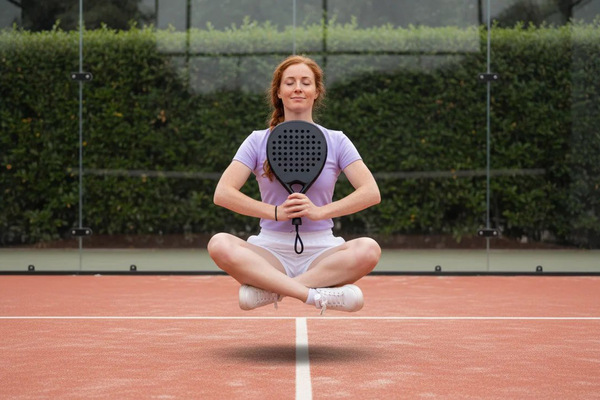
Ask regular padel players why they keep coming back, and many won't talk about forehands or rankings. They'll talk about how they feel afterward: lighter, clearer, more connected. The sport has a reputation as a social reset, a place where you swap screens and worries for four people, a small court, and a ball that needs your attention. This guide looks at the padel mental health benefits that players describe, what the research actually says (and doesn't), and how to build a padel routine that supports your wellbeing without turning it into another pressure.
Note
This article gives general information about wellbeing and sport. It isn't medical advice, and padel is not a treatment or a substitute for professional care. If you're struggling with your mental health, speak to a doctor or a qualified mental health professional.

What the Research Says
Physical activity is widely linked to better mental health, but padel itself is still under-researched. A 2025 systematic review in Frontiers in Psychology looked at padel and pickleball. It screened 71 studies and included 14, and only eight of those examined padel, with small samples averaging around 67 participants. The padel studies mostly focused on performance-related mental factors, such as self-confidence, anxiety, and mental fatigue, while the pickleball studies more often reported happiness, life satisfaction, and social integration.
Within the padel research, higher-level players generally reported greater self-confidence and lower physical symptoms of anxiety, and losing a match was linked to lower confidence and more anxious thoughts. The authors stressed that stronger research is needed to show whether playing causes any improvements, and the results shouldn't be read as proof that padel prevents depression or anxiety.
Enjoyment Seems to Matter
A 2026 cross-sectional study of padel players in Saudi Arabia found that players who took part mainly for the enjoyment and stimulation of the game reported lower levels of depression, stress, and anxiety. Players driven mainly by external pressure or rewards reported higher levels. Because the study captured a single moment in time, it shows an association, not a cause, but it fits the idea that how you play matters as much as how often.
The Broader Picture
A narrative review on padel and health notes that racket sports offer cardiovascular and musculoskeletal benefits, and that the interactive nature of the game supports the social connections that are important for mental health. In other words, padel doesn't have a special magic, but it combines several things known to help: movement, social contact, and fun.
Why Players Call It a "Social Reset"
Free tournament generator — Americano, Mexicano and more. Set it up in minutes.
- You can't play alone. Padel is doubles, so every session involves other people, which makes it easy to build a social habit.
- It pulls your attention to the present. Many players say that following a fast ball and a partner's movement leaves little room to ruminate.
- Early success feels good. The walls keep the ball in play, so beginners enjoy rallies quickly, which encourages them to return.
- It's movement you enjoy. People stick with exercise they like, and padel feels more like play than a workout.
- The club becomes a community. Group chats, mixers, and a post-match drink turn sessions into a regular part of social life.
Social Connection On and Off Court
The social side is the most obvious benefit. Between points, at changeovers, and after the match, there's space to talk. Formats like Americano rotate partners so you meet many people in one evening, and open matches in booking apps connect you with players even if you're new to an area. For people who work from home or have moved to a new city, a weekly padel slot can become a reliable point of contact in the week.
Confidence and Competition
Padel can also build confidence, as skills improve and rallies get longer. The flip side is that competition can bring pressure. The research suggests losing can dent confidence and raise anxious thoughts, especially among competitive players. If that sounds familiar, try focusing on process goals, such as moving well or communicating with your partner, and keep scoring light in social games.
Important
If playing starts to cause persistent stress, dread, or low mood rather than relief, that's a signal to adjust your approach and, if it continues, to talk to a professional.

Building a Wellbeing-Friendly Padel Routine
| If You Want | Try This |
|---|---|
| A break from stress | Short, regular sessions at a fixed time each week |
| More social contact | Americano nights, open matches, and club mixers |
| Confidence | A beginner clinic and a simple record of your progress |
| A routine to look forward to | A standing slot with the same small group |
| Less pressure | Friendly games, relaxed scoring, and rotating partners |
How to Keep It Enjoyable
- Play for the fun of it. The early research suggests that enjoyment matters, so protect it.
- Be kind to yourself after mistakes. Everyone hits balls into the net. Laugh, reset, and play the next point.
- Be a supportive partner. Encouragement makes the game better for everyone, including you.
- Keep a rhythm that suits your life. One or two sessions a week you actually enjoy beat five you dread.
- Protect your body. Warm up and rest, because injuries can quickly take away the pleasure.
Who Tends to Love It Most
Players describe different reasons for loving padel. Remote workers and people new to a city often value the built-in social contact. People who find the gym dull like that padel feels like play. Busy parents and professionals appreciate a short, scheduled session that gets them moving and out of their routine. Everyone's reasons are personal, so think about what you want from your sessions and choose the format that fits.
If You Feel Nervous Before Playing
It's normal to feel anxious about playing with new people or in front of others. A few simple steps can help. Arrive early, so you aren't rushing. Tell your partner you're new or nervous, since most players are glad to help. Start with easy rallies and a relaxed warm-up, and set a small goal, such as keeping the ball in play. Remember that everyone's focus is on their own game, and that mistakes are part of every session.
When Padel Isn't Enough
Padel can be a great part of a healthy lifestyle, but it isn't a cure for mental health problems. If you notice that low mood, anxiety, or loss of interest lasts for weeks, interferes with daily life, or feels overwhelming, talk to a doctor or a mental health professional. Playing can sit alongside professional support, and for many people it's a welcome part of recovery and routine, but it shouldn't replace help when you need it.
Common Mistakes
Expecting It to Fix Everything
Padel can support wellbeing, but it's one part of a bigger picture that includes sleep, relationships, and professional help when needed.
Turning It Into Another Pressure
Chasing results and rankings can erase the relief you wanted. Keep some games purely for fun.
Playing Through Pain or Exhaustion
Overdoing it leads to injury and burnout. Rest when you need to.
Using It to Avoid Problems
A game can be a healthy break, but it shouldn't replace dealing with the things that are weighing on you.
Advice
Start small: book one relaxed session a week with people you like, and notice how you feel before and after. If it lifts your mood and gives you something to look forward to, build on it.

The padel mental health benefits players talk about, a social reset, focused attention, and a regular reason to move, are consistent with what research suggests about physical activity and enjoyment, even though padel-specific evidence is still limited. Play for the fun of it, build a routine you can keep, look after your body and your mind, and let padel be one of the good things in your week.