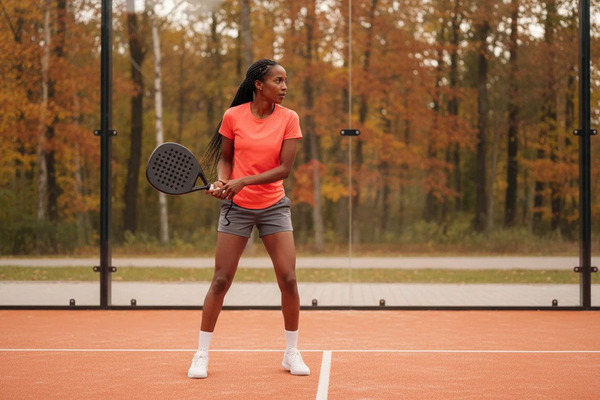
Should you hit your padel backhand with one hand or two? It's one of the most common questions from players who come to padel from tennis, and it comes up for beginners too. The honest answer is that it depends on you, but you can make the choice far less random. This guide compares the one-handed and two-handed backhand in padel, covering reach, control, the walls, volleys, and who each style suits. It also explains the hybrid approach many players end up using, and gives you a simple way to test both. For step-by-step technique, see our separate guides to the one-handed and two-handed backhand.
The Quick Verdict
The one-handed backhand is the more common choice in padel, and it's usually the best all-round option because of its reach and its ability to handle the walls. The two-handed backhand can work well for some players, especially those from a tennis background, but it has real limits in padel. Many players land on a middle path: two hands when they have time, one hand when they're stretched or playing off the wall.
The One-Handed Backhand
The one-handed backhand has long been the predominant technique in padel, and it's still the default for most players.
Strengths
- Reach. One hand gives you greater lateral reach, which matters when you're stretched wide or a ball pops off the glass behind you.
- Volleys and defense. It's well suited to backhand volleys and defensive lobs.
- Variety. It makes transition shots and changes of pace and direction easier, which adds unpredictability.
- Wall play. Most defensive backhands and glass backhands are played one-handed, often with a slice for control.
Limits
It asks more of your wrist and forearm, so strength and technique matter. Beginners often find it harder to control at first, particularly the flat version, which is a challenge for many tennis players who were used to a two-hander or a slice.
The Two-Handed Backhand
The two-handed backhand has been growing in padel, driven partly by younger players and a search for more stability.
Put it to the test with our free padel quiz — quick questions, instant results.
Strengths
- Leverage and stability. Two hands give you more leverage and a steadier racket, which helps on powerful returns and low balls.
- Familiarity. If you come from tennis, it's the technique you already know.
- Disguise. It can make it harder for opponents to know where the ball is going.
Limits
The biggest limitation in padel is the wall. A two-handed backhand works well on balls that haven't bounced off the wall, but it's much harder to use on rebounds, where reach and flexibility matter. You also can't hit a true slice with two hands, and you need to be a step closer to the ball to hit it comfortably.
Note
Two-handed technique has a slightly different contact point. You'll usually hit a touch further back than with one hand, so adjust your spacing accordingly.

Side by Side
| Factor | One-Handed | Two-Handed |
|---|---|---|
| Reach | Greater lateral reach | Shorter, you need to be closer |
| Control on powerful balls | Needs good technique | More stability and leverage |
| Balls off the wall | Strong, most glass backhands | Limited, works best without a bounce off the wall |
| Volleys and lobs | Well suited | Less suited |
| Slice | Natural option | Not possible with two hands |
| Learning curve | Harder at first | Easier for tennis converts |
Who Should Choose Which?
- Tennis players with a two-hander. You can start with two hands, but plan to build a one-handed option for the wall and for balls you have to stretch for.
- Complete beginners. Learn the one-handed backhand from the start. It's the standard in padel, and it avoids having to unlearn a habit later.
- Players with strong upper bodies. They generally adapt more easily to the one-handed backhand.
- Younger or less strong players. Some prefer the security of two hands, at least while they build strength.
- Volley-heavy, net-focused players. One hand makes backhand volleys and transitions easier.
The choice is personal and should be based on comfort, performance, and adaptability. Strength, injury history, and playing style all play a part.
The Hybrid Approach
A practical middle ground that many players land on: hit with two hands when you have time and the ball sits up, and release to one hand when you're reaching or playing off the back wall. It gives you the stability of two hands on easy balls and the reach of one hand when you need it. If you try this, practice the release so it feels automatic, rather than deciding in the middle of a rally.
Important
Whichever style you choose, you will need a reliable answer for balls off the glass. If your two-handed backhand falls apart on rebounds, build a one-handed backup rather than hoping the ball won't come to that side.

How to Test Both
Run a simple two-week experiment. In week one, hit your backhands with your current style in drills and games. In week two, try the other style or the hybrid. Each week, note how many backhands you get in on easy balls, how you handle balls off the glass, how comfortable your volleys feel, and how your shoulder and elbow feel afterward. The style that holds up in all four areas is probably the right one for you.
Returns, Volleys, and Lobs: Where Each Style Helps
Think about the situations you face most. On powerful returns and low balls, the two-handed backhand offers more control and stability. On backhand volleys and defensive lobs, the one-handed version tends to be easier because of its reach and freedom of movement. If most of your trouble comes from fast serves and hard-hit balls, two hands may help. If it comes from volleys, wide balls, and the glass, one hand is likely the better bet.
Switching From One Style to the Other
If you decide to change, do it gradually. Spend a few sessions hitting easy rallies at a slower pace with the new style, practice shadow swings, and use a practice wall or a feeder to groove the contact point. Keep your old style for matches until the new one feels reliable, and give it at least a couple of weeks before judging it. Expect your timing to feel off at first, since contact points and spacing are slightly different between the two.
Technique Notes for the Two-Handed Version
If you go with two hands, keep your dominant hand in a continental grip with your other hand over the face of the racket, legs semi-flexed and about shoulder-width apart. Transfer your weight from the back foot to the front foot as you swing, and let the non-dominant hand release the racket face around the point of contact so you can finish naturally.
Common Mistakes
Choosing Only by Habit
Staying with a tennis habit because it's familiar can limit you on the wall. Test alternatives.
Ignoring the Wall
A backhand that only works before the bounce leaves you exposed. Practice rebounds with your chosen style.
Switching Every Week
Changing styles constantly means neither becomes reliable. Give each option a fair trial, then commit.
Skipping the Warm-Up
Both styles load the shoulder and elbow differently. Warm up, and speak to a coach or professional if you feel pain.
Advice
Ask a coach to film your backhand from the side and watch your reach and recovery on balls off the glass. Those two moments show you very quickly which style suits you.

The one-handed backhand is the standard choice in padel for its reach and its ability to handle the walls. The two-handed backhand can work for some players, and a hybrid of the two suits many. Test both, check how they hold up on rebounds and volleys, and commit to the style that makes your backhand a shot you trust.