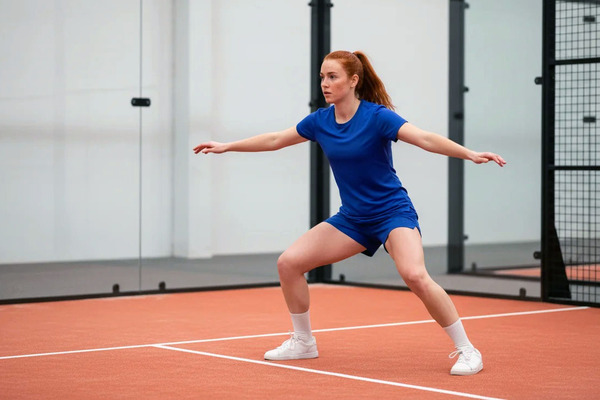
Always a step late to the ball?
Footwork drills for padel beginners matter more than most new players expect, since padel's small court and constant direction changes reward quick, efficient movement over raw power. Good footwork is what actually gets you into position to hit a clean shot, and without it, even solid technique falls apart under time pressure. This guide covers the basic footwork every beginner should build first, along with simple drills to practice it.

Why Footwork Matters More Than It Looks in Padel
Padel's enclosed court means the ball keeps coming back into play off the walls far more often than in tennis, which means rallies last longer and require more repeated bursts of movement. Beginners often focus entirely on their swing, but a well-timed shot starts with getting your feet into the right position early, not making a last-second lunge to reach the ball.
The Split Step: The Foundation of Padel Footwork
A split step is a small hop timed just as your opponent is about to hit the ball, landing you in a balanced, ready position with your weight evenly spread. It's the single most important footwork habit in padel, since it's what lets you push off quickly in any direction the moment you see where the ball is going.
Beginners who skip this step often look a half-second slow to every ball, even when their technique is otherwise sound. Practicing the timing of the split step, landing right as your opponent makes contact, is worth prioritizing before anything more advanced.
Note
Good footwork isn't about being fast in a straight line. It's about being ready to change direction instantly, which is exactly what padel's constantly shifting rallies demand.

Warming Up Before Footwork Drills
A few minutes of light jogging, ankle rolls, and dynamic stretches like leg swings and lunges before starting footwork drills reduces the risk of a strained ankle or calf, especially during quick direction-change work. Padel's short, explosive movements put real stress on the lower body, so treating footwork practice with the same warm-up seriousness as a full training session is worth the extra few minutes.
Basic Footwork Drills for Beginners
Put it to the test with our free padel quiz — quick questions, instant results.
Side-to-Side Shuffle Drill
Practice shuffling sideways along the baseline, keeping your feet apart and your knees slightly bent rather than crossing your legs. This builds the lateral movement pattern you'll use constantly during rallies, since padel rewards staying low and mobile over big, upright strides.
Ladder Drill for Quick Feet
An agility ladder, or even a line of markers on the court, helps build quick, controlled foot placement. Simple in-and-out or side-step patterns through the ladder train the fast, small steps that padel's tight spaces demand, rather than the longer strides used in more open sports.
Split-Step Timing Drill
Have a partner or coach hit balls to you while you practice landing your split step at the exact moment they make contact. Getting this timing right, not too early, not too late, is what makes the split step actually useful rather than just an extra movement.
Important
Stay low throughout these drills. A high, upright stance makes every direction change slower, since you have to lower your center of gravity before you can push off effectively.

Footwork for Moving to the Net
Padel rewards getting to the net when the opportunity is there, and the footwork for that approach matters as much as the shot that sets it up. Practice moving forward in small, controlled steps rather than a single big sprint, since you need to stay balanced enough to react to whatever comes back once you arrive. A split step just before you reach your net position keeps you ready rather than still drifting forward when the next ball arrives.
Footwork for the Back Wall
Playing a ball off the back wall requires different footwork than a straightforward groundstroke, since you often need to move backward and then forward again in a short space. Practice a simple drill: shuffle back toward the wall, let a fed ball bounce and rebound, then step forward into the shot rather than staying flat-footed at the wall. This back-and-forward pattern is one of the more unique footwork demands padel places on beginners coming from other sports.
Drills for Change of Direction
Have a partner feed balls to alternating sides of the court, forcing you to recover to a central position after each shot before moving to the next one. This mirrors real rally movement far more closely than drills that only train movement in one direction, and it builds the recovery habit that keeps you from getting caught flat-footed after a wide ball.
| Drill | What It Builds |
|---|---|
| Side-to-Side Shuffle | Lateral movement and low, balanced stance |
| Ladder Drill | Quick, controlled foot placement |
| Split-Step Timing | Readiness to react the instant the ball is hit |
| Net Approach Footwork | Balanced forward movement without overrunning position |
| Change of Direction | Recovery to center between alternating shots |
Footwork for Doubles Positioning
Since padel is always played in doubles, footwork isn't only about reaching the ball, it's also about maintaining the right shape with your partner. Practice moving together as a unit: when one player shifts toward a side to cover a ball, the other should adjust position to close the gap that movement leaves open. A simple drill is to have both players shadow-move together in response to fed balls, without a racket, focusing purely on staying connected as a pair rather than each player just reacting individually.
Common Footwork Mistakes Beginners Make
Standing Too Upright
A tall, stiff stance slows down every reaction. Bending the knees and staying low keeps you ready to push off in any direction without wasting time lowering your body first.
Crossing the Feet
Free tournament generator — Americano, Mexicano and more. Set it up in minutes.
Crossing one foot over the other during lateral movement can leave you off balance right when you need to change direction again. A shuffle step, keeping feet roughly shoulder-width apart, is more stable and just as fast over short distances.
Watching the Ball Instead of Moving Early
Waiting to see exactly where the ball will land before moving wastes valuable time. Reading your opponent's body position and swing, and starting to move before contact, gives you the head start padel's fast rallies require.
Neglecting Recovery After a Shot
Hitting a shot and then standing still to watch it is a common beginner habit that leaves you unprepared for whatever comes back. Recovering to a balanced, central position immediately after your own shot should become automatic.
Taking Steps That Are Too Big
Long, reaching strides might feel like they cover ground faster, but they often leave players off balance and slow to adjust if the ball changes direction unexpectedly. Smaller, quicker steps that keep your weight centered are usually more effective over the short distances padel actually requires.
Advice
Practice footwork drills without a racket at first if the movement feels unnatural. Removing the added coordination challenge of hitting a ball lets you focus purely on building clean, efficient steps.

How Often to Practice Footwork
Ten to fifteen minutes of dedicated footwork work before or after a regular practice session, two or three times a week, is enough to build noticeable improvement without turning every session into a fitness class. Consistency matters more than duration here, since footwork habits are built through repetition rather than occasional long sessions.
Good footwork rarely gets the same attention as a flashy smash or a well-placed lob, but it's the foundation that makes every other shot possible. A beginner who commits to a few simple footwork drills early on will usually see their overall game improve faster than one who only focuses on stroke technique, since better positioning makes every shot in their arsenal easier to execute cleanly.