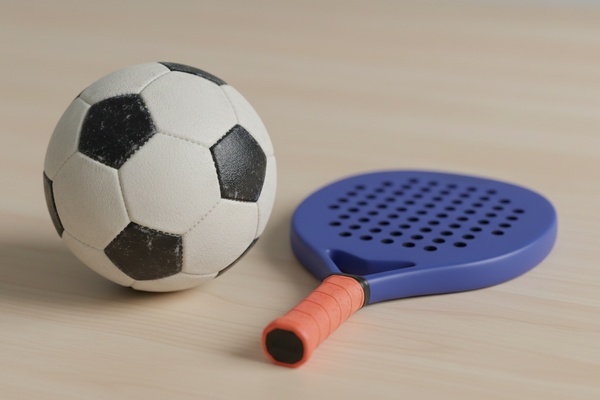
Wondering why so many footballers end up on the padel court?
Footballers and padel have become one of the more obvious pairings in modern sport. From Lionel Messi and Neymar posting clips from backyard courts to entire Premier League training grounds adding padel facilities, professional football has embraced the sport at almost every level, active players, retired legends, and even club owners.
This guide looks at why so many footballers, current and former, have gravitated toward padel specifically, rather than golf, tennis, or any other off-field activity.

The Skill Crossover: Why Padel Feels Natural to Footballers
Padel rewards many of the same instincts footballers already rely on: quick reads on where the ball and an opponent are heading, sharp reactive footwork, and comfort making decisions under time pressure. Coaches who work with footballers on padel courts have noted how quickly they pick up positioning and shot selection, since so much of it builds on skills they've spent a career developing on grass.
That head start makes the learning curve far less intimidating than picking up an entirely new sport from scratch, which helps explain why so many footballers stick with padel rather than trying it once and moving on.
The walls are also part of the appeal for players with a football background. Rather than ending a rally, they add a layer of unpredictability and creativity, turning positioning and timing, skills footballers already understand from open play, into a new kind of tactical puzzle.
Low-Impact Recovery: Easier on the Body Than Football
Football takes a heavy toll on the knees and ankles over a long career, and padel's softer surface and lower-contact style make it a noticeably gentler alternative. For players managing old injuries or simply trying to extend their competitive years after retirement, that reduced physical toll is a major part of the appeal.
Because intensity is easy to adjust, a casual, low-pressure match or an all-out competitive one, padel also works as active recovery for players still in the middle of a demanding season, not just as a retirement hobby.
Free tournament generator — Americano, Mexicano and more. Set it up in minutes.
Note
Padel isn't risk-free, any racket sport carries some chance of strain or injury. But compared to the repeated high-impact running and contact of football, it's widely seen as a gentler option for players managing wear and tear.

A Mental Break From the Pressures of the Job
Professional footballers spend enormous amounts of time processing tactics, nutrition plans, and rehab schedules. Padel offers a genuine mental switch-off, a sport that's competitive and engaging enough to be fun, but without the weight of a professional career riding on the result. Several current and former players have described it as one of the few activities that actually feels like a break rather than another obligation.
The Social Side: A Team Sport Off the Pitch
Padel is almost always played as doubles, which fits naturally with a sport built around teammates and squad culture. Where golf spreads a group out over several hours and a lot of equipment, padel lets four people share one court for a fast, social match that fits easily into a rest day or a break between training sessions.
That social pull extends beyond individual friend groups. Entire squads have taken up the sport together, turning what starts as a handful of players messing around after training into a genuine team activity that coaching staff sometimes actively encourage.
Important
Not every footballer plays padel for the same reason. Active players often use it for recovery and team bonding, while many retired players describe it as a way to stay competitive and social after football itself is no longer part of daily life.

Padel Courts Inside Professional Football Clubs
The trend has gone well beyond individual players enjoying a hobby. Jürgen Klopp, who has called himself a padel "addict," asked for a padel court to be included when Liverpool built their new Kirkby training ground, and he and assistant Pep Lijnders have been filmed playing teammates like Mohamed Salah and Thiago while on tour. Manchester City, Everton, Middlesbrough, and Aberdeen have all added their own dedicated padel courts as well, treating the sport as a genuine part of a player's routine rather than a novelty.
Current Stars Who Play
Lionel Messi and Neymar are among the most visible active footballers associated with padel. Messi has built a padel court at his own home and regularly plays with friends and family, while Neymar has become one of the sport's biggest ambassadors, hosting matches with fellow professionals and sharing his games widely on social media. Barcelona players have also long been known for regular padel sessions after training, a habit that dates back well over a decade in Spanish football.
| Reason Footballers Play | Why It Appeals |
|---|---|
| Skill crossover | Positioning and reactive footwork transfer from football |
| Low impact | Gentler on knees and ankles than football |
| Mental break | Fun and competitive without career pressure |
| Social format | Doubles play fits squad and friend-group culture |
| Life after football | Keeps retired players competitive and connected to sport |
Padel vs Golf: The New Off-Day Activity
For years, golf was the default way footballers spent a day off together. Padel has started to take over that role for a simple practical reason: a full round of golf takes several hours and a bag of expensive equipment, while a padel match wraps up in under an hour and only needs a shared racket and a pair of trainers. It also fits more people into the same session, since a padel court holds four players at once rather than spreading a group out across a course.
Life After Football: Padel for Retired Players
Retirement is where padel's appeal to footballers becomes even clearer. Former stars including Iker Casillas, Carles Puyol, Gerard Piqué, Francesco Totti, Xavi Hernández, Sergio Ramos, and Cesc Fàbregas have all been regularly spotted on padel courts since hanging up their boots. Casillas has spoken about how the sport helped him stay fit and recover physically after football, while Totti has been credited with helping popularize padel among former players and celebrities in Italy.
Organized events have grown around this trend too, including tournaments like the 4Padel Football Cup, which brings together former Ligue 1 players such as Samir Nasri and Kevin Gameiro for relaxed, competitive matches away from the pressure of professional football.
Football Money Meets the Business of Padel
The connection runs beyond players onto the business side as well. Paris Saint-Germain owner Nasser Al Khelaifi is such a fan of the sport that his company, Qatar Sports Investments, took control of professional padel's top tour in 2023, rebranding it as Premier Padel. It's a clear sign that football's relationship with padel isn't limited to a fun way to spend a day off, it's shaping how the professional sport itself is run.
That overlap between football money and padel's professional structure has only deepened the sport's visibility within football circles, since decisions made by a figure as prominent in the football world as Al Khelaifi carry weight well beyond padel's existing fanbase.
Advice
If you're a footballer, or just a fan of the sport, curious about trying padel, its shallow learning curve and social format make it one of the easier racket sports to pick up with a group of friends for the first time.

Between the skill overlap, the gentler physical demands, and a social format that fits naturally with squad culture, it's not hard to see why padel has become such a fixture in football, at training grounds, on retirement calendars, and increasingly in the boardrooms deciding where the sport goes next. For a sport still building recognition in some markets, having so many recognizable faces from football genuinely enjoying it, rather than just endorsing it, has been one of its most effective forms of growth.