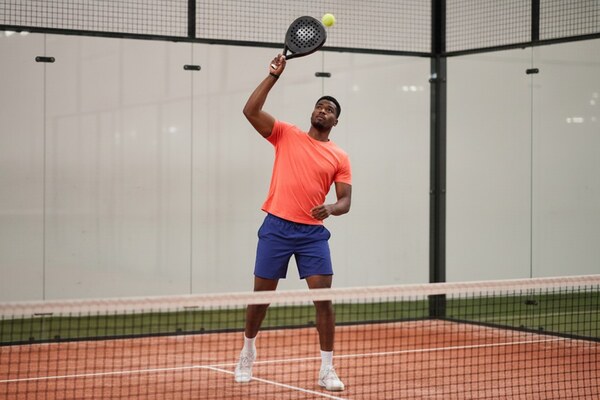
A flat smash in padel is an overhead shot hit with maximum pace and no spin, aimed at ending the point outright. It's one of the most exciting shots to watch, and one of the first "power" shots beginners want to learn, but it comes with its own rules quirks and technical details that are easy to get wrong without a bit of guidance.
This guide covers the basic rules that apply to a smash in padel, how a flat smash differs from other overhead shots, and the technique that makes it a reliable weapon rather than an easy unforced error.
What Is a Flat Smash in Padel?
A flat smash is an overhead shot hit with a flat trajectory and maximum pace, without the topspin or slice used on some other overhead variations. It's typically played off a high, short lob from your opponents, giving you the chance to strike the ball above head height and drive it down hard into their court.
The "flat" part of the name refers to the lack of added spin. Instead of shaping the ball's flight for extra bounce or control, a flat smash relies on pure pace and a well-chosen angle to make it hard to return.
The Rules Behind the Smash
A smash follows the same basic rules as any other shot in padel: it has to clear the net and land within your opponents' court boundaries. Where it gets interesting is what happens after the ball bounces. If the ball bounces once inside the court and then flies out over the back glass or the fence, the shot still counts as in, and the point goes to the team that hit it, since the ball has already legally landed inside the boundary before leaving the court.
This is very different from tennis, where anything that leaves the playing area is simply out. In padel, hitting a smash so hard that it clears the back wall after bouncing is actually a normal, celebrated way to win a point, not a mistake.
Note
The key distinction is timing. If the ball hits the wall or fence before it bounces on the court, that's a fault. If it bounces first and then goes out over a wall or fence, the point is won by the team that hit it.

Flat Smash vs Other Overhead Shots
Padel has several overhead shots that can look similar to a beginner but serve different purposes. The flat smash is the most direct and aggressive of them, aimed at winning the point immediately, while shots like the bandeja and vibora are played with less pace and more control, usually to hold or approach the net rather than end the rally on the spot.
Put it to the test with our free padel quiz — quick questions, instant results.
| Shot | Trajectory | Main Purpose |
|---|---|---|
| Flat Smash | Flat, maximum pace | End the point outright |
| Bandeja | Controlled, moderate pace | Hold the net position |
| Vibora | Sliced, sideways trajectory | Attack while staying in control |
Technique for a Reliable Flat Smash
Grip and Preparation
Most players use a continental or slightly modified grip for the smash, similar to the serve. As soon as you see a high, short ball coming, turn your shoulders and bring your racket up and back early, the same preparation used for an overhead in tennis, so you're not rushing your swing at the last moment.
The Contact Point Above Your Head
Contact should happen slightly in front of your body and above your head, not directly overhead or behind it. Hitting the ball too far behind you usually sends the shot into the net, while contact too far in front often sails long or misses the intended angle entirely.
Weight Transfer and Follow-Through
Push up and through the ball, transferring your weight forward as you make contact, rather than staying flat-footed. A full follow-through, finishing with the racket moving down and across your body, adds control to the pace rather than just adding raw power.
Important
Don't sacrifice balance for extra power. A rushed, off-balance smash is far more likely to go long, wide, or into the net than a slightly less powerful shot hit from good position.

Where to Aim a Flat Smash
Aiming at an opponent's feet or body is often more effective than trying to find open space, since it takes away their reaction time and makes a clean return difficult even if they get their racket on the ball. Angled smashes toward the open side of the court work well when an opponent is out of position, while a smash straight down the middle can create confusion about who should take the shot in doubles.
When to Use a Flat Smash
A flat smash makes the most sense off a high, short lob that gives you time to set up and enough height to generate real pace. Attempting it off a deep, well-placed defensive lob is much riskier, since you'll have less time to prepare and a smaller margin for error. Recognizing which lobs are smashable and which are better handled with a controlled bandeja is a skill worth developing early.
Glass vs Fence: A Small But Useful Distinction
During a rally, it doesn't matter whether the ball goes out over the back glass or the metal fence after bouncing, both count as a legal, point-winning shot. The one exception is on the serve itself: if a serve bounces in the service box and then hits the fence, that specific serve is a fault, even though the same bounce-then-fence sequence would be completely fine later in the same rally. It's a small rule quirk, but worth knowing so you don't second-guess a smash that clears the fence mid-rally.
How to Defend Against a Flat Smash
When you're on the receiving end of a smash, your first priority is simply getting the ball back in play rather than attempting anything ambitious. A defensive lob, hit high and deep, is usually the safest response, buying time to reset your position rather than trying to block the smash back at pace. Staying a step further back than you would for a slower shot also gives you more reaction time against the added speed.
Common Mistakes with the Flat Smash
Rushing the Preparation
Waiting too long to turn and prepare leaves you scrambling to hit the ball at an awkward point, usually behind your body. Early preparation gives you time to set up a clean, controlled swing.
Free tournament generator — Americano, Mexicano and more. Set it up in minutes.
Trying to Hit Every Ball as Hard as Possible
Not every smash opportunity needs maximum power. A slightly controlled, well-placed smash that lands in is far more valuable than a powerful one that sails long or wide.
Ignoring Footwork
Beginners often reach for a high ball without properly positioning their feet underneath it first. Good footwork, getting your body under the ball before swinging, matters more for a consistent smash than arm strength does.
Forcing a Smash on a Bad Ball
Not every lob is a smash opportunity. Attempting a flat smash on a deep, well-placed ball that leaves little time to prepare usually ends in an error. Recognizing when a controlled bandeja is the smarter choice avoids handing away points unnecessarily.
Advice
Practice the overhead motion without a ball first, focusing purely on turning your shoulders, preparing early, and finishing your swing. Building the motion before adding the pressure of contact makes the full shot come together faster.

Drills to Improve Your Flat Smash
Have a partner or coach feed high, easy lobs so you can focus purely on footwork, contact point, and direction before adding pace. Once your technique feels consistent, add targets in the corners of the court and track how many smashes you can land inside them, gradually increasing the height and difficulty of the feeds as your consistency improves.
A reliable flat smash comes down to recognizing the right opportunity, preparing early, and prioritizing balance over raw power. Combined with an understanding of how padel's wall rules actually reward a well-hit smash that clears the back glass, it's a shot worth developing carefully rather than rushing.