Playing regularly but not seeing much progress?
A good weekly padel practice routine mixes technical drills, match play, and some general fitness work, rather than just showing up whenever a court happens to be free. Structuring your week deliberately, even loosely, tends to produce faster, more noticeable improvement than the same number of hours spent entirely on casual matches. This guide covers the building blocks of a solid routine, sample schedules for different levels, and how to adjust the plan as your life and priorities shift.

The Building Blocks of a Weekly Routine
A well-rounded padel week usually includes four elements: dedicated technical practice, where you isolate and work on specific shots or footwork; match play, where you apply that technique under real conditions; some general fitness work to support the movement demands padel places on your body; and enough rest to actually absorb all of it. Skipping any one of these for too long tends to show up as a plateau, technique that never translates to matches, or match performance that declines as fatigue builds up.
These four elements don't need equal time each week. A beginner might spend almost all their time on instruction and match play, while a competitive player devotes real, dedicated blocks to each one separately. What matters is that all four show up somewhere in the week, rather than one or two dominating entirely while the others get ignored indefinitely.
Note
There's no single correct routine. The right mix depends on your current level, how many days a week you can realistically commit, and what you're specifically trying to improve.

A Sample Weekly Routine for Beginners
Beginners benefit most from a routine weighted heavily toward instruction and controlled practice rather than intense fitness work, since technique gains at this stage matter far more than conditioning.
| Day | Focus |
|---|---|
| Tuesday | Group lesson or coached session |
| Thursday | Casual match with friends |
| Weekend | Optional light footwork practice or rest |
A Sample Weekly Routine for Intermediate Players
Once the basics feel comfortable, adding a dedicated drill session alongside regular matches helps break through the common intermediate plateau, where casual play alone stops producing real improvement.
Put it to the test with our free padel quiz — quick questions, instant results.
| Day | Focus |
|---|---|
| Monday | Drill session: volleys, footwork, or a specific weak shot |
| Wednesday | Match play |
| Friday | Light fitness or footwork work |
| Weekend | Match play or a social tournament |
Important
Jumping from casual, occasional play straight to a five- or six-day routine increases injury risk substantially. Build up gradually over several weeks rather than all at once.

A Sample Weekly Routine for Competitive Players
Players training for tournaments or league competition typically need a more structured split between technical work, match simulation, and physical conditioning, adjusted based on how close the next competition is.
| Day | Focus |
|---|---|
| Monday | Technical drills and shot-specific work |
| Tuesday | Interval or endurance conditioning |
| Wednesday | Match play or sparring |
| Thursday | Strength and mobility work |
| Friday | Match simulation or tactical practice |
| Saturday | Competitive match or tournament |
| Sunday | Full rest |
Fitting Fitness Work Around Padel
General fitness doesn't need its own separate, complicated program to support a padel routine. A short session of bodyweight strength work, lunges, squats, planks, and some light cardio once or twice a week covers most of what padel's quick sprints and direction changes demand. The goal isn't to become a gym athlete on the side, it's to build enough general durability that padel's specific movements don't wear down your joints and muscles faster than they can recover.
Tracking Progress Week to Week
A simple way to know whether a routine is actually working is to track a few basic markers over a month: whether a specific weak shot is showing up less often as a problem, whether match results are trending in the right direction, and whether you feel less fatigued during longer sessions than you did a few weeks earlier. Routines that produce no noticeable change after a reasonable stretch of consistent effort are worth adjusting, either in frequency or in what each session actually focuses on.
How to Structure a Single Practice Session
Within any given session, a simple structure works well regardless of level: a short warm-up to get moving and loosen up, a focused block on one or two specific technical goals, then time spent applying that work in either fed-ball drills or live points. Trying to work on five different things in one session usually means none of them get the repetition needed to actually improve, so narrowing each session's focus tends to produce better results than a scattered approach.
Deciding that focus ahead of time, rather than figuring it out once you're already on court, also makes each session more productive. A quick note before you arrive, today's goal is the backhand volley, or today's goal is footwork recovery, keeps the session purposeful instead of drifting into whatever feels easiest in the moment.
Adjusting Your Routine as Life Gets Busy
A routine only works if it's realistic given everything else going on in your life. A consistent two-session week that survives a busy month will do more for your padel over a year than an ambitious five-session plan that collapses the first time work gets hectic. When time is tight, prioritize match play over isolated drills, since it's the most efficient way to maintain overall feel and fitness even when dedicated practice time disappears.
Advice
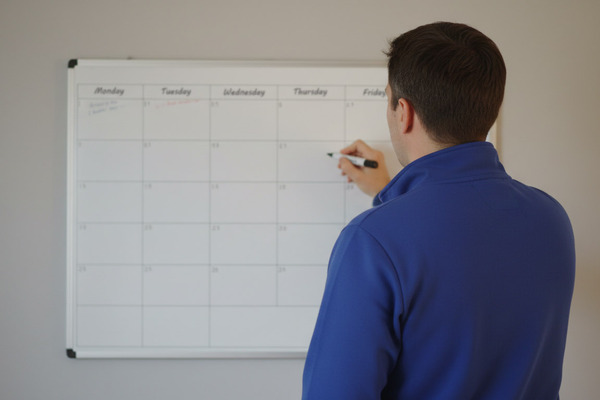
Write your routine down somewhere you'll actually see it, a calendar, a notes app, a shared group chat with your regular playing partners. A routine that only exists as a vague intention rarely survives more than a couple of weeks.

Common Mistakes When Building a Routine
Copying Someone Else's Schedule Exactly
Free tournament generator — Americano, Mexicano and more. Set it up in minutes.
A routine built for a competitive player training full-time won't fit someone playing recreationally around a full-time job, and trying to force it usually leads to burnout within a few weeks. Build a routine around your actual available time and current level rather than an aspirational one borrowed from someone in a very different situation.
Only Ever Playing Matches
Matches are valuable, but a routine made up entirely of casual games rarely fixes specific technical weaknesses, since there's no space to isolate and repeat a shot without the pressure of a live point. At least one session with a narrower, drill-focused goal each week tends to produce faster improvement than match play alone.
Never Revisiting the Plan
A routine that made sense three months ago might not reflect your current level, goals, or schedule anymore. Revisiting your routine every few weeks, even briefly, keeps it aligned with where you actually are rather than where you were when you first wrote it down.
Signs Your Routine Needs Adjusting
If you're relearning the same mistakes every session rather than building on previous progress, your sessions might be too infrequent or too unfocused to let skills stick. On the other end, persistent soreness, declining performance despite consistent effort, or a growing reluctance to show up are signs you've built a routine that's outpacing your recovery. Either signal is worth adjusting rather than pushing through, since a routine's whole purpose is sustainable, compounding progress, not just logging hours.
A weekly padel practice routine works best when it matches your actual level and life, not an idealized schedule copied from someone else. Whether that's two sessions a week for a beginner or six for a competitive player, the same principles apply: mix technical work with match play, respect recovery, and build the routine up gradually so it's still standing a few months from now.
The best test of any routine isn't how it looks written down, it's whether you're still following some version of it three months later. A modest schedule that survives busy weeks and low-motivation stretches will always outperform an ambitious one that only lasts until the first real disruption to your normal week.