Tired of games that are over before they start?
A mismatched padel game, where one pair is clearly stronger than the other, rarely stays fun for long. The weaker side gets discouraged, the stronger side gets bored, and both end up further from the close, competitive rallies that make padel enjoyable in the first place. Avoiding this comes down to a few practical habits: being honest about your own level, using the tools booking apps already provide, and communicating clearly before you ever step on court.

Why Mismatched Games Happen So Often
Most mismatches aren't intentional. They usually come from vague self-assessment, a beginner who calls themselves "intermediate" after a few months, or a group booking a court with friends of a friend whose actual level no one has verified. Open matches booked through an app can also go wrong if a player's listed rating doesn't reflect how they actually play, since ratings only work as well as the honesty and consistency behind them.
The Cost of a Mismatched Game
A lopsided game is a bad experience for both sides, just in different ways. Weaker players spend the match chasing balls they can't return and rarely get a real chance to build confidence or improve. Stronger players, meanwhile, end up either coasting through an unchallenging match or, worse, playing at reduced intensity in a way that can feel patronizing to their less experienced opponents. There's also a practical safety angle: a much faster, harder-hitting player can genuinely put a beginner at risk of a badly timed reaction or a rushed, awkward movement trying to keep up.
Note
A mismatch doesn't have to mean a huge skill gap to ruin a game. Even a moderate difference in level can make a match feel one-sided if it's not accounted for when the game is set up.

Signs a Match Might Be Mismatched Before It Even Starts
Free tournament generator — Americano, Mexicano and more. Set it up in minutes.
A few warning signs are worth watching for before the first point is played. If one pair is visibly much more comfortable warming up, hitting cleaner, more confident shots even in casual rallying, that's often a preview of how the match itself will go. Large gaps in experience, someone who has played for years against someone who picked up a racket for the first time last month, are another obvious red flag worth addressing before committing to a full match rather than hoping it evens out once play starts.
Mismatches Aren't Always About Overall Level
Skill gaps aren't always as simple as one player being generally better than another. Sometimes a mismatch comes from a specific gap, one pair having much stronger net play while the other is comfortable only from the baseline, or one player with a powerful smash facing an opponent who has never had to defend one. These narrower mismatches can be trickier to spot in advance than an obvious overall skill gap, but they matter just as much for how enjoyable the match actually feels.
Be Honest About Your Own Level
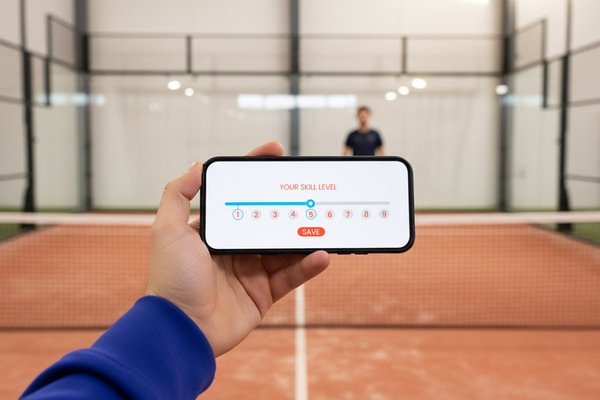
The single biggest factor in avoiding mismatched games is accurate self-assessment. It's tempting to round up, especially after a few good sessions, but overstating your level almost guarantees a future game that's uncomfortable for someone. If you're unsure where you stand, err toward describing yourself a notch below what you hope you are rather than a notch above, and let your actual results in matches adjust that over time.
Use Skill Ratings and Filters When Booking
Most padel booking apps include a skill rating, often on a scale like 0.0 to 7.0, along with filters for open matches that let you search specifically for games at your level. Using these tools as intended, rather than ignoring them or padding your own number, is one of the simplest ways to avoid ending up in a game that's badly mismatched from the start. If an app's rating system feels inaccurate after a few matches, most platforms let it self-correct based on results, so playing honestly early on pays off with a more accurate number later.
Important
A skill rating is only useful if it's kept honest. Deliberately setting your level too high to get into more competitive games usually backfires, producing exactly the mismatched, frustrating match you were trying to avoid.

Ask Before You Join an Open Match
When joining an open match with players you don't know, a quick message beforehand asking about everyone's general level takes thirty seconds and can save an entire session from feeling one-sided. Most players are happy to answer honestly, since nobody wants a badly mismatched game either, and the small awkwardness of asking is nothing compared to ninety minutes of an uneven match.
Communicate With Your Regular Group
If you regularly play with the same friends, it's worth having an honest, occasional conversation about how everyone's level is actually developing. Skills don't improve at the same rate for everyone, and a group that was evenly matched a year ago might not be anymore. Bringing this up isn't about excluding anyone, it's about figuring out whether pairings within the group need to shift, or whether it's time to occasionally invite a fifth or sixth player into the rotation to keep matches competitive for everyone.
| Situation | How to Handle It |
|---|---|
| Booking with strangers | Use app skill ratings and filters honestly |
| Joining an open match | Ask about everyone's level before confirming |
| Playing with regular friends | Check in occasionally on how levels have shifted |
| Hosting a social event | Sort players into skill bands ahead of time |
What to Do If a Game Turns Out Mismatched Anyway
Sometimes a mismatch only becomes obvious once you're already on court. In that case, adjusting on the spot, the stronger pair playing with slightly less pace, or the format shifting to focus more on rallies than winning, can salvage the session without anyone feeling singled out. If the gap is severe enough that adjustments don't help, it's reasonable to end the match a little early and rebook with better-matched opponents next time, rather than pushing through ninety unenjoyable minutes out of politeness.
Advice
If you're clearly the stronger player in a mismatched game, use it as a chance to work on placement and consistency rather than power. It keeps the rally alive for your opponents and still gives you something useful to practice.

Organizing Balanced Games as a Host
If you're the one organizing a group session or a social event, take a few minutes upfront to ask attendees about their experience level, or check their app rating if you have access to it, before assigning pairings. Sorting a larger group into rough skill bands, even informally, does far more for everyone's enjoyment than assuming a random draw will sort itself out. This matters even more for anyone new to the sport, since a discouraging first few games are one of the most common reasons beginners quietly stop coming back.
Avoiding a mismatched padel game comes down to honesty and a small amount of upfront communication: an accurate sense of your own level, actual use of the rating tools booking apps provide, and a willingness to ask a quick question before joining a game with people you don't know. None of it takes much effort, and it's usually the difference between a match everyone leaves happy with and one that quietly puts someone off the sport.
A well-matched game rewards everyone involved with closer points, more rallies, and a genuine sense that the outcome was in doubt until the end. That's worth the small upfront effort of checking levels and asking a few honest questions, especially compared to the alternative of a lopsided match that leaves one side bored and the other discouraged.