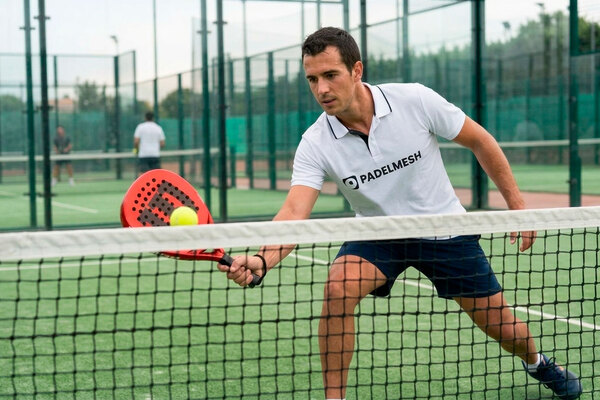
New to padel?
Padel is a racket sport played in doubles on a small enclosed court with glass walls. It's fast to learn, easy to enjoy from day one, and one of the most social sports you can pick up right now. If you've heard the name but haven't played yet — this guide covers everything: how the game works, the court, the rules, the gear, and what your first match will actually feel like.

What Is Padel Sport?
Padel is its own sport. It's not tennis with walls, and it's not squash on a bigger court. It borrows elements from both, but it plays differently from either. The setup: two teams of two stand on opposite sides of a net and try to hit the ball so the other side can't return it. The court is enclosed by glass walls and metal mesh. Those walls aren't just a boundary — they're part of play. A ball can bounce on the court, hit the glass, and still be live. That single rule changes how the game feels. In tennis, a ball that gets past you is usually gone. In padel, it might come back off the glass. You get another shot. Rallies last longer. Points are less punishing for beginners. It's usually played as a doubles game — four players total. That makes it more social than most racket sports, and easier to start, because you're sharing the court with a partner instead of covering everything alone.
How Does Padel Work?
The goal is simple: hit the ball over the net and keep it in bounds until the other team can't return it.
Here's how a point typically unfolds:
- The server bounces the ball once and hits it underarm, below waist height, diagonally into the opponent's service box.
- The receiving team returns it.
- Both teams trade shots across the net.
- The ball can bounce once on the court, then hit the glass wall — still in play.
- Whoever can't make a legal return loses the point.
You can hit the ball after one bounce, or volley it before it hits the ground. The one thing you can't do is let it bounce twice on your side.
That's most of what you need to understand how padel works for your first game.
The wall rebound — what makes padel different
The wall rebound is what surprises most first-time players. You expect the point to end when the ball heads toward the back. Instead, it comes off the glass and back into play.
Advice
New players often rush the ball too early. Better to wait, read the rebound, and play it calmly after the glass. This takes a few games to feel natural. Once it does, it becomes one of the most satisfying parts of the sport.

How Big Is a Padel Court?
A standard padel court is 10 meters wide and 20 meters long — roughly half the size of a tennis court. There's a net in the middle, service boxes close to it, glass walls at both ends, and metal mesh running along the sides.
The enclosed size is part of what makes padel good for beginners. The ball stays closer. You cover less ground. Rallies build naturally instead of ending on the first strong shot. Missing a shot doesn't send the ball flying out of reach.
Note
When you book a court, you're booking the whole space — typically for four players. Some clubs run open sessions where you can join a group at your level if you don't have a full team.

Basic Padel Rules for Beginners
You don't need to study a rulebook before your first game. Learn these, and you're ready to play.
The essentials:
- Padel is almost always played two vs. two (padel doubles).
- The serve is underarm — the ball must bounce once before you hit it, below waist height.
- The serve goes diagonally into the opponent's service box.
- After the serve, the ball can bounce once on your side before you return it.
- After bouncing, the ball can hit the glass walls and stay in play.
- Volleys (hitting the ball before it bounces) are allowed during rallies.
- The ball has to cross the net and land inside the court — including the back and side boundaries — to count.
What catches beginners off guard:
The most common early mistake is trying to hit the ball hard toward the back corner and expecting the point to end there. In padel, the opponent might just play it off the wall. Control and placement matter more than power.

Free tournament generator — Americano, Mexicano and more. Set it up in minutes.
Another one: chasing every ball to the back glass. Sometimes the right move is to let it come to you.
Can the Ball Hit the Wall in Padel?
Yes — and it's one of the defining padel game rules.
After the ball bounces once on the court, it can hit the glass wall and remain in play. Your opponent can then play it after the rebound. This keeps the rally going and creates angles and situations you don't see in other racket sports.
A few things that don't count:
- If the ball bounces twice on your side before you hit it — point over.
- If you hit the ball into your own glass before it crosses the net — not a legal return.
- If the ball hits the metal mesh at the top of the wall — usually out, depending on where it lands.
Nobody reads the walls perfectly at first. Give it a few sessions.
How Does Scoring Work in Padel?
Padel scoring follows the tennis scoring system.
Points go: 15 - 30 - 40 - game.
If both teams reach 40, it's deuce. From there:
- Some formats use advantage scoring — you need to win two points in a row.
- Many social and club matches use a golden point instead — one point decides the game, no advantage needed. Faster, simpler, still works.
A set goes to six games, with a two-game lead required. If the set reaches 6–6, teams usually play a tiebreak.
Advice
For a first match, don't get too caught up in counting. Ask the club how they keep score locally, and just focus on playing the points.
Padel Serve Rules
The padel serve is underarm. That's probably the biggest difference from tennis, where the overhead serve takes months to develop.
Here's how it works:
- Stand behind the service line, on the right side for the first game.
- Bounce the ball once.
- Hit it below waist height.
- It must land diagonally in the opponent's service box.
- It can't hit the side glass before landing in the box.
- If it clips the net and lands in the correct box, it's a let — serve again.
Note
You get two attempts per serve. The serve rotates between teams after each game.
That's it. Most beginners have a working serve within a few minutes.
Padel vs Tennis: What's the Difference?
The comparison comes up constantly — and it makes sense. Both use a net, a ball, similar scoring, and overlapping vocabulary. But they feel quite different once you're on the court.
| Padel | Tennis | |
|---|---|---|
| Court | Enclosed, smaller | Open, larger |
| Racket | Solid, no strings | Strung |
| Serve | Underarm, after bounce | Overhead |
| Format | Usually doubles | Singles or doubles |
| Walls | In play after bounce | Out of bounds |
The biggest practical difference for beginners: the serve. Tennis asks you to develop a reliable overhead serve from scratch. Padel's underarm serve is functional almost immediately.
The rhythm is also different. Tennis rewards power and big serves. Padel rewards positioning, angles, patience, and working as a pair. You can still hit hard in padel — but it's rarely the best move.
Is padel easier than tennis? For complete beginners, usually yes. Easier to start a rally, easier to serve, and easier to have fun in your first session. That doesn't mean it's simpler at a high level — experienced padel players use walls, lobs, volleys, and court positioning in ways that take real time to develop.
Padel vs Pickleball: What's the Difference?
Padel and pickleball share a few things: both are easy to start, both are naturally social, and both attract people who want a racket sport without a steep learning curve.
But they're different sports.
Pickleball uses an open court, a plastic ball, and a solid paddle. The court is smaller. There's a "kitchen" zone near the net where you can't volley. Pickleball is more about quick hands and net play.
Padel has an enclosed court with glass walls, a ball closer to a tennis ball, and more movement across the whole court. The wall rebounds create a dimension pickleball doesn't have. The space is bigger, and strategy tends to develop over longer rallies.
Both are worth trying. But the experience on court is pretty different.
What Equipment Do You Need to Play Padel?
Not much, especially for a first game. Most clubs rent rackets, and balls are sold at the desk.
What you need:
- A padel racket — shorter than a tennis racket, no strings, with holes in the face. Beginner rackets are built for control and a larger sweet spot, which makes solid contact easier.
- Padel balls — look like tennis balls, but slightly less pressurized. Use what the club provides.
- Court shoes — padel involves a lot of lateral movement, quick stops, and short sprints. Running shoes feel unstable on court. If you play regularly, proper court shoes are worth it.
- Comfortable sports clothes — nothing specific.
If you're playing once to try it out, rent the racket and don't worry about anything else.
Is Padel Easy to Learn?
Yes — at least at the start. You can understand the basics in five minutes and play a real game the same day.
That's partly why people keep asking: is padel good for beginners? It usually is. The smaller court, the doubles format, the underarm serve, and the wall rebounds that extend rallies all lower the barrier to actually enjoying the sport early on.
Do you need experience to play padel? No. Tennis players will recognize some of the scoring and net play. Squash players often pick up wall reads faster. But someone with zero racket-sport background can still join a casual match and have a good time.
The sport gets deeper the more you play. In your first session, you're thinking about getting the ball over the net. A few months in, you're thinking about positioning, lobs, when to press forward, how to use the back glass to your advantage, and when to slow a rally down intentionally.
That's a good learning curve — easy enough to enjoy at the start, with enough to work on later.
What Should I Know Before Playing Padel for the First Time?
Don't aim for power early. Padel rewards control. A ball placed at the right angle is more effective than a hard ball hit straight at your opponent.
Don't rush the glass. New players instinctively run toward the back wall when the ball goes deep. Sometimes the smarter move is to stop, wait, and let the ball come to you after the rebound.
Talk to your partner. Simple words — "mine," "yours," "leave it," "switch" — prevent both of you from chasing the same ball or leaving the middle of the court wide open.
Warm up first. Hit a few easy shots before you start scoring. Try a couple of serves. Play a few wall rebounds at low pace. Five minutes of that makes the whole match easier.
Try a beginner session if the club offers one. A coach can explain positioning and movement in twenty minutes — things that would take you a full session to figure out alone.
Why Is Padel Becoming So Popular?
Most sports make you work for a few weeks before the game feels fun. Padel doesn't.
Beginners can keep a rally going in their first session. The court feels manageable. The serve isn't scary. Playing doubles keeps the atmosphere lighter than a solo sport.
It also works across fitness levels. A social match between friends is relaxed. A competitive club game is a real workout. You can book a court online in a few minutes, text three people, and be playing within the week.
The low entry barrier is part of it. So is the social side — padel clubs tend to have a community feel that keeps people coming back beyond just the game itself.
How to Start Playing Padel
Book a court, bring three people (or join a club open session), and play.
For your first game:
- Rent a racket from the club.
- Wear stable shoes — court shoes if you have them.
- Don't overthink the serve. Bounce it once, hit it below the waist, aim diagonally.
- Keep your first goal simple: get the ball over the net and inside the lines.
- Let some balls come off the back wall instead of trying to cut them off.
Move with your partner. Don't both chase the same ball. Enjoy the rally more than the score. You'll figure out positioning and tactics naturally as you play more.
Give padel one session. The serve clicks faster than you expect, the wall rebounds start to make sense after a few games, and the doubles format means you're never out there alone. Book a court, find three people, and see what the fuss is about.