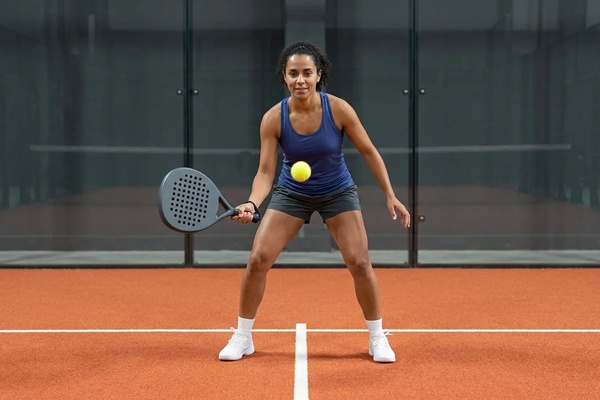
Want a shot that wins points with touch instead of power?
The drop shot, known in Spanish as the dejada, is one of the most delicate shots in padel. It isn't about power. It's about touch, timing, and surprise, and used at the right moment it sends your opponents scrambling forward, out of position, and opens up the court for your next attack. Used at the wrong moment, it's a gift. This guide explains the padel drop shot technique in plain steps: what it is, when to use it and when to avoid it, how to hit it, how to disguise it, and how to practice it. It's an intermediate shot, so build your basics first.

What Is a Drop Shot?
A drop shot is a soft, short ball that barely clears the net and lands near it, designed to make opponents who are standing deep run forward. The real value isn't only winning the point outright. A well-disguised drop shot forces opponents to creep up and second-guess their position, which opens the deep court for your next shot and keeps them honest about where they stand.
Note
The drop shot is a finesse shot, not a main weapon. Think of it as a change of pace that you use occasionally, when the situation is right, rather than a shot to play every time you get the chance.

When to Use It
The best moment is when your opponents are towards the back of the court, because they then have further to run to reach the ball. It also helps to be balanced, with time to set up, and holding a ball you can comfortably play. Slicing or adding backspin slows the ball down, which makes it harder to reach.
| Situation | Drop Shot? |
|---|---|
| Opponents are deep, pushed back by a lob or a good ball | Good moment |
| You're balanced, with time and a comfortable ball | Good moment |
| You can disguise it with the same preparation as another shot | Good moment |
| Opponents are close to the net | Avoid, they can reach it easily |
| You're stretched, off balance, or in a hurry | Avoid, play a safer shot |
| Your preparation is slow and obvious | Avoid, they'll see it coming |
How to Hit It, Step by Step
1. Use a Relaxed Continental Grip
The continental grip is the standard padel grip, and it naturally opens the racket face. Keep your hold relaxed, since soft hands let you absorb the ball's pace instead of hitting it.
2. Prepare Like Another Shot
Take your racket back as you would for a drive or a slice, with the same shoulder turn. The preparation is what makes the drop shot work, because the opponent shouldn't know what's coming until the last moment.
3. Keep It Short and Soft
Put it to the test with our free padel quiz — quick questions, instant results.
Forget the big wind-up of a powerful drive. A short, compact motion gives you control. Imagine catching the ball on the racket face for a split second, then gently guiding it over the net.
4. Open the Face and Cut Under the Ball
Keep the racket face slightly open, and as you make contact, brush or cut down and underneath the back of the ball. That adds backspin and slows the ball after it lands.
5. Make Contact in Front
Meet the ball in front of your body, not beside or behind you. A contact point in front gives you control over height and direction.
6. Recover and Move Forward
A drop shot isn't finished when the ball leaves your racket. Recover to a balanced position straight away, and if you're the net pair, be ready for a floated reply.
Disguise Makes the Shot
If opponents spot a slow, lazy preparation, they'll know what's coming and rush forward, turning your clever shot into an easy put-away. Use the same preparation, the same grip, and the same body language as the shot you want them to expect. The drop shot should look like a drive or a slice right up to the point of contact.
Important
Don't overuse it. A drop shot works because it's unexpected. If you play it every time you're at the net, opponents will adjust and start moving forward early, and you'll lose the surprise.

Where to Aim
Aim for a ball that barely clears the net and lands short, close to it, so opponents positioned deep have to cover a long distance. Pick a target on the court, such as a cone or a marked zone near the net, and practice landing the ball there. If your ball sits up in the middle of the court, it's too long, and you'll need more backspin and a softer touch.
Five Drills for the Drop Shot
Drill 1: Soft Rally at the Net
Stand close to the net with a partner and rally softly, focusing on feel and a relaxed grip. It builds the touch you need.
Drill 2: Target Practice
Place a cone or a towel near the net on the opposite side. Feed yourself or have a partner feed easy balls, and count how many out of ten land near the target.
Drill 3: Same Preparation, Two Outcomes
Alternate a normal drive or slice with a drop shot, using exactly the same preparation. Ask your partner to tell you when they can see the difference.
Drill 4: Deep Partner, Short Ball
Have your partner stand near the back of the court. Play a controlled rally, and when you receive an easy ball, try one drop shot. It teaches you to choose the moment.
Drill 5: One Drop Per Game
In practice games, allow yourself only one drop shot per game. It builds the habit of using it selectively, at the right time.
Common Mistakes
Playing It Under Pressure
A drop shot from a poor position usually fails. Choose a safer shot when you're stretched.
Obvious Preparation
If your swing looks different, opponents move early. Copy your usual preparation.
Hitting It Too Hard
Power makes the ball sit up. Think soft hands and short motion.
Using It Too Often
It stops being a surprise. Use it sparingly.
Playing It When Opponents Are at the Net
They can reach it easily, and you've handed them an attacking ball.
Advice
Ask a coach or a friend to watch whether your drop shot preparation looks the same as your drive. If they can tell the difference, work on that before you work on anything else.

The padel drop shot is a touch shot: a relaxed continental grip, a short and soft swing, an open face cutting under the ball, and the same preparation as your other shots so it stays disguised. Use it when your opponents are deep and you have time and balance, avoid it when they're close to the net or you're under pressure, and it becomes a smart way to change the pace of a point.