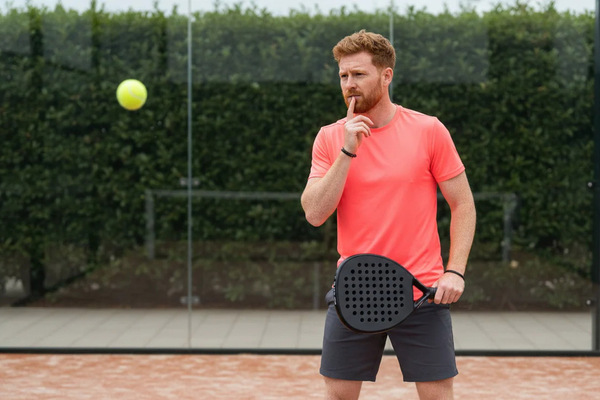
Hitting good shots but often choosing the wrong one?
Ask players what separates good padel players from great ones, and the answer is rarely a bigger smash. It's decisions. Padel is a sport of constant decision-making: which ball to take, which to leave, when to attack, when to reset, when to move forward. Even excellent movement and shot-making mean little if the wrong option keeps being chosen. The good news is that decision-making can be trained. This guide gives you a set of padel decision making drills: reading drills, conditioned points, small-sided games, reaction and pattern drills, and pressure drills, plus a sample session and a way to review your choices.

What Decision Making Means in Padel
Good decisions come from answering three quick questions before every shot. Where am I on the court? What has my opponent just given me? And what's the best shot for this situation, the safe one or the attacking one? If you know your zone, you already narrow the options: a lob from the back, a controlled attack at the net. Tactical discipline means respecting your partner's role, holding your position, choosing suitable shots, and knowing when to take risks, because without it your play becomes chaotic and predictable.
Note
Decisions improve through deliberate practice, not hope. Recreate match situations in drills, keep a record, and review. After a few weeks of conscious practice, most players notice better anticipation, faster decisions, and better adaptation to changes of pace.

Reading Drills: See Before You Choose
Drill 1: Racket and Body Cues
During practice matches, focus on your opponent's body position and shot preparation before impact. Watch the racket in particular. An open racket face beneath the ball usually means a defensive ball or a lob, while a racket fully back and above the ball height suggests an attacking shot. Foot position, shoulders, and grip can also reveal intent. Call out your read before they hit, and see how often you're right.
Drill 2: Predict the Shot
In a rally or feeding drill, predict the type of shot the opponent will play before they strike the ball. Keep score of correct predictions. The aim is to train reading without losing composure: observe, and wait for the right moment to anticipate or move, rather than guessing early.
Conditioned Drills: Limit the Options
Drill 3: One-Pattern Points
Play full points with a condition, such as all shots must be cross-court. Limiting options forces you to find solutions inside a rule, which improves decision-making under pressure.
Drill 4: Only Bandeja or Smash
Restrict overheads to one shot, for example only the bandeja or only the smash. It sharpens your sense of when each is appropriate and builds tactical creativity.
Drill 5: Finish After a Specific Play
Play conditioned points where a point can only be finished after a specific play, such as a volley after a lob. It builds the habit of constructing points rather than ending them on the first ball.
Drill 6: Goal-Oriented Points
Put it to the test with our free padel quiz — quick questions, instant results.
Set a goal other than winning the point, such as keeping the attacking position or avoiding unforced errors. It reinforces tactical thinking and reduces the urge to force winners.
Small-Sided Games: Less Space, Faster Choices
Drill 7: Half-Court Points
Play points on half the court or from forced positions. The tighter space forces you to think of alternatives and adapt quickly.
Drill 8: Two Versus One
One player faces two opponents. The single player works on reading space and choosing the best shot, while the pair practices exploiting gaps.
Drill 9: Zone-Restricted Matches
Divide the court into zones with cones and limit play to certain areas. It encourages you to adapt your defensive or offensive choices depending on the active zone.
Drill 10: Quick Minigames
Play short games to five points where mental speed matters. The short format makes every decision count and trains you to adapt quickly to the opponent's variations.
Reaction and Pattern Drills
Drill 11: Color Calls
Assign colors to certain plays or zones. A coach or partner calls a color, and you must execute the matching action, such as a lob for one color and a volley for another. It builds mental reaction and reduces hesitation.
Drill 12: Wall Exit and Finish Patterns
Repeat common sequences, such as a wall exit followed by a volley or a bandeja, until the response becomes automatic. Pattern play turns the right decision into a habit.
Drill 13: Lob Game With Choices
A feeder sends lobs to different zones, and you decide each time whether to reply with an aggressive drop, a lob, or a parallel pass. Say your choice out loud before you hit.
Pressure Drills
Drill 14: Key Point Simulation
Recreate situations like the golden point or advantage, so you practice shot selection and emotional control when it matters. Treat every point in a short set as a match ball.
Drill 15: Surprise and Disadvantage Starts
Begin points from awkward situations, such as starting out of position or a point behind. It trains calm decisions when things aren't going to plan.
Important
Don't overload yourself. Choose one theme for a session, such as reading or conditioned points, and use two or three drills from it. Too many conditions at once make decisions slower, not better.

Pair Decisions: Talk and Signal
In doubles, decisions are shared. Elite players communicate constantly: where the opponents are positioned, which ball to take and which to leave, which shot to play, when to switch sides. Practice signaling games before serving, where both players agree on signals for plays such as net approaches or switching sides after the rebound. Clear calls turn two individual decisions into one team decision.
Drill Summary
| Drill Type | Decision It Trains | Example |
|---|---|---|
| Reading | Anticipating the opponent's shot | Racket and body cues, predict the shot |
| Conditioned points | Choosing within a rule | All cross-court, only bandeja or smash |
| Small-sided games | Using space and adapting fast | Half-court, two versus one, zone limits |
| Reaction and pattern | Reducing hesitation | Color calls, wall exit followed by a finish |
| Pressure | Staying calm at key moments | Golden point simulation, decisive points |
| Pair signaling | Shared decisions | Signals before serving, constant calls |
A Sample 45-Minute Decision Session
Warm up for ten minutes with easy rallies. Spend ten minutes on a reading drill, calling your prediction before each shot. Play fifteen minutes of conditioned points, such as only cross-court or a finish after a lob. End with ten minutes of short games to five with golden-point rules, and say aloud what you were thinking in the last two or three points.
Review Your Decisions
Decisions improve faster when you review them. After each point, ask yourself whether the choice was right, not just whether the point was won. Record matches when you can, and watch for patterns: shots you choose too often, moments you hesitate, and situations where a safer option was available. A few notes after each session add up to a clear picture of what to change.
Visualize Before You Play
Before a session, spend a few minutes imagining match situations and the choices you'd like to make in them. Visualization helps prepare the mind for decisions, and it makes it easier to recall your plan when the pace picks up.
Common Mistakes
Guessing Too Early
Anticipating before you've read the cues leads to being wrong-footed. Observe, then move.
Always Choosing the Same Shot
Predictable play is easy to defend. Use conditioned drills to build alternatives.
Judging Decisions by Results Only
A good choice can lose a point. Review the decision, not just the outcome.
Staying Silent With Your Partner
Shared decisions need shared information. Talk, call, and signal.
Advice
Pick one decision to improve for a whole week, such as "lob when I'm under pressure at the back." Repeat it in every drill and match, and it quickly becomes automatic.

Padel decision making drills come down to reading the opponent, limiting your options so you find better ones, practicing patterns until they're automatic, and testing your choices under pressure and with your partner. Train one theme at a time, review what you chose and why, and your game will look calmer, smarter, and harder to play against.