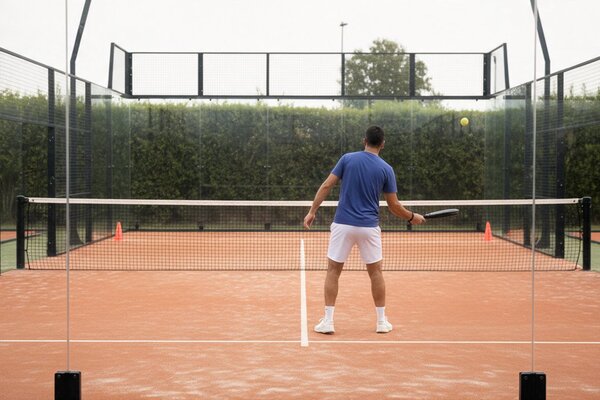
Padel rewards accuracy more than almost any other racket sport. A ball placed deep in the corner at a moderate pace is far more effective than a hard-hit ball that gives your opponent an easy rebound off the glass. That's why ball control drills pay off so quickly: they turn a shot that goes roughly where you intended into one that goes exactly where you intended. This guide gives you a set of padel ball control drills for better accuracy, organized by what you're trying to control (direction, depth, pace, and touch), plus a progression, a sample session, and a way to score your results.
What Ball Control Really Means
Control isn't a single skill. It's four dials you can turn: direction, which is where the ball goes across the court; depth, which is how far it travels; pace, which is how fast it moves; and height and touch, which is how soft or low you can play it. Accuracy means being able to set each dial on purpose. The drills below train each one separately before combining them, which is the fastest way to build reliable control.
Set Up Your Practice
- Mark your targets. Use cones, tape, or visual markers to define zones. Targets turn vague practice into measurable practice.
- Keep sessions short and focused. Blocks of 10 to 15 minutes keep your attention sharp and your quality high.
- Keep a success log. Write down how many shots hit the target in each drill. A number shows progress better than a feeling.
- Use good balls. Worn or flat balls make control drills frustrating and distort your feel.
Note
Try the 70 percent rule in your control drills: hit at a controlled pace and focus on placement only. Accuracy at moderate pace is the foundation, and you can add speed later.

Direction Drills
Corridor Rally
With a partner, rally while keeping every ball inside a lane on the court, such as the left third or the middle third. If either of you hits outside the lane, restart the count. It trains the ability to control the angle of every shot.
Cross-Court Rally
Rally cross-court from the back of the court, aiming to keep the ball in play for at least twenty consecutive shots. The cross-court direction gives you the longest distance and the most room for error, so it's a good place to build rhythm.
Zone-Targeted Play
Mark zones with cones, say deep middle, deep corner, and a short zone, and call the target before each shot. Calling it forces you to decide before you swing, which makes your control deliberate.
Depth Drills
Deep Cross-Court to the Baseline
Hit cross-court shots aiming for the ball to bounce near the baseline, with a target area marked by cones or imaginary lines. Count how many land deep and keep the pace moderate.
Put it to the test with our free padel quiz — quick questions, instant results.
Back-of-the-Court Zones
Mark zones near the back of the court and work on sending the ball to those areas with a partner or a coach. As your accuracy improves, shrink the zones.
Pace Drills
Controlled Rally in the Service Boxes
Rally with a partner, keeping the ball inside a designated area such as the service boxes. Start slowly, then raise the pace gradually, and try to maintain accuracy as the rally speeds up.
Moderate-Speed Consistency Rally
Hit at a steady, moderate speed without trying to win the point. The aim is to prolong the rally while staying accurate and regular, so you learn that you can keep the ball under control at a pace you can sustain. Our consistency drills take this idea further.
Touch and Height Drills
Volley-to-Volley
With a partner, rally volleys continuously at the net, keeping the ball low and focusing on placement and reflexes rather than power.
Long and Short Alternation
In target practice, alternate long and short shots with both forehand and backhand. This trains touch and sensitivity, since you have to adjust your pace and swing for each distance.
Solo and Wall Drills
Wall Ball Exercise
If you have a practice wall, hit with varying depth and angle, using both forehand and backhand. It improves consistency and touch, and sharpens reaction time and ball control.
Serve and Smash Targets
Serve Accuracy Targets
Place cones in specific zones of the service box and aim your serves at them. Reduce the target size or add movement restrictions as you improve.
Smash to Target
Mark an area near the back glass and practice smashes aimed at that spot, so your power comes with a purpose.
Control Under Pressure
Lateral Movement With Hitting
Use cones or tape to mark zones and move while hitting, keeping your accuracy while you're in motion.
Point Simulation
Play full points focusing on accuracy with every shot, especially at decisive moments. It moves your control from drills into real matches.
Important
Don't shrink the targets too soon. If your hit rate drops below about half, go back to a bigger target. Build confidence first, then make the drill harder.

Drill Summary
| Drill | What It Controls | How to Score It |
|---|---|---|
| Corridor rally | Direction | Consecutive balls inside the lane |
| Cross-court rally | Direction and rhythm | Longest rally, aim for 20 shots |
| Deep cross-court to the baseline | Depth | Balls landing deep out of 10 |
| Controlled rally in service boxes | Pace | Balls kept in the area as pace rises |
| Volley-to-volley | Touch and height | Consecutive low volleys |
| Wall ball | Consistency and touch | Longest wall rally |
| Serve and smash targets | Placement | Targets hit out of 10 |
| Point simulation | Control under pressure | Accuracy at decisive points |
How to Progress
Beginners should start with broad targets and no pressure, then reduce the target size and increase the challenge as confidence builds. After that, add movement, such as hitting on the move, and finally repeat the drills under fatigue or in match situations. Aim for at least two specific control sessions a week, split into short blocks.
A Sample 45-Minute Session
Start with ten minutes of gentle rallies at moderate pace, to warm up and find your rhythm. Then spend twenty minutes on accuracy drills, such as the cross-court rally with a target and the deep zones, recording your hit rate. Finish with fifteen minutes of mini-matches where precision counts more than power, so you test your control in a more realistic setting.
Be Patient in Real Rallies
Control drills pay off in matches because the enclosed court produces long rallies, often ten to twenty shots. The temptation is to end the point early with a risky shot. Instead, keep the ball in play and move your opponents around the court. A ball placed deep in the corner at moderate pace will usually do more damage than a hard one that sits up off the glass.
Does Equipment Matter?
Equipment plays a supporting role. Control-oriented rackets offer a larger sweet spot and less ball exit, which suits accuracy work, and good balls improve your feel and depth control. Still, the biggest gains come from the drills themselves, so use what you have and focus on practice before you think about upgrading.
Common Mistakes
Hitting Too Hard
Power makes accuracy harder. Build control at a moderate pace first.
Practicing Without Targets
Without a target, you can't measure accuracy. Always mark the zone.
Making Targets Too Small Too Early
Missing constantly kills confidence. Start broad and shrink gradually.
Forgetting to Log Results
If you don't record your numbers, you won't see your progress. Write them down.
Advice
Pick one dial per week, for example depth, and focus on it in every drill. Turning one dial at a time builds control faster than trying to fix direction, depth, and pace all at once.

Padel ball control drills come down to clear targets, a moderate pace, and practice that isolates direction, depth, pace, and touch before combining them. Log your results, shrink the targets slowly, and test your control in short, precision-first mini-matches, and your shots will start landing where you mean them to.