The kick smash is one of the most talked-about shots in padel, and one of the most confusing for newcomers. You'll hear commentators mention it, you'll see better players use it on short lobs, and you may wonder whether you should be trying it too. This beginner guide explains the kick smash in plain language: what it is, whether you're ready for it, a simple recipe to try, and a safe way to practice without turning every overhead into a gamble. If you want more advanced detail, our guide to the topspin smash goes deeper.
What Is a Kick Smash?
A kick smash is an overhead hit with topspin. Instead of driving the ball flat, you brush up and over it, so after it bounces it jumps high and often comes off the glass at an awkward height for your opponents. The idea is to apply pressure and set up the next ball, not necessarily to end the point on the spot.
Note
Names for this shot vary. Many coaches use "kick smash" and "topspin smash" for the same idea. Some sources link it to the por tres, a smash designed to leave the court off the opponent's glass, which is a more ambitious version. This guide covers the basic kick smash.

Should Beginners Learn It?
Honestly, not first. The kick smash is a nice tool to add, but the basics come first: a reliable bandeja, a solid lob, and a controlled flat smash. For beginners, the bandeja is one of the most important overheads to master, and the more aggressive shots are best practiced thoroughly before you use them in a match. Think of the kick smash as a bonus for once the basics feel comfortable.
Are You Ready? A Quick Checklist
- You can turn sideways and move back with crossover steps without losing balance.
- You hit a flat smash or bandeja with contact in front of your body most of the time.
- You can recover to the net after an overhead.
If you can tick all three, you're ready to experiment.
A Simple Recipe
1. Choose the Right Ball
Put it to the test with our free padel quiz — quick questions, instant results.
Try it only on an easy, high lob that gives you time to get underneath the ball. If the lob pushes you backward and your contact point drops, play a lob or a bandeja instead.
2. Set Up Like a Second Serve
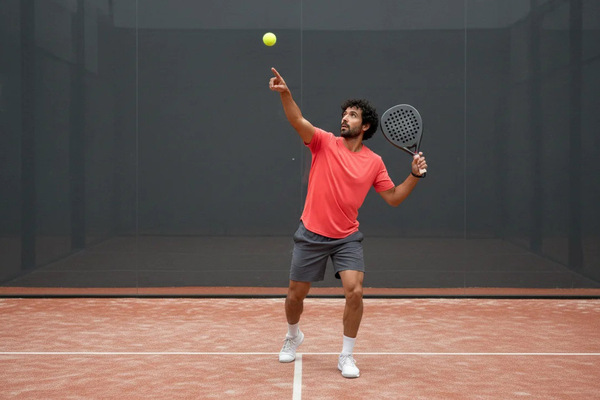
Turn sideways, raise the racket high, and point at the ball with your free hand. Many coaches compare the motion to an exaggerated tennis second serve: you throw the racket up and across the ball instead of through it.
3. Make Contact in Front
Meet the ball in front of your body with your arm extended. The key difference from a flat smash is what the racket face does: it closes through the hit, brushing over the top of the ball to add spin.
4. Keep It Controlled
The kick smash is about spin and margin, not raw power. Hit at a comfortable pace so the ball clears the net and lands inside the court, rather than swinging as hard as you can.
5. Recover Straight Away
After the shot, get back to a balanced position near the net. The ball may come back, so don't stand and watch.
Important
Don't smash while you're still moving backward, and only go for a kick smash when you know you can regain your net position afterward. If in doubt, play a bandeja.

Where to Aim as a Beginner
Keep your targets simple. Aim to land the ball in the court, ideally in the middle or toward the back, so it bounces high and comes off the glass. Resist the urge to try and hit it out of the court straight away. That's a more advanced idea, and it adds a lot of risk for very little reward while you're still learning.
A Seven-Step Practice Ladder
| Step | What to Do |
|---|---|
| 1 | Shadow swings: practice the turn, the high racket, and the brushing motion without a ball |
| 2 | Hand-fed balls from close to the net, brushing the ball gently over the top |
| 3 | Flat smashes from fed lobs to warm up your timing and contact point |
| 4 | Kick smashes from fed lobs, focusing on the brush and a controlled pace |
| 5 | Add a target in the middle of the opponent's court |
| 6 | Add movement: start further back and move into position as the lob is fed |
| 7 | Use it in games, but only on easy, high balls, and count how many work |
A useful session structure is to hit a set of eight to ten flat smashes, then eight to ten kick smashes, so you can feel the difference between hitting through the ball and brushing over it.
How to Know It's Working
Check three things. First, does the ball land inside the court? Second, does it jump high after the bounce rather than sitting up? Third, are you back in position and balanced before the next ball? If all three are happening, the shot is doing its job, even if it doesn't look spectacular.
Kick Smash, Flat Smash, or Bandeja?
As a beginner, the choice usually comes down to how much time you have and how comfortable you feel under the ball.
| Situation | Beginner Choice |
|---|---|
| Easy, high lob and you're balanced | Kick smash is an option, or a flat smash |
| Lob pushes you back or the contact point drops | Bandeja or a lob |
| You want to hold the net safely | Bandeja |
| You want a flatter, lower ball that stays in play | Flat smash |
Prepare Your Body for Overheads
Overheads ask a lot of your shoulders, legs, and core, so warm up before you practice them. A few minutes of arm circles, light shadow swings, and easy movement make your first smashes feel smoother. If you feel pain in your shoulder or elbow, stop and speak to a coach or a qualified professional before continuing, rather than pushing through.
Common Beginner Mistakes
Free tournament generator — Americano, Mexicano and more. Set it up in minutes.
Hitting It Flat and Calling It Spin
If the racket goes straight through the ball, there's no topspin. Think about brushing over the top.
Swinging Too Hard
Hitting too hard is one of the most common beginner mistakes. Against experienced opponents, a ball hit with too much pace can simply come off the glass and come back at you.
Using Mostly Your Arm
Power comes from the legs and body as well. A stiff, arm-only swing is harder to control.
Going for It From a Bad Position
If you're off balance or low on the ball, choose another shot. A safe bandeja beats a failed kick smash.
Forgetting to Recover
The shot isn't over when you've hit the ball. Get back to the net with your partner.
Advice
Have a coach or a friend watch your contact point and recovery on video. Those two details are hard to see yourself, and fixing them improves every overhead you hit.

A Simple Weekly Plan
Spend ten minutes at the end of two practice sessions a week on overheads. Start with shadow swings, hit your flat smashes and bandejas, and add a few kick smashes at the end. After a few weeks, try it in a friendly game on easy balls and see how it feels, without worrying about winning the point.
The kick smash is a great shot to have, but it's a bonus, not a starting point. Build your overhead basics, learn to brush over the ball with a relaxed, controlled swing, use it only when you have time and can recover, and it becomes a useful way to put pressure on your opponents.