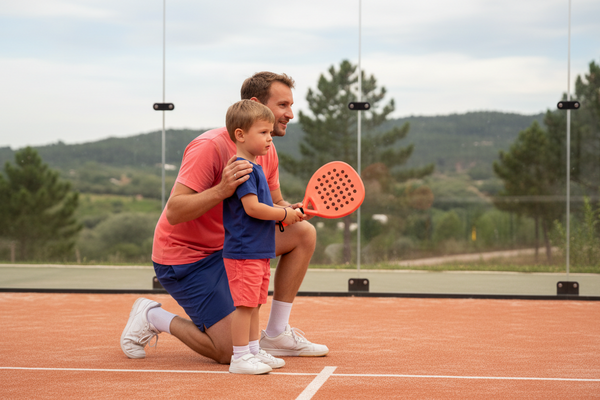
Walk into a padel club on a weekend and you'll often see something you rarely find in other racket sports: children and adults on the same court. Kids discover padel through parents, friends, school clubs, and junior clinics, and many of them fall in love with it for the same reasons grown-ups do: the walls keep the ball in play, rallies start quickly, and the doubles format makes it social from the first game. This guide looks at the culture around junior padel: how kids come to the sport, what a good junior session looks like, how to choose equipment and coaching, and how families can support young players without taking the fun out of it.
Why Kids Take to Padel
Padel is forgiving for beginners of any age. The court is small, the walls give a second chance on many balls, and a child can enjoy a rally within minutes. Faster early success keeps kids coming back, which is the most important thing at the start. Because the game is played in doubles, it's also naturally social, with a partner to talk to, laugh with, and learn from.
Note
Padel is often described as a sport the whole family can play together. That shared court time, across ages and abilities, is a big part of why junior padel culture feels so welcoming.

How Kids Discover the Sport
Most children arrive in padel through someone they know. A parent invites them to hit a few balls on a family session, a friend brings them to a club, or a school or club clinic offers a taster. Some come from other racket sports and find padel an easy transition, while others have never held a racket. Whichever route they take, the first impressions matter. A relaxed, playful first experience does more to build a lasting interest than any amount of technique.
What Age Is Right?
There's no single answer, and sources differ. Some equipment makers say children can try their first strokes from around the age of three, as soon as they're strong enough to hold the racket, and that readiness depends on their strength and ability. Other guides point to roughly ages nine to twelve as the sweet spot for starting properly with structured coaching, which is when many junior clinics target. A sensible approach is to let the child lead: play-based sessions for younger children, and more structured coaching as they grow in strength and attention span.
Free tournament generator — Americano, Mexicano and more. Set it up in minutes.
What a Good Junior Session Looks Like
The best junior sessions keep children moving and hitting. One of the biggest mistakes in junior racket sport coaching is the line drill, where children stand in a queue waiting for a turn. Fun isn't the soft part of junior coaching, it's the engine, and games, challenges, and short rallies tend to hold attention far better than repetitive drills. Age-appropriate rules and expectations matter too, and programs often work best when they start with just two age groupings rather than too many.
Choosing the Right Equipment
A standard adult padel racket is too heavy for most children under twelve. Junior rackets are lighter and have shorter handles for smaller hands, and manufacturers typically offer separate ranges for younger children and for older juniors, with many players moving to an adult racket around twelve or thirteen. Age is only a guide, since a child's strength, height, and ability all matter, so ask a coach to help choose. Adults shouldn't play with junior rackets, which are built for children's needs.
| Stage | What to Focus On |
|---|---|
| First steps | Play and fun, light racket, short rallies, no pressure |
| Early juniors | Small-group sessions, games and challenges, basic rules |
| Older juniors | Structured coaching, social doubles, first matches |
| Competitive pathway | Junior brackets and tournaments, if the child wants them |
Choosing a Club or Program
When you tour a club, ask about the coaches' qualifications, the coach-to-player ratio, and whether children are grouped by age or by skill. Junior programs carry real safeguarding and liability responsibilities, so check that the club takes them seriously. A good program can start small, even with just three or four children, as long as the coaching philosophy is built around fun and movement.
The Role of Parents and Family
Families shape junior padel culture more than anyone. The most supportive thing a parent can do is encourage, show interest, and avoid pressure. Playing together on a family session, where children, parents, and sometimes grandparents share a court, is one of the best ways to build a lifelong habit. Let the child set the pace, celebrate effort rather than results, and remember that for most kids the goal is to have fun with friends, not to become a champion.
Important
Avoid pushing too hard too early. Children who feel pressured tend to lose interest. Keep sessions short and playful, and let them enjoy the sport on their own terms.

Learning Sportsmanship and Etiquette
Padel's social side makes it a good place to learn sportsmanship. Simple habits like shaking hands and tapping rackets at the net, thanking your partner and opponents, calling the score honestly, and encouraging teammates set the tone. Because points are played in pairs, children also learn to communicate and support a partner, skills that carry over well beyond the court.
From Fun to Competition
Some children will want to compete, and many federations and clubs run junior brackets, leagues, and national programs for them. The pathways vary by country, so ask your local club or national federation what's available. For most players, a gentle introduction to match play, with friendly games against peers, is a better first step than a tournament, and the choice should always come from the child.
A Simple Plan for Families Starting Out
In the first month, book a short taster session and focus on fun, using a junior racket and easy rallies. In the following months, join a small-group clinic and play social doubles with a friend or parent. Once they're enjoying it, add a regular weekly slot and, if they're interested, try a friendly junior event. Keep checking in with your child about what they enjoy, and adjust the plan accordingly.
Common Mistakes
Using an Adult Racket Too Early
A racket that's too heavy makes it hard to learn good technique and can discourage kids. Choose a junior racket.
Over-Coaching
Too much correction takes the fun out of it. Let kids play and add technique gradually.
Making It About Results
Focusing on winning too early puts pressure on children. Celebrate effort and improvement.
Ignoring Safeguarding
Choose clubs and coaches who take child safety seriously and are open about their policies.
Advice
Let your child pick a friend to bring to their first session. Kids who start with someone they know tend to feel more relaxed, and the social side of padel does the rest.

Junior padel culture is built on fun, friendship, and family. Give children a light racket, a playful first session, a supportive club, and the freedom to enjoy the game at their own pace, and many of them will do the rest themselves, discovering a sport that can stay with them for life.