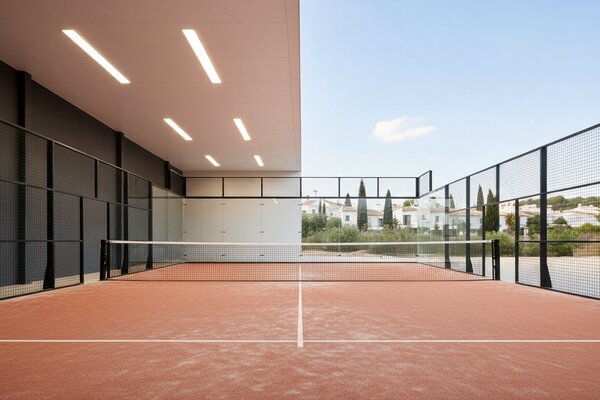
Padel courts look almost identical indoors and outdoors, but the experience of belonging to an indoor club and an outdoor club can feel very different. The weather decides when you play, the lighting changes how the ball looks, and the surroundings shape the whole atmosphere: whether you're sitting under a ceiling after a match or watching the sky turn orange from a terrace. This guide compares indoor and outdoor padel clubs from a player's and a lifestyle point of view, covering weather, playing conditions, comfort, social life, and how to choose between them, or enjoy both.
The Basic Difference
Indoor padel is played on covered courts, protected from the weather, while outdoor padel is played in the open air and exposed to wind, sun, rain, and temperature changes. Both follow the same rules and court dimensions, so the game itself doesn't change. What changes is everything around it.
Weather: The Biggest Lifestyle Factor
Wind is the single biggest variable separating the two. Outdoors, wind can alter the ball's trajectory and force you to adjust constantly, while indoors the conditions are stable all year. Rain shuts down outdoor play, since wet artificial turf becomes slippery and the ball's bounce becomes unpredictable. Heat and humidity matter too: outdoor summer sessions can be tiring, while indoor clubs with climate control stay comfortable all year.
Note
Climate decides a lot. In places with frequent rain or harsh winters, indoor courts keep you playing all year. In mild, sunny regions, outdoor courts are a natural fit.

How the Ball Behaves
Indoor courts generally deliver a more consistent bounce. Outdoors, the surface can play faster or slower depending on the conditions: humidity can make the ball heavier and bounce less, while extreme heat can speed the game up, and temperature affects ball pressure, so the same ball bounces higher on a hot day than a cold one. Outdoor courts can also be dustier or more slippery, while indoor courts offer more consistent traction.
Lighting and Visibility
Indoor courts rely entirely on artificial lighting, which, when designed well, gives uniform brightness without glare or shadows. Outdoor courts use natural daylight, plus floodlights for evening play. That means outdoor players may deal with sun glare and shifting shadows, particularly in the afternoon or at sunset, while indoor players enjoy steady visibility at any hour.
Free tournament generator — Americano, Mexicano and more. Set it up in minutes.
Atmosphere and Social Life
Outdoor courts offer fresh air, a view of the sky, and a sense of openness that many players love. Indoor courts trade that openness for comfort, with controlled temperature, no external distractions, and more of a sports-hall or clubhouse feel. Indoor clubs suit friend groups, team outings, and longer tournaments, since they can run events in any weather, and waiting for your turn is more comfortable too.
| Factor | Indoor Clubs | Outdoor Clubs |
|---|---|---|
| Weather | Unaffected by rain, wind, or heat | Rain stops play, wind and heat affect the game |
| Ball bounce | Consistent, predictable | Varies with temperature, humidity, and wind |
| Lighting | Uniform, no glare | Natural light plus floodlights, glare possible |
| Atmosphere | Comfortable, controlled | Open air, sky, fresh air |
| Season | All year, extended hours | Best in mild, dry months |
| Skills challenged | Precision and technique | Adaptation, spin, tactical awareness |
How Each Environment Shapes Your Game
Indoor padel rewards precision and technique, because external factors don't interfere. It's a good setting for beginners to focus on footwork, wall play, and basic strategy without wind or sun adding complexity. Outdoor padel demands constant adaptation. Wind and sun call for stronger mastery of spin and sharper tactical anticipation, and playing with and against the wind teaches you to adjust power and direction. If you like constant challenges, outdoor is a great teacher.
Comfort, Clothing, and Health
Outdoor play means thinking about sun protection, hydration, and the weather. Wear clothing suited to the temperature, and consider caps, wristbands, and sunglasses for outdoor sessions. Wet surfaces increase the risk of slips and falls outdoors, and long exposure to sun can lead to dehydration and fatigue. Indoors, the main considerations are staying hydrated and warming up properly, since the controlled environment can make it easy to forget how hard you're working.
Equipment Choices
The environment can influence your equipment. In indoor courts, where humidity is lower and the temperature is more controlled, higher-pressure balls are often recommended to ensure proper bounce. Outdoors, humidity and dust can affect a ball's durability and behavior, so a more resistant ball can be a better choice. Check your shoe soles as well, since outdoor dust can reduce grip.
Cost, Booking, and Club Models
Outdoor courts typically cost less to build, which is why many clubs start outdoors and expand, and some later cover their existing courts. Indoor clubs can operate in the evening, in winter, and on rainy days, which makes it easier to run classes and leagues all year. Pricing and booking systems vary between clubs, so check how each one handles peak hours, memberships, and pay-per-play options before committing.
Covered and Hybrid Courts
Not every court is strictly indoor or outdoor. Many clubs have covered or partly covered courts, or a mix of both on the same site, which gives you some shelter from rain and sun while keeping an open-air feel. If you live somewhere with unpredictable weather, a club with both options gives you the best of each.
Important
Don't judge a club only by whether it's indoor or outdoor. Court quality, lighting, maintenance, and the community around it matter just as much to how much you enjoy playing there.

Which One Suits You?
Choose indoor if you want year-round, predictable conditions, evening play in any weather, comfortable team events, or a calm environment to work on technique. Choose outdoor if you love fresh air and an open atmosphere, enjoy adapting to conditions, and live somewhere with mild, dry weather. If you can, play both: outdoor sessions in good weather and indoor sessions when the weather turns, which also makes you a more adaptable player.
Tips for Moving Between Indoor and Outdoor
If you usually play in one environment and try the other, give yourself a few minutes to adjust. Outdoors, watch the wind direction during the warm-up and adjust your lobs and smashes. Indoors, expect a more predictable bounce and use the consistency to refine your timing. Be prepared for a different pace and feel, and don't judge your game on the first session.
Common Mistakes
Ignoring Sun and Hydration Outdoors
Heat reduces endurance and increases fatigue. Protect yourself and drink regularly.
Playing in the Rain
Wet turf is slippery and risky. It's better to wait or move indoors.
Expecting the Same Bounce Everywhere
Conditions change the ball's behavior, so adapt your timing and spacing.
Choosing Only by Court Type
Community, maintenance, and booking convenience matter as much as the roof.
Advice
Try a trial session at both types of club before deciding. A single game in each will tell you more about which suits your lifestyle than any list of pros and cons.

Indoor and outdoor padel clubs offer different lifestyles on the same sport: one gives you consistency and year-round reliability, the other gives you fresh air and a bigger test of adaptability. Think about your climate, your schedule, and the kind of atmosphere you enjoy, and you'll find the club, or the mix of clubs, that keeps you playing.