When players talk about fast feet in padel, they usually don't mean top running speed. A padel court is small, so what matters is the first step, how quickly you change direction, and how fast you recover. These are trainable skills, and a few focused sessions a week can make a visible difference. This guide explains what fast feet really means on a padel court, then gives you a simple program of drills, a sample weekly plan, and tips to avoid the common mistakes that slow you down or put your joints at risk.
Note
This article gives general training information, not medical advice. If you have an injury, pain, or a health condition, check with a doctor or physiotherapist before starting a new exercise routine, and adjust the drills to your fitness level.

What "Fast Feet" Means in Padel
Padel involves short, explosive movements, quick changes of direction, and constant reaction to the ball. That makes foot agility important at every level, from beginner to professional. In practice, fast feet means three things: a quick reaction and first step, efficient changes of direction, and the ability to recover to a balanced position after each shot. Training all three is more useful than simply running faster in a straight line.
Principles for Training Fast Feet
Keep your feet around shoulder-width apart with your knees slightly bent, which keeps you balanced and ready for sudden movements. Work on lateral movement using side steps and crossovers, and stay low during sideways movement to improve stability. Move with good technique first and add speed gradually, since sloppy fast repetitions build bad habits. Combine footwork drills with padel-specific movement, so what you train carries over to the court.
The Drills
Agility Ladder
Place a ladder on the floor and work through step sequences: side steps, in-and-outs, double steps, and crossover patterns. The ladder develops coordination, foot speed, and reaction. A typical dose is three to four sets of about thirty seconds.
Cone Shuffles and Lateral Jumps
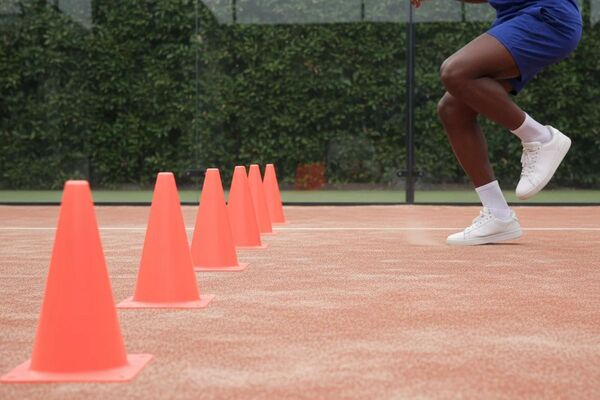
Set up a row of cones and shuffle quickly from one to the next, or jump from side to side landing with both feet, keeping your eyes forward. These drills train lateral speed and the ability to stop and change direction.
Zigzag Runs
Mark a zigzag path with cones and run it at speed, simulating real match movement. Focus on sharp, controlled direction changes rather than raw speed, and keep your center of gravity low as you turn.
Put it to the test with our free padel quiz — quick questions, instant results.
Short Sprints
Sprints of five to ten meters from a standing start build the initial acceleration you need to reach fast balls. Rest fully between repeats so each one is explosive.
Plyometric Jumps
Exercises like squat jumps, box jumps, and high knees build the leg power behind quick starts. Begin with low volume and land softly, since these exercises place more demand on the joints.
Shadow Movement
Practice moving to imaginary shots without a ball, with sudden changes of direction, simulating forward, backward, and lateral movement and recovering to your base each time.
Reaction Drills
Have a partner throw balls at different speeds and directions, or give a visual or verbal signal, and react as quickly as you can. Ten reps per round is a reasonable starting point. These drills train the connection between seeing and moving.
Important
Padel is hard on the ankles and knees, especially if you move inefficiently. Warm up first, build volume gradually, and stop if you feel pain. Quality of movement matters more than the number of repetitions.

A Sample Weekly Plan
A realistic target is at least two short sessions a week, alternating agility, speed, and movement work with real game situations. Here's one way to structure it.
| Session | Drills |
|---|---|
| Session A (agility) | Warm-up, ladder (3-4 x 30 seconds), cone shuffles, zigzag runs |
| Session B (speed and reaction) | Warm-up, short sprints, reaction drills (about 10 reps), shadow movement |
| Playing session | Apply the movements in games or short sets |
A Four-Week Progression
In week one, focus on technique and slow, accurate repetitions. In week two, increase speed while keeping the movements clean. In week three, add plyometrics and reaction work. In week four, combine drills into a circuit that mixes jumps, lateral movement, and changes of pace, and then test yourself with a simple measure like a timed cone shuffle.
Warm Up Before Speed Work
Fast movements demand prepared muscles and joints. Spend five to ten minutes on a general warm-up, such as light jogging and skipping, followed by dynamic mobility for the ankles, knees, and hips, before any sprint or jump. Start the first drill at half speed and build up, so your body has time to adapt before the explosive efforts.
Build the Strength Behind the Speed
Quick feet rely on strong legs. Simple exercises like squats, lunges, and calf raises, plus core work, give you the power to accelerate and the stability to stop and turn. You don't need a heavy program, a couple of short strength sessions a week alongside your agility work is usually enough to support faster, safer movement.
Recover Between Sessions
Speed work is demanding on the nervous system and the legs, so don't schedule hard agility sessions on consecutive days. Leave at least a day between them, sleep well, and keep your easy days genuinely easy. If your legs feel heavy or sore in a way that doesn't ease with a warm-up, take an extra rest day rather than pushing through.
Adapting the Drills to Your Level
Beginners should start with the ladder and cone shuffles at a comfortable pace, and skip plyometrics until their movement is controlled. Intermediate players can add short sprints and reaction drills, and experienced players can combine everything into circuits with changes of pace. Whatever your level, adjust the exercises to your own physical condition and listen to your body.
Footwear and Surface
Fast footwork depends on traction. Shoes designed for padel provide the support and grip you need for sudden direction changes, and a quick check of your soles before training tells you whether the grip is still good. Train on a stable, non-slippery surface and avoid overly slippery floors for fast direction changes.
Measure Your Progress
Pick one or two simple measures and test them every few weeks, such as the time to complete a cone shuffle, the number of ladder sequences completed cleanly in thirty seconds, or how often you reach a ball comfortably in a practice rally. A steady improvement over a month is a clear sign your feet are getting quicker.
Common Mistakes
Crossing Your Feet
Crossing your feet during lateral movement makes you unstable. Practice side movements without crossing.
Standing Tall
An upright stance slows every direction change. Keep a low, flexible position.
Rushing Quality for Speed
Sloppy repetitions build bad habits. Get the movement right first.
Skipping Rest
Sprints and jumps need recovery between sets. Tired repetitions are slower and riskier.
Advice
Finish each drill session with a few minutes of padel-specific movement, such as shadow shots with a recovery step. It helps the gym-style speed transfer to the court.

Training faster feet for padel comes down to short, explosive, well-controlled movements: a quick first step, sharp direction changes, and fast recovery. Combine agility ladder work, cone drills, short sprints, and reaction drills with a sensible progression and padel-specific practice, and you'll reach more balls with less effort.