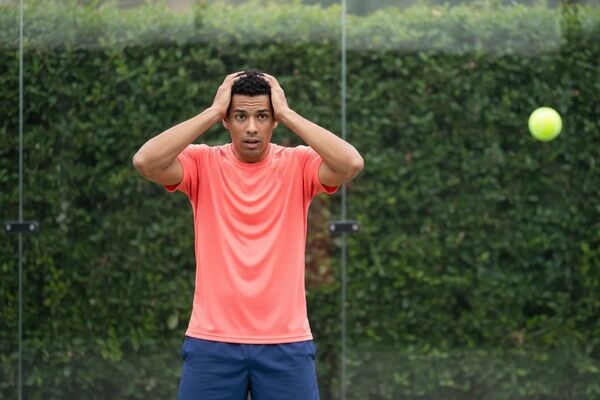
Every padel player has lost a point they should have won: the simple ball into the net, the easy return that sailed out, the volley that floated into the middle of the court. These are unforced errors, and they decide far more matches than spectacular winners do. The good news is that easy mistakes are rarely random. They come from a small number of root causes, and once you know which one is yours, they become much easier to fix. This guide helps you diagnose where your easy mistakes come from and gives you habits and drills to reduce them. For mistakes tied to a specific shot, see our guides to common mistakes on individual strokes.
What Counts as an Easy Mistake?
An unforced error is a mistake caused by poor execution or a poor decision rather than by pressure from your opponent, typically when a ball was easy enough to play. In padel, games are often won by the pair that makes the fewest of them, which is why reducing easy errors is one of the fastest ways to win more points without learning any new shots.
Note
Some errors are simply the result of good play by your opponents, and that's fine. The goal isn't to eliminate every mistake, only the ones you gave away.

The Four Root Causes
1. Poor Shot Selection
Many easy errors start with choosing the wrong shot: trying a winner from a difficult position, smashing every high ball, or going for the lines when the middle was safe. Choosing the right shot for the situation, instead of always looking for the winner, reduces errors immediately.
2. Rushing
Padel rewards patience, and rushing to end rallies early is one of the most common causes of giveaways. Players who rush hit the ball before they're set, before it has finished its rebound, or before their partner is in position.
3. Poor Preparation and Technique
Late racket preparation, a poor grip, or failing to bend the knees on low balls all produce errors on simple shots. Keeping the racket up and the body sideways as you anticipate the shot is a small change that improves consistency quickly.
4. Focus and Pressure
Distraction, overconfidence, and pressure all lead to simple mistakes. Staying engaged for every point, including when the ball isn't coming to you, helps you read the game and make clearer decisions. Urgency under pressure tends to push players toward worse decisions, not better ones.
Put it to the test with our free padel quiz — quick questions, instant results.
A Self-Diagnosis Table
| What You Notice | Likely Cause | Fix |
|---|---|---|
| Ball goes into the net on low balls | Not bending the knees, low net clearance | Get lower with your legs, aim higher over the net |
| Ball goes long or out under pressure | Trying to do too much | Simplify: deep and through the middle |
| Errors after long rallies | Rushing to finish the point | Be patient, keep the ball in play |
| Errors on easy balls | Lost concentration | Stay engaged, reset between points |
| Frozen by rebounds | Unsure how to use the walls | Let the ball come off the glass, then step in |
Build a Safe Default Shot
One of the most useful habits is choosing a reliable default when you're unsure. A deep, controlled ball through the middle of the court gives you the largest margin for error, reduces the angles available to your opponents, and keeps the point alive. Practicing a central reset drill, where you rally using only deep, central balls, trains that safer default until it becomes automatic.
Shrink the Target to Gain Margin
One drill coaches use to cut errors is to make the target area smaller than the whole court, which leaves a built-in margin for error. For example, aim for the middle third of the court instead of the lines. When you aim for a smaller central target, a slightly off shot still lands in, whereas aiming at the edge turns the same miss into an error.
Important
Safe doesn't mean passive. A deep ball through the middle often creates pressure, since your opponents have to hit upward and have fewer angles to attack.

Stay Positioned and Talk
Easy mistakes often come from poor positioning rather than poor technique. Beginners frequently drift too far back, get stuck between defense and attack, or play as if they were alone on court, leaving big gaps. Calling "mine" and "yours" and staying level with your partner removes a surprising number of simple errors, because each ball is clearly someone's responsibility.
Prepare Every Shot
Small preparation changes pay off immediately. Keep your racket high and your body sideways as you anticipate the next ball, and bend your knees for low shots. Check that your equipment isn't working against you: worn balls can produce unexpected bounces, and a racket that doesn't suit you can reduce control.
Use the Lob and Reset
Many beginners forget the lob, one of the smartest shots in padel. When you're under pressure or both opponents are close to the net, a lob buys time and takes pressure away. Using it as a reset, rather than forcing a risky shot, is often the difference between losing a point and surviving it.
A Simple Routine Between Points
Build a short routine to reset your focus after each point: a breath, a quick check of your position, and a clear intention for the next shot. Don't dwell on the last error, since carrying frustration into the next point is a reliable way to make another. Treat each mistake as information, ask what caused it, and move on.
Count Your Errors
What gets measured improves. In a practice match, count your unforced errors and note the cause each time, such as net, long, rushed, or lost focus. After a few sessions, the pattern will point to your single biggest source of giveaways, and that's the one to work on first.
Check Your Equipment and Conditions
Sometimes the cause is hiding in your bag. A racket that doesn't suit your game can reduce control and invite errors, and balls that have gone flat or worn can produce unexpected bounces. A quick check before you play, new or good balls, a racket that feels comfortable, and a fresh overgrip, removes a few avoidable variables so you can focus on decisions and technique.
Learn From Each Error
Errors are part of learning, but only if you look at them. When you make a mistake, ask one short question: was it the shot I chose, the way I prepared, my position, or my focus? Answering honestly, even in a few seconds, builds the awareness that gradually turns repeated errors into one-off slips.
Common Mistakes When Trying to Fix Mistakes
Trying to Fix Everything at Once
Pick one root cause and work on it for a few sessions.
Playing Safe Only When Behind
A safe default should be your habit from the first point, not an emergency option.
Ignoring Equipment
Worn balls or the wrong racket can cause errors you blame on yourself.
Being Hard on Yourself
Frustration costs more points than the mistake itself. Reset and play the next ball.
Advice
Play one set where your only goal is to make the fewest unforced errors, ignoring the score. It's a surprisingly effective way to discover how many points you were giving away.

Stopping easy mistakes in padel comes down to finding your root cause, choosing a safe default, preparing every shot, staying positioned with your partner, and resetting after each point. Do that, and you'll hand over far fewer free points and win far more of the ones that matter.