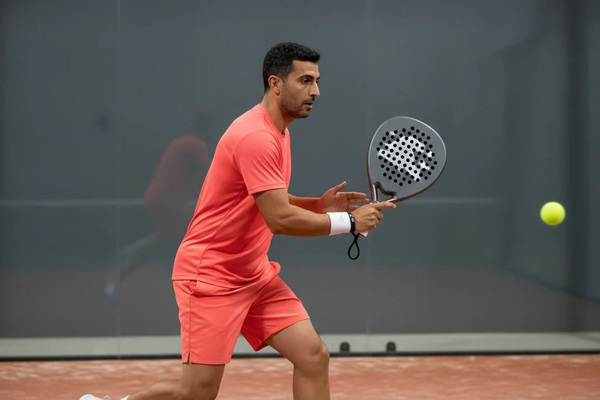
Most players think a shot ends when the ball leaves the racket. In padel, a shot really ends when you're back in a balanced, ready position with your partner. Because the walls keep the ball in play, rallies are long and the next ball often arrives before you've finished admiring your last one. Recovery is what makes the difference between being comfortable and being constantly rushed. This guide breaks recovery into simple parts, shows where to recover after each type of shot, and gives you drills to make it automatic.
Why Recovery Is Half of Every Shot
Good positioning does more for your game than extra power. A player who recovers well reaches the ball with time to spare, chooses better shots, and leaves fewer gaps for opponents to hit into. The opposite is just as true: a great shot followed by standing still often hands the next point to your opponents. Recovery is not a separate skill, it's part of the stroke.
The Three Parts of a Recovery
1. Get the Racket Ready
Right after contact, bring the racket back up in front of you rather than letting it hang low. A common mistake, even at advanced levels, is leaving the racket low or in the wrong position after the shot. A ready racket is the quickest part of recovery, and it often decides whether you can react to the next ball.
2. Move to a Balanced Base
Step toward a central, balanced position where you can move in any direction. Keep your weight on the balls of your feet and your eyes forward. This is the recovery step: a short, deliberate movement, not a sprint.
3. Line Up With Your Partner
Finally, check where your partner is and adjust so that you're level, in the same band of the court, covering the middle between you. Recovery is only complete when you and your partner are positioned as a pair.
Note
Experts often suggest aiming to be back in your base position with the racket ready within roughly half a second to a second, though the ideal window depends on pace, distance, and the shot you played.

Where to Recover After Each Shot
Put it to the test with our free padel quiz — quick questions, instant results.
After the Serve
The serve is a setup shot. After serving, both players should move forward together and stop in a balanced ready position, roughly two to three meters behind the net, ready for the return.
After the Return
Don't watch your return. Move immediately to the net, ideally together with your partner. A good return followed by standing still is a wasted return.
After a Volley
Step back to a balanced position level with your partner, with the racket up in front of you, ready to split step again as your opponent hits.
After a Bandeja or Smash
The recovery after a bandeja is almost as important as the shot itself. Use the momentum of the shot to push your body back toward the net, level with your partner, rather than staying where you hit. The aim is to keep your net position and be ready to attack the next ball.
After a Lob From the Back
If you've hit a lob to reset the point, use the time it buys to move forward with your partner, stopping balanced as your opponents prepare to play their overhead.
After a Back Wall Return
The back glass is a recovery area. After you've played your reply, return to a balanced position alongside your partner. If your partner is forced back by the play, read the situation and recover with them so there isn't a split formation.
| Shot | Recover To |
|---|---|
| Serve | Forward together, balanced ready position 2-3 m behind the net |
| Return | Straight to the net with your partner |
| Volley | Balanced position level with your partner, racket up |
| Bandeja / smash | Back toward the net using the shot's momentum |
| Reset lob | Advance together, stop balanced |
| Back wall return | Balanced position beside your partner |
Keep Your Racket Up
Recovery isn't only about feet. Make it a habit to keep the racket up in front of you after every shot, no higher than shoulder level and not hanging by your side. Efficient swings recover faster, so avoid a big follow-through that pulls you out of position, and finish your stroke in a way that lets the racket come back quickly.
Recover With Your Partner
Recovery works best when both players do it together. Stay in the same horizontal band, shift left or right as one, and communicate with short calls if one of you is pulled out of position. If your partner is forced back, read the play and recover with them rather than staying forward alone.
Important
Don't recover into a split formation. One player at the net while the other is at the back is the most common reason pairs lose control of a point.

Drills to Make Recovery Automatic
Random Reaction Drill
A coach or partner throws balls to different zones, and you react, play the shot, and recover to your base each time. The point is to train the return to position, not the shot.
Zigzag With Recovery
Move from side to side from the center to the corners, always keeping your eyes forward and your racket ready, returning to the center each time. It builds the muscle memory for recovery.
Return and Advance
A partner feeds a serve, you return, and you finish at the net before the next ball arrives. Repeat until the advance feels like part of the return.
Pressured Recovery Rally
Rally with a partner who feeds the next ball quickly after each shot, so you have to recover before the next ball arrives. Slow the pace if your technique starts to suffer.
Bandeja and Return to the Net
Hit a bandeja and immediately return to the net level with your partner before the next feed. This trains the most important recovery in the lob-and-net loop.
Common Mistakes
Watching Your Own Shot
Standing still to see where the ball goes delays your recovery. Move first, then look.
Leaving the Racket Low
A low racket makes every following shot a scramble. Bring it up straight after contact.
Recovering Alone
If your partner isn't moving with you, a gap opens. Recover as a pair.
Over-Swinging
A big follow-through takes you out of position. Use a compact finish.
Tracking Your Progress
Ask a partner or coach to watch for one thing, such as whether you recover to a balanced position after each shot, or film a few rallies and count how often you're set before the next ball. Rising numbers over a few weeks are a clear sign that recovery is becoming automatic.
Advice
Say "recover" to yourself as you finish every swing for one session. It sounds simple, but a verbal cue is one of the fastest ways to turn recovery into a habit.

Recovering after every shot comes down to three quick actions: get the racket ready, move to a balanced base, and line up with your partner. Do that consistently and padel stops feeling rushed, because you're simply already where the next ball needs you to be.