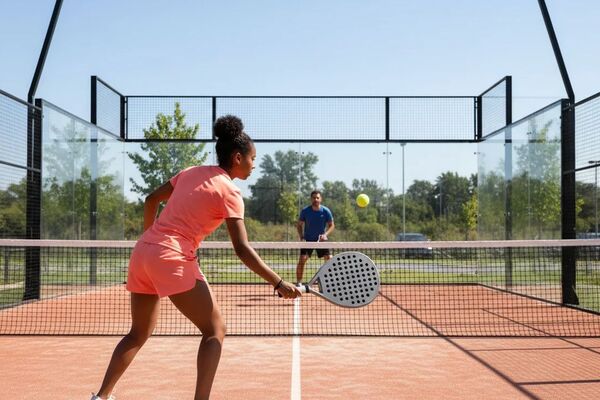
Your first padel match is much less intimidating than it sounds. The court is small, the serve is gentle, and the walls keep the ball in play, so most beginners are enjoying long rallies within minutes. What does help is knowing a handful of rules, a simple scoring system, and a realistic game plan before you step on court. This guide walks you through the day: what to bring, the rules that matter, how scoring works, what to do in the first few points, and how to enjoy the experience even when the ball does something unexpected.
Before You Arrive
Wear comfortable athletic clothing and court shoes with good grip, and bring water. Many clubs include a racket and balls for beginner sessions or rent them cheaply, so you rarely need to buy anything first. Arrive ten minutes early so you can meet your partner and opponents, get a feel for the court, and warm up with a few easy rallies. Tell the others it's your first match, since most players are happy to go easy and explain things as you go.
The Rules You Need on Day One
Padel is played in doubles, with two teams of two. The rules that matter most at first are the serve and the walls.
The Serve
To serve legally, stand behind the service line, bounce the ball once, hit it underhand at or below waist height, and aim diagonally into the opposite service box, keeping both feet behind the line until contact. You get two serves, and if the ball clips the net but still lands in the correct box, it's usually a let and you replay the serve. The serve is designed to start the rally, not to win the point outright.
The Return
You cannot volley a serve, so the receiver has to let it bounce before returning it. After that, the ball can be played in the air or after one bounce.
The Walls
After the ball has bounced on the ground, it may hit the glass and remain in play, and you can play it after it comes off the glass. A ball that hits the mesh directly without bouncing first is a fault, and the serve may touch the glass after its first bounce but never the mesh directly.
Put it to the test with our free padel quiz — quick questions, instant results.
Note
If you only memorize three things, make them these: the serve is underhand and below the waist, you can't volley a serve, and the ball can come off the glass after one bounce.

Scoring in Plain Language
Padel uses tennis-style scoring: 15, 30, 40, and game. Within each team, players choose who serves first and then keep that serving order through the set. Many friendly games use the golden point rule at deuce, meaning the next point wins the game, and the receiving team chooses which side the serve comes to. A set is usually the first to six games, and at 6-6 it's decided by a tie-break to seven points with a two-point margin.
| Term | What It Means |
|---|---|
| 15, 30, 40, game | Points within a game, as in tennis |
| Golden point | At deuce, the next point wins the game |
| Set | First to six games, with a tie-break at 6-6 |
| Let | A serve that clips the net and lands in, replayed |
| Fault | An illegal serve, replaced by a second serve, then a lost point |
What to Do in the First Few Points
Keep it simple. Focus on getting the ball back over the net and in play, rather than hitting winners. Let balls that bounce deep come off the back glass instead of rushing them, and play a controlled shot to the middle or cross-court. Call "mine" or "yours" early so you and your partner don't collide or leave a ball between you. Take your time between points, and don't worry about technique: consistency wins most beginner points.
A Simple Game Plan for Beginners
Beginners can do well with a straightforward plan. Rally patiently, aim for the middle of the court to reduce the angle for your opponents, and use a lob when you're in trouble to buy time. Try to advance to the net together with your partner when the opportunity arises, but don't force it. Avoid smashing every high ball, since controlled shots usually win more points than power at this level.
Important
Don't try to learn every shot in your first match. Choose one or two goals, such as keeping the ball in play and letting it bounce off the back wall, and let everything else develop over time.

Court Etiquette
Agree the format before you start, such as best of three sets, a single set, or playing until the booking ends, and decide whether you'll use golden point. Padel is largely self-officiated at recreational level, so be honest and generous with calls, and give the benefit of the doubt when you can't tell. Return stray balls from other courts politely, avoid disturbing neighboring games, and thank your partner and opponents at the end.
A Quick Pre-Match Checklist
Before the first point, check that you have your racket or have arranged to borrow one, court shoes, water, and a few balls if it's your responsibility. Confirm the format with the other players, ask who will serve first, and agree on any basic rules such as golden point. A minute spent on this removes most of the small uncertainties that can make a first match feel stressful, and leaves you free to concentrate on hitting the ball.
Handling Nerves and Mistakes
It's normal to feel nervous, to misjudge a rebound, or to be surprised by the glass. Treat early mistakes as part of learning the game, laugh at the odd bounce, and keep your focus on the next point. Many beginners find the first few games are the hardest, and then things settle as the walls start to feel familiar.
After the Match
Take a moment to chat with your partner and opponents, ask what felt good, and ask for one tip. If you enjoyed it, suggest playing again or ask about beginner sessions at the club. Stretch lightly, rehydrate, and be kind to your legs, since padel uses muscles that sometimes ache the next day, particularly if you're new to racket sports.
Free tournament generator — Americano, Mexicano and more. Set it up in minutes.
Common First-Match Mistakes
Volleying the Serve
The serve has to bounce before you return it. Wait for it.
Serving Above the Waist
This is the most common serving fault. Keep contact at or below waist height.
Rushing Balls Off the Back Wall
Let the ball come off the glass and give yourself time.
Trying to Hit Winners Every Time
Aim for consistency. Opponents will make mistakes if the ball keeps coming back.
Advice
Go in with a simple goal: have fun and play every point. Players who relax and focus on keeping the ball in play enjoy their first match far more than those chasing perfect shots.

Playing your first padel match comes down to a few practical things: arriving prepared, knowing the serve and scoring, keeping the ball in play, using your partner and the walls, and keeping the mood light. Do that, and the first match tends to become the first of many.