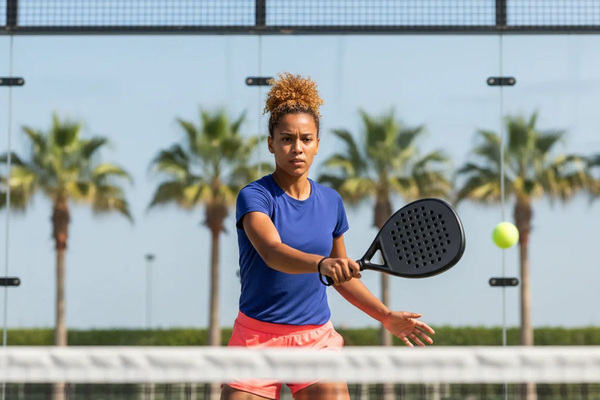
The team at the net wins more points in padel. Almost every good habit in the game comes back to getting to the net, staying there, or pushing opponents back so you can take it again. But being at the net isn't enough on its own. Plenty of players reach it and then lose the point with a rushed winner attempt, a ball at chest height, or a gap in the middle. This guide focuses on what to do once you're there: how to earn the net, how to hold it, where to aim, when to finish, and how to build points patiently so opponents make the mistakes.
Why Net Control Matters
The net gives you downward contact, sharper angles, and the first clean chance to force a weak ball. One analysis of professional matches found that winning players scored around a third more points at the net and made nearly half as many unforced errors there as the losing players. You don't need the exact numbers to see the message: good net play is a mix of winning the position and staying controlled.
Note
Even at the professional level, many points are won through opponents' mistakes rather than winners. At the net, your job is often to make the next ball difficult, not to end the point immediately.

Earn the Net, Don't Charge It
Many players coming from tennis tend to charge the net blind, closing in on a poor lob or an easy ball, which turns them into a sitting duck for the opposing volleyers. The better approach is to earn the net with a shot that gives you time: a good lob that pushes opponents back, or a soft chiquita at the feet of the net players. Move forward together with your partner and don't sprint into the tape without a plan.
Hold the Net: Position and Middle
Once you're at the net, stay solid. Keep level with your partner, shift together, and make sure the middle isn't left open, since a split pair gives opponents an easy target through the gap. Agree before each point who covers the middle on common patterns, and call the opponents' movement if your partner has their back to the net, using short calls like "both up," "tight," or "mid-court."
Three Targets for Your Volleys
Where you hit matters more than how hard. Three targets work consistently.
| Target | Why It Works |
|---|---|
| The opponent's feet | Forces them to hit upward, giving you a weak ball to attack or a lob you can read |
| The middle gap | Creates doubt about who takes the ball and reduces angles |
| An angle that makes the next ball float | Opens the court for a follow-up, but only once the position is right |
Put it to the test with our free padel quiz — quick questions, instant results.
When both opponents are at the net, hitting right down the middle is a simple and effective tactic. Deep through the middle is usually safer than a sharp angle, and a ball at chest height gives your opponents a comfortable volley, so aim low.
Build the Point With Patience
Once your team is at the net, build the point patiently with plenty of balls through the middle, covering the angles and letting the pressure grow. Aim at the feet or the middle to create doubt. Once a gap opens, a slow ball to the side can die low on the fence or the glass. Don't imagine you have to finish every point with a powerful volley winner, since it's the riskier shot and a controlled volley that forces another weak ball is often worth more.
Important
Consistency wins more points than flair. Playing one more well-placed ball, and letting your opponent make the mistake, is the foundation of good net play at every level.

When to Finish
There are moments to attack. When the ball arrives above the net and you're balanced, you can hit down with more pace or at an opponent's feet. A good rule of thumb is to kill the ball when the finish is there, and play the bandeja when position matters more than pace. Reduce pace and use a controlled downward angle rather than swinging for the lines, and if a floating chiquita or a short lob gives you a sitter, take it.
Read Your Opponents
Look for weaknesses and target them: a weaker volley, a nervous overhead, or a player who tires as the match goes on. Change where you hit the ball, including the placement of your serve, to keep opponents guessing. As the match continues, fatigue, physical and mental, tends to produce more errors from the other side of the net.
Work With Your Partner
Winning at the net is a team activity. Communicate clearly, take the balls you're best placed for, and agree who finishes and who sets up. A volley hit well from a poor position can still leave a gap, so combine good shots with good positioning and recover to a balanced position after every ball.
Handle the Lob Without Losing the Net
The lob is the main way opponents try to dislodge you, so your net game needs an answer. Read it early by watching how your opponent prepares, turn sideways, and take a few quick backward steps. Choose the shot by the depth of the lob: a central one suits a solid bandeja, a short one invites a more aggressive vibora or a smash, and a deep one is often best allowed to bounce and be played off the glass. Then recover to the net together so one lob doesn't cost you the position.
A Sample Net Point
A typical winning sequence looks simple. You earn the net with a lob or a chiquita, volley low at the feet to force a weak reply, play a controlled volley through the middle, and then finish the first ball that sits up. At no stage did you need a spectacular shot, only good positioning, a sensible target, and the patience to wait for the right ball.
Drills to Win More Points at the Net
Feet and Service Line Targets
On every volley in practice, aim for the feet of the player in front of you or for the opponent's service line. Track how many land in your target zone.
Middle Volley Rally
Two pairs rally with both pairs at the net, playing every ball through the middle. It trains control, communication, and the habit of choosing the safest target.
Build-the-Point Game
Play points where the net pair must hit at least three volleys before attempting a finish. It builds patience and teaches you to wait for the right ball.
Sitter Conversion
Have a feeder give you a mix of floating and low balls. Take the floaters with a controlled, downward volley and reset on the low ones, learning to tell the difference quickly.
Common Mistakes
Charging the Net Blind
Closing in without earning the net gets you passed. Move up behind a good shot.
Aiming at the Chest
A chest-high ball is comfortable for your opponents. Aim low.
Leaving the Middle Open
A split pair is easy to hit through. Cover the middle together.
Forcing Every Winner
Risky finishes give points away. Build patiently and finish only when the ball is there.
Tracking Your Net Play
In practice matches, count the points you win at the net and the unforced errors you make there. A rising win count and a falling error count over a few weeks is a clear sign your net game is improving, even if individual points still feel messy.
Advice
For a full session, set a simple rule: no volley winner attempts until you've hit at least three controlled balls in a point. It's an uncomfortable constraint that quickly shows how many points patience wins.

Winning more points at the net comes down to earning the position, holding it as a pair, aiming low and through the middle, and building patiently until the finishing ball arrives. Do that and the net becomes not just where you stand, but where you win.