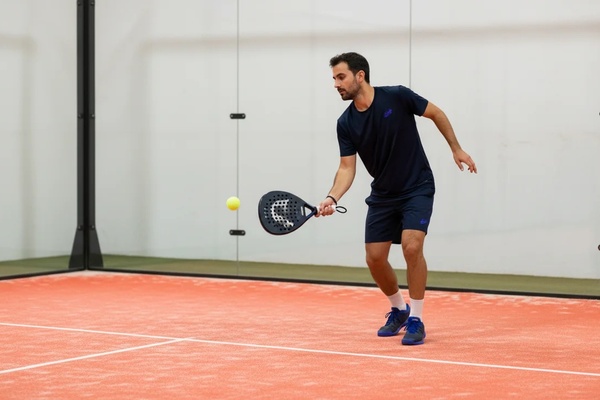
Wondering if hitting the glass after your serve is actually a fault?
Whether the ball can hit the glass after a serve in padel comes up constantly for new players, especially since glass panels make up such a large part of the court's structure. The rule works exactly the same way it does for the fence sections — it all comes down to timing, not which specific surface the ball happens to touch.
This guide covers exactly what's legal when it comes to the glass on a serve, why the rule is built around bounce order rather than the surface itself, and where players commonly get confused.

The Short Answer
No, the ball cannot hit the glass on the fly during a serve and remain legal — the serve must bounce once inside the correct service box before touching the glass, fence, or any other surface. If the glass is touched before that first bounce, the serve is a fault.
Why This Distinction Matters for New Players
Padel's glass panels are one of the sport's most recognizable features, and a huge amount of legal, exciting play happens off them during regular rallies. That constant, legal use of the glass mid-point is exactly why the serve exception can feel counterintuitive at first — it's the one specific moment in a point where wall contact isn't automatically fine, simply because the ball hasn't legally landed yet.
Glass and Fence Follow the Same Rule
Padel courts alternate between solid fence sections and glass panels, particularly around the back and corners of the court, but the serve rule doesn't distinguish between them at all. Whether the ball touches glass or fence, the deciding factor is always whether that contact happened before or after the required first bounce in the correct service box.

Testa dig själv med vårt gratis padelquiz — snabba frågor, direkt resultat.
Why Glass Specifically Causes Confusion
Glass panels are common at the back of the court and around the corners, which are exactly the areas a poorly placed serve is more likely to drift toward. Because the glass is transparent and can look like it's barely part of the court structure at a glance, some beginners don't immediately register it as a wall the same way they would an obviously solid fence panel — but the rule treats them identically.
| Situation | Legal? | Why |
|---|---|---|
| Serve bounces in the correct box, then hits the glass | Yes | The required bounce already happened before the glass contact |
| Serve hits the glass before bouncing in the box | No — fault | The ball touched a surface other than the ground first |
| Serve bounces outside the correct box, then hits the glass | No — fault | The bounce location itself was already illegal |
| Serve bounces in the box, receiver lets it hit the glass before returning | Yes | Normal, legal continuation of the point |
Where Glass Panels Are Typically Located
Most padel courts use glass along the back wall and the rear portions of the side walls, with mesh fencing typically making up the front sections near the net. A serve that goes long or wide is often more likely to reach a glass section simply because of where those panels are positioned on a standard court, which is part of why this specific question comes up so often.

What Happens After the Legal Bounce
Once the served ball has legally bounced inside the correct service box, it's completely fine for it to continue on and hit the glass before the receiver returns it. The receiver isn't required to return the ball on the first bounce — letting it play off the glass first, then returning it, is a completely normal and legal way to handle a serve.
Reading a Serve That's Heading Toward the Glass
Once you know the ball is legally in play, tracking a serve toward the glass is really just a smaller-scale version of reading any other wall shot in padel. Watch the bounce in the box first, then follow the ball's path to the glass, and give it a moment to complete the rebound before committing to your return swing — rushing the contact because the ball is heading toward a wall usually leads to a mishit.

Common Situations Beginners Get Wrong
Treating Glass Differently From Fence
Some players assume glass contact carries different rules than fence contact, perhaps because it looks and sounds different when the ball hits it. There's no distinction in the rules — both are simply surfaces the ball must not touch before the required first bounce.
Missing the Bounce Before It Happens
Because serves move quickly, it's easy to notice the glass contact and miss whether the ball actually bounced in the box first. Watching the full sequence, not just the end result, is what actually determines the call.
Gratis lottningsgenerator — Americano, Mexicano och mer. Klar på några minuter.
Confusing This With a Let
This rule is unrelated to the let, which applies specifically when a serve clips the net and still lands legally. Glass contact after a proper bounce isn't a let situation at all — it's simply a legal continuation of play.
Padel Serve Glass Rule Quick Checklist
- The serve must bounce once in the correct service box before touching anything else, including glass.
- Glass and fence follow the exact same rule — there's no difference between them.
- If the glass is touched before that first bounce, it's a fault.
- Once the ball has legally bounced in the box, glass contact afterward is completely fine.
- The receiver can let the ball play off the glass before returning it.
- This is separate from the let rule, which only applies to net contact on serve.
The glass isn't a special case — it follows the exact same logic as every other wall on the court when it comes to serves. Once the required bounce happens first, everything after that, glass included, is fair game.