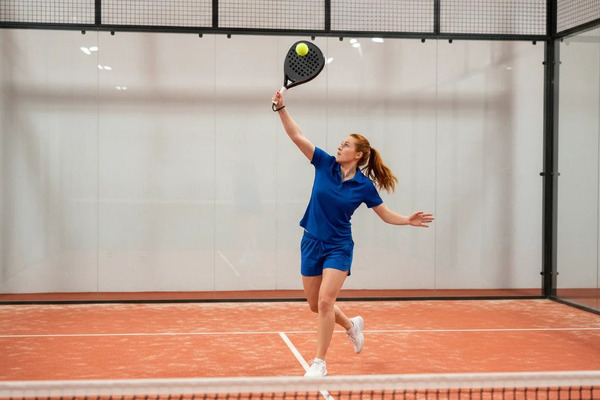
Freezing between a bandeja and a vibora when a lob comes your way?
Bandeja vs vibora confuses a lot of players who are just starting to build out their overhead game, since both shots are hit against a lob and both come from padel's signature toolkit of controlled, non-smash responses. They look similar in the moment, but the swing path, trajectory, and purpose are genuinely different, and mixing them up leads to mistimed shots and missed opportunities.
This guide breaks down what separates a bandeja from a vibora, how the technique differs, and when each one makes more sense during a point.

What the Two Shots Have in Common
Both the bandeja and the vibora are hit against a lob, both use a continental grip, and both prioritize control over the raw power of a full smash. Neither shot is meant to be a guaranteed winner the way a smash is — instead, they're designed to keep your team in an advantageous position at the net while still applying pressure.
Why Padel Developed Two Distinct Overhead Options
Padel's enclosed court and doubles format put a premium on holding the net, which pushed players to develop overhead responses that don't carry the same risk as a full smash. Over time, that need split into two distinct tools rather than one — the bandeja for reliable depth and consistency, and the vibora for a shot that's still controlled but adds a genuine tactical wrinkle through spin. Having both in your arsenal gives you more than one way to handle a lob depending on the situation.
What Is a Bandeja
The bandeja is a controlled overhead hit with a relatively flat, moderate trajectory, aimed at landing deep in your opponents' court. The swing is short and compact, and the goal is consistency — a bandeja that lands deep and keeps your team at the net has done its job, even if it doesn't end the point.
What Is a Vibora
Testa dig själv med vårt gratis padelquiz — snabba frågor, direkt resultat.
Vibora, Spanish for "viper," is a faster, more aggressive overhead hit with heavy sidespin, causing the ball to skid low and sideways after it bounces rather than continuing in a predictable, straight line. Where the bandeja prioritizes depth and consistency, the vibora prioritizes an unpredictable, awkward bounce that's genuinely difficult for opponents to track down.
| Aspect | Bandeja | Vibora |
|---|---|---|
| Trajectory | Flatter, moderate pace | Faster, with heavy sidespin |
| Bounce behavior | Fairly predictable | Skids low and sideways, harder to read |
| Primary goal | Hold net position, consistency | Create a difficult, awkward return |
| Swing path | Short, compact, flatter | Sharper wrist snap, more spin generation |
| Risk level | Lower | Moderate — higher than bandeja, lower than a smash |
Technique Differences
The two shots start to look genuinely different once you break down the swing itself, from grip and backswing through to what the racket face is doing at contact.

Bandeja Swing Path
The bandeja uses a shorter, more restrained swing with a relatively flat racket face at contact, sending the ball on a controlled, moderate trajectory. There's minimal spin involved — the shot's value comes from placement and depth rather than a difficult bounce.
Vibora Swing Path
The vibora involves a sharper wrist snap and a swing path that brushes across the ball, generating significant sidespin. This spin is what makes the ball skid unpredictably off the court surface, rather than bouncing up in a straight, readable line the way a bandeja typically does.
When to Use a Bandeja
The bandeja is the safer, more reliable default — a good choice when you want to maintain your net position without taking on much additional risk. It works well against deep lobs or when you're not in a strong enough position to generate the extra spin and pace a vibora requires.
When to Use a Vibora
The vibora makes more sense when you have good positioning and want to apply more pressure than a standard bandeja provides, particularly against opponents who struggle with low, skidding bounces. Because it's more technically demanding, it's generally considered a step up from the bandeja rather than a shot beginners should prioritize first.
Which Shot Should Beginners Learn First
Most coaches recommend learning the bandeja before the vibora, since it's more forgiving technically and builds the overhead footwork and timing that the vibora later builds on. Trying to learn the vibora's spin-heavy technique before the basic overhead motion is solid usually leads to inconsistent results and frustration.

How the Bounce Difference Actually Affects a Rally
The practical difference between these two shots shows up most clearly in how your opponent has to react. A bandeja's predictable bounce gives opponents a normal amount of time to track the ball and set up a return, even if they're on the back foot. A vibora's low, skidding bounce compresses that reaction window significantly, since the ball behaves less like a typical groundstroke bounce and more like a sharply curving, low-skidding shot that's simply harder to time.
Common Mistakes Confusing the Two
A handful of mix-ups come up again and again among players who are still sorting out which shot fits which moment.

Trying to Add Spin to a Bandeja
Attempting to brush across the ball for extra spin on a shot that calls for a simple, flat bandeja often results in a mishit or an unpredictable shot you didn't actually intend. Keep the two swing paths distinct rather than blending them.
Using a Vibora When a Bandeja Would Do
The vibora's added technical demands mean a higher chance of error, so using it in situations that don't call for extra risk — like when a simple, safe bandeja would maintain your position just fine — often isn't worth it.
Underestimating the Vibora's Difficulty
Some players try the vibora too early in their development, before their basic overhead technique is solid, and end up with an inconsistent shot that doesn't reliably produce either version's intended result.
Bandeja vs Vibora Quick Checklist
- Bandeja: flatter trajectory, predictable bounce, safer and easier to learn.
- Vibora: sidespin-heavy, skidding bounce, more difficult to return but harder to execute.
- Learn the bandeja first before attempting the vibora's spin technique.
- Default to the bandeja when you're not in a strong position or want to minimize risk.
- Use the vibora selectively, when good positioning allows for the added technical demand.
- Keep the two swing paths distinct rather than blending flat and spin technique together.
The bandeja and vibora solve a similar problem — handling a lob without giving up the net — but through very different means. Once you can tell the two apart and know which situation calls for which, your overhead game becomes a lot more versatile and a lot less confusing.