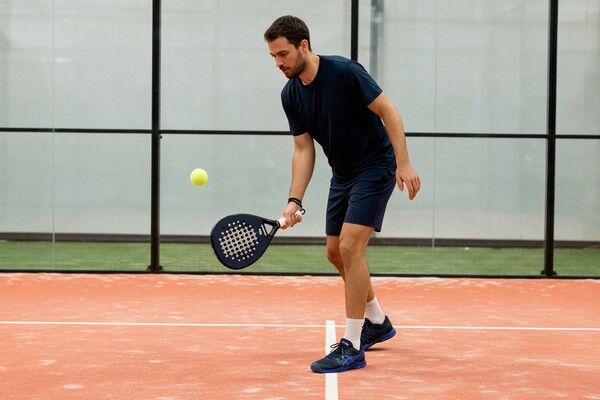
Confused about whether the ball can hit the fence after your serve?
Whether the ball can hit the fence after a serve in padel is one of those rules that trips up almost every new player at some point, usually right after watching a serve get called out despite looking perfectly fine to them. The short answer is that it depends entirely on the order things happen in — and once you understand that order, the rule stops feeling confusing.
This guide breaks down exactly what's allowed on a serve when it comes to the fence, why the rule works this way, and the common situations that trip up beginners.

The Short Answer
No, the ball cannot hit the fence directly on the fly during a serve and still be legal — a serve must bounce once inside the correct service box before touching anything else, including the fence, glass, or any other surface. If the serve hits the fence before bouncing in the box, it's a fault.
Why Beginners Run Into This Rule So Often
This particular rule tends to come up constantly for new players simply because padel's walls are everywhere, and it's natural to assume the same rules that apply mid-rally also apply to the serve. Since so much of padel gameplay actually does involve the ball legally bouncing off the fence and glass, it's an easy assumption to make — just one that happens to be wrong specifically for that very first bounce of the serve.
How the Padel Serve Actually Works
A legal padel serve is hit underhand, below waist height, and must bounce once inside the diagonal service box on the receiver's side before the receiver returns it. The serve itself doesn't involve the walls at all during this first bounce — it's only after that initial legal bounce that the walls become part of the picture.

What Happens After the Ball Bounces in the Box
Test det med vår gratis padelquiz — raske spørsmål, umiddelbart resultat.
Once the served ball has bounced once inside the correct service box, it's completely legal for it to then hit the fence, glass, or side wall before the receiver returns it. This is where a lot of the confusion comes from — the fence itself isn't the problem, timing is. The ball is allowed to interact with the walls, just not before that first legal bounce happens.
| Situation | Legal? | Why |
|---|---|---|
| Serve bounces in the correct box, then hits the fence | Yes | The required bounce already happened before the wall contact |
| Serve hits the fence before bouncing in the box | No — fault | The ball touched a surface other than the ground first |
| Serve bounces outside the correct box, then hits the fence | No — fault | The bounce itself was already illegal, regardless of the fence |
| Serve bounces in the box, receiver lets it hit the wall before returning | Yes | Perfectly normal, receiver can let it play off the wall |
Why This Rule Exists
The serve is meant to start the point fairly, with a predictable bounce that gives the receiver a clear, legal ball to respond to. If a serve could bounce off the fence before landing in the box, servers could exploit unpredictable wall angles to make the serve nearly impossible to read, turning the serve into far more of a lottery than the rest of padel's more skill-based scoring system intends.
What Counts as the "Correct" Service Box
Padel serves are hit diagonally, just like tennis — the ball must land in the service box diagonally opposite the server, on the receiver's side. If the serve bounces in the wrong box, it's a fault regardless of whether it later touches the fence or not, since the initial bounce location is what determines legality, not the fence contact.

Common Situations Beginners Get Wrong
Assuming Any Fence Contact Is a Fault
The most common misunderstanding is thinking that touching the fence at any point during a serve automatically makes it illegal. In reality, fence contact is completely fine as long as it happens after the required first bounce in the correct box.
Confusing This With the Let Rule
This fence situation is separate from the let rule, which applies specifically to a serve that clips the net and still lands correctly. A serve touching the fence after a legal bounce isn't a let — it's simply a normal, legal continuation of the point.
Not Noticing the Bounce Order
Since serves happen quickly, it's easy to focus on where the ball ends up rather than the actual sequence of contact. Paying attention to whether the bounce happened before or after any wall contact is the key detail that determines the call.
Gratis oppsettgenerator — Americano, Mexicano og mer. Klar på noen minutter.
What the Receiver Can Do
Once the serve has legally bounced in the box, the receiver can choose to let the ball continue on to hit the fence or glass before returning it, just like with any other legal shot in padel. There's no requirement to return the ball immediately off the first bounce — using the wall's rebound is a completely normal part of reading and returning a serve.

How This Compares to Tennis
Tennis players picking up padel sometimes assume any wall or fence contact automatically ends the point, since tennis has no equivalent structure around the court. Padel's fence and glass are a core part of the sport rather than an obstacle, and the serve rule reflects that — the walls only become "live" for either side once the ball has legally landed in play, whether that's the required serve bounce or any other legal shot afterward.
Padel Serve Fence Rule Quick Checklist
- The serve must bounce once in the correct diagonal service box before touching anything else.
- If the fence is touched before that bounce, it's a fault — no exceptions.
- Once the ball has legally bounced in the box, hitting the fence afterward is completely fine.
- The bounce location (correct box) matters more than whether the fence gets touched at all.
- This rule is separate from the let rule, which only applies to net contact on serve.
- Receivers can let the ball play off the fence after a legal bounce before returning it.
Once you focus on the order of events — bounce first, wall contact after — this rule stops being confusing. The fence itself was never the issue; it's simply about making sure the serve's first bounce happens exactly where it's supposed to.