Beginner padel drills matter more than most new players expect, since padel's mix of tennis-like strokes, squash-like walls, and its own scoring system means a lot of small habits need to click before matches actually feel fun rather than chaotic. Structured drills let you build those habits in a low-pressure setting, rather than trying to figure everything out mid-point against an opponent.
This guide covers a set of beginner-friendly drills covering the core strokes, footwork, and wall play every new player needs, organized so you can build skills progressively rather than jumping around randomly.
Why Structured Drills Help Beginners Specifically
Padel combines several unfamiliar elements at once for most new players — a smaller court, an underhand serve, and walls that keep the ball in play. Trying to absorb all of that during live points is overwhelming, so isolating each skill in a drill setting lets you build genuine competence before adding the pressure and unpredictability of a real match.
What Makes Padel Drills Different From Tennis Drills
Players arriving from tennis often expect their existing warmup and drill routines to transfer over directly, but padel's compact swings, underhand serve, and wall-based rallies mean several tennis drills don't apply the same way. Building a padel-specific drill routine from the start, rather than adapting old tennis habits on the fly, tends to produce faster, cleaner progress for beginners with a racket sports background.
Grip and Stroke Fundamentals Drills
These first two drills build a clean, repeatable swing before you add movement, a partner, or any real pace.
Shadow Swing Practice
Without a ball, practice the basic forehand and backhand motion slowly, focusing on a continental grip, a short backswing, and a complete follow-through. This builds muscle memory for the compact swing padel requires before you're worrying about actually hitting a moving ball.
Wall Rally Drill
Hitting against a wall or rebounder at a moderate pace lets you focus purely on clean contact and consistent placement, without needing a partner. Aim for a simple target zone rather than trying to hit winners, and gradually increase pace once contact feels reliable.
Footwork Drills
Good footwork underpins everything else in this guide, and these two drills build the reaction speed and side-to-side movement padel calls for on every point.
Split-Step Timing Drill
Have a partner or coach hit balls toward you while you practice a small split-step timed to their contact, then react toward wherever the ball actually goes. This builds the reflexive movement pattern that makes everything else — groundstrokes, volleys, wall shots — easier to execute cleanly.
Cone Shuffle Drill
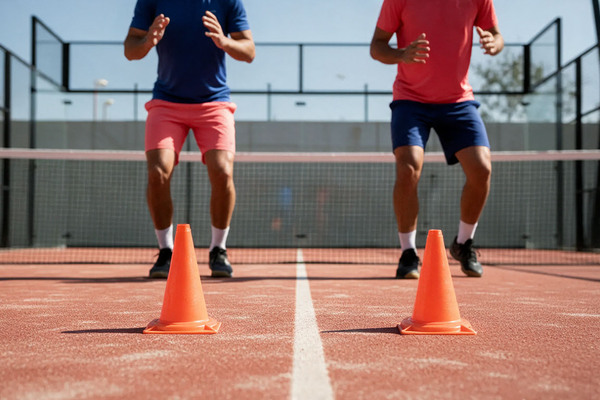
Set up a few cones in a small square and practice shuffling sideways between them without crossing your feet. This builds the lateral movement padel demands constantly, since most court coverage happens through short, quick adjustments rather than long sprints.
| Drill | Skill Focus | Equipment Needed |
|---|---|---|
| Shadow swing practice | Grip and stroke mechanics | None |
| Wall rally drill | Clean contact, consistency | Wall or rebounder |
| Split-step timing drill | Reaction speed | Partner or coach |
| Cone shuffle drill | Lateral movement | 4 cones |
| Basic volley drill | Net play fundamentals | Partner or coach |
| Wall bounce reading drill | Reading back wall rebounds | Partner or coach |
| Serve target drill | Serve consistency and placement | Cones or targets |
Volley Drills
Net play decides a large share of padel points, so this section focuses on the compact volley touch you need close to the net.
Basic Volley Exchange
Stand near the net with a partner and practice short, controlled volley exchanges, focusing on a compact punch motion rather than a full swing. This is one of the fastest ways to build comfort at the net, which is where a large share of padel points are ultimately decided.
Wall Play Drills
Reading the ball off the back wall is one of the biggest adjustments new players face coming from other racket sports, and this drill isolates that skill on its own.
Wall Bounce Reading Drill
Have a partner or coach feed balls toward the back wall at varying speeds and angles while you practice reading the bounce and positioning yourself to return it. This directly targets one of the biggest adjustments beginners need to make when switching from other racket sports to padel.
Serve Drills
A reliable serve sets the tone for the point, so this drill prioritizes placement and consistency over raw power.
Serve Target Drill
Set up cones or markers inside the correct service box and practice serving toward those targets, prioritizing consistency and placement over pace. A reliable, well-placed serve matters far more at the beginner level than trying to hit hard.
Common Mistakes Beginners Make During Drills
A handful of habits trip up new players again and again while working through these drills, starting with how quickly they move through each repetition.
Rushing Through Repetitions
Going through drills quickly without focusing on clean technique just reinforces bad habits faster. Slow down, especially early on, and prioritize quality repetitions over quantity.
Skipping the Fundamentals for Advanced Shots
It's tempting to try flashy shots like the bandeja or vibora before the basics are solid, but this usually just creates confusion and frustration. Build a strong foundation with grip, footwork, and basic strokes before adding anything more advanced.
Practicing Without Feedback
Drilling alone or without any way to check your technique makes it easy to reinforce small errors without realizing it. Practicing with a partner, coach, or even recorded video helps catch issues that are hard to notice from feel alone.
Structuring a Beginner Practice Session
A reasonable session might start with five to ten minutes of shadow swings and wall rallying to warm up strokes, move into footwork drills, add volley and wall-reading practice, and finish with serve target work. Repeating this structure across multiple sessions builds the fundamentals far more reliably than trying to cram everything into a single long practice.
Practicing Without a Regular Partner
Not every beginner has consistent access to a partner or coach, but several of these drills — shadow swings, wall rallying, and serve target practice — can be done solo with just a wall or rebounder. Building a habit of solo practice between organized sessions helps reinforce the fundamentals more quickly, even if the footwork and volley drills still need a second person eventually.
Beginner Padel Drills Quick Checklist
- Start with shadow swings and wall rallying to build clean stroke mechanics.
- Practice split-step timing and lateral shuffles to build core footwork.
- Work on basic volley exchanges to get comfortable at the net.
- Use a wall bounce reading drill to build confidence with back wall play.
- Prioritize serve consistency and placement over power.
- Avoid rushing through repetitions — quality matters more than volume.
These beginner drills won't make padel feel effortless overnight, but they build the specific habits — grip, footwork, wall reading, and net comfort — that make the sport click much faster than jumping straight into matches. Work through them consistently, and the transition from confusing to genuinely fun happens a lot sooner than you'd expect.