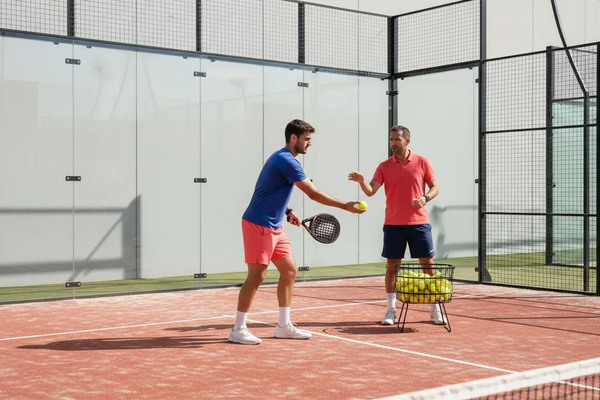
Basic padel technique comes down to a handful of foundational habits — grip, ready position, footwork, and a few core shots — that everything else in the sport eventually builds on. Skipping these fundamentals to chase more advanced shots usually just means relearning things later, so it's worth spending real time getting comfortable with the basics before worrying about anything flashy.
This guide walks through the essential technique every beginner needs: grip, stance, the core groundstrokes and volleys, the serve, and the footwork habits that tie it all together.
Why Padel's Fundamentals Differ From Tennis
Players coming from tennis often assume their existing technique transfers directly, but padel's smaller, enclosed court changes several basics right away. Shorter, more compact swings replace big tennis wind-ups, an underhand serve replaces the overhead tennis serve, and the walls introduce an entirely new category of shot that simply doesn't exist in tennis. Starting fresh with padel-specific fundamentals, rather than assuming tennis habits will carry over cleanly, tends to save a lot of frustration early on.
The Continental Grip
Most coaches recommend beginners start with a continental grip, which works reasonably well across forehands, backhands, volleys, and serves without constant switching. Hold the racket loosely, similar to a handshake grip, rather than gripping tightly — tension in the hand translates directly into a stiffer, less controlled swing.
The Ready Position
Between shots, stay in a relaxed athletic stance: knees slightly bent, weight on the balls of your feet, racket held out in front of you at roughly waist height. This neutral position lets you react quickly in any direction rather than starting from a flat-footed, upright stance that costs valuable reaction time.
Basic Groundstrokes
Padel's two basic groundstrokes, the forehand and the backhand, both rely on a short, compact swing with contact out in front of the body.
The Forehand
Keep the backswing short and compact — padel's smaller court doesn't reward the big wind-ups common in tennis. Turn your shoulders slightly as the ball approaches, make contact out in front of your body, and follow through toward your target rather than stopping the swing short.
The Backhand
The same principles apply: a short backswing, contact in front of the body, and a complete follow-through. Many beginners find the backhand less natural at first simply because it uses a less familiar arm position, so it's worth giving it deliberate extra practice rather than avoiding it.
| Fundamental | Key Point | Common Mistake |
|---|---|---|
| Grip | Continental, held loosely | Gripping too tight, switching grips unnecessarily |
| Ready position | Knees bent, racket up, weight forward | Standing upright and flat-footed |
| Groundstrokes | Short backswing, contact in front, full follow-through | Big tennis-style wind-up |
| Volleys | Short punch motion, firm wrist | Swinging like a groundstroke at the net |
| Serve | Underhand, below waist height, diagonal | Serving too hard without control |
Basic Volleys
At the net, volleys require a completely different motion from groundstrokes — short, controlled, almost like a firm punch rather than a swing. Keep the racket out in front, use minimal backswing, and prioritize a stable wrist and clean contact over trying to generate extra power.
The Serve
Padel's serve is underhand and must be hit below waist height, bouncing once in your own service box before crossing diagonally into the opponent's box. Focus on a smooth, controlled toss and swing rather than trying to serve with maximum pace — placement and consistency matter far more than speed at the beginner level.
Footwork Fundamentals
Padel rewards short, quick adjusting steps far more than long sprints, since most movement happens within a fairly compact space. Practice a small split-step as your opponent strikes the ball, which helps you react a fraction of a second faster in whichever direction the ball actually goes.
Recovering to the Ready Position
After every shot, get back into a balanced, ready stance rather than standing still to watch where the ball goes. This habit alone prevents a huge number of the rushed, off-balance shots beginners tend to struggle with.
Using the Walls
One of padel's defining features is that the ball can bounce off the back glass and fencing and still be in play. Rather than treating a ball heading toward the wall as a lost point, like in tennis, learn to read the bounce and reposition to return it — this single adjustment in mindset is one of the biggest technical shifts tennis players need to make when switching to padel.
Common Mistakes Beginners Make
A handful of recurring habits account for most of the errors beginners make, and swinging too hard on every shot is often the biggest culprit.
Overswinging on Every Shot
Trying to hit every shot as hard as possible, rather than focusing on clean, controlled contact, leads to far more unforced errors than it's worth. Consistency beats power at every level, but especially while the fundamentals are still developing.
Standing Flat-Footed
Waiting for the ball without staying light and ready to move often results in rushed, off-balance shots. Constant small movement, even between points, keeps your body ready to react.
Ignoring the Backhand
Avoiding the backhand side by running around to hit forehands instead might work briefly, but it creates a real weakness opponents will eventually exploit. Give the backhand equal practice time from the start.
Rushing Shots Off the Wall
Panicking and hitting too early when the ball is heading toward the back wall often leads to mishits. Give the ball time to complete its bounce before committing to a swing.
How to Practice These Fundamentals
Spend dedicated time on each element separately before combining them under match pressure — shadow swings for groundstroke and volley technique, footwork ladders or cone drills for movement, and simple serve repetition for consistency. Building each piece individually makes it far easier to identify exactly what needs work rather than trying to fix everything at once during a live point.
How Long It Takes to Feel Comfortable
Most beginners start feeling reasonably comfortable with the core fundamentals — grip, ready position, basic groundstrokes, and simple volleys — within a handful of sessions, though genuine consistency under match pressure usually takes longer. Progress isn't always linear either; footwork and back wall reading, in particular, often click later than the swing mechanics themselves, simply because they depend more on repeated exposure to real, unpredictable bounces than on isolated practice.
Basic Padel Technique Quick Checklist
- Use a relaxed continental grip for most shots.
- Stay in an athletic ready position between shots, not standing flat-footed.
- Keep groundstrokes compact — short backswing, contact in front, full follow-through.
- Use a short, controlled punch motion for volleys rather than a full swing.
- Focus on serve placement and consistency over raw power.
- Learn to read and use back wall bounces rather than treating them as lost points.
- Practice each fundamental separately before combining them in live play.
Solid basic technique isn't glamorous, but it's what makes every more advanced shot possible down the line. Get comfortable with these fundamentals first, and the rest of padel becomes a lot easier to build on.