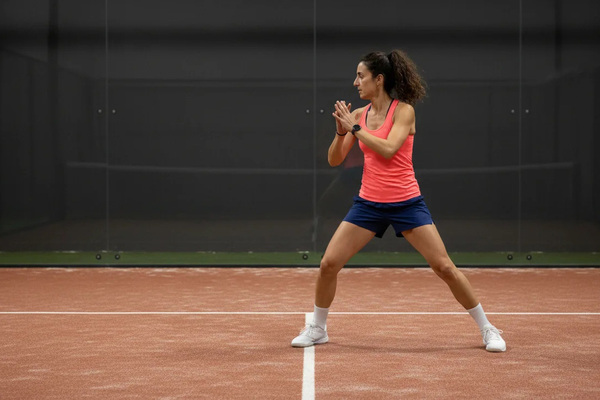
Padel is played largely from side to side. You shift across the court to cover the middle, slide along the net to reach a volley, and move laterally off the back glass to get into position for a rebound. That's why lateral movement drills are some of the most useful exercises a padel player can do. They build the quick, balanced side steps that keep you in position, reduce the lunging that throws you off balance, and make covering your half of the court feel easier. This guide gives you the principles, eight lateral movement drills for padel players, and a simple plan to put them together.
Note
This article gives general training information, not medical advice. If you have an injury, pain, or a health condition, check with a doctor or physiotherapist before starting a new exercise routine, and adjust the drills to your fitness level.

Why Lateral Movement Matters in Padel
Padel requires lateral movement, with constant side-to-side changes across the court. Coaches recommend practicing side steps and crossovers to move quickly from side to side, while keeping a low center of gravity for stability. Efficient footwork also protects your joints, since padel courts can be hard on the knees and ankles, particularly when players move inefficiently.
Principles to Keep in Mind
Whichever drill you do, a few basics make it more useful.
- Stay in an athletic position. Feet around hip-width apart, knees bent, weight on the balls of your feet.
- Keep your feet parallel for shuffles. Toes point forward, and you push off with the trailing foot instead of crossing your feet.
- Stay low. A low center of gravity gives you stability and a quicker first step.
- Use a wide base. Keep your feet at least hip-width apart as you move, which helps maintain dynamic balance.
- Quality first. Quick, clean steps beat sloppy fast ones.
Shuffle or Crossover?
Two basic patterns cover most lateral movement. The side shuffle is for short distances, where you stay facing forward and ready. The crossover step is for longer distances, such as moving back toward the glass or across the court, when a shuffle won't get you there in time. The drills below train both.
Eight Lateral Movement Drills
1. Cone Shuffle
Put it to the test with our free padel quiz — quick questions, instant results.
Set two cones about four to five meters apart. Start in an athletic position at one cone and shuffle to the other, pushing off the trailing foot and keeping your feet parallel and toes forward, then shuffle back. Focus on rapid, quick foot actions. Have a partner point or call "left" and "right" so you react rather than memorize the pattern.
2. Ladder Side Steps
Lay an agility ladder on the floor and move sideways through it with side steps and in-and-out patterns. It develops quickness, coordination, and the lateral movement padel demands. Start slowly and add speed once your feet stay clean.
3. Shadow Shuffle With the Racket
Place a line of cones along the net. Shuffle from cone to cone with your racket up in the volley position, and mimic a volley at each one. It links footwork to the shots you actually play.
4. Crossover to the Glass
Start near the service line, turn sideways, and use crossover steps to travel to the back glass, then recover forward. This trains the longer, faster movement you need for lobs and wall balls.
5. Cone Direction Drill
Place several cones at different points, and move quickly to each one following a coach's or partner's directions. Keep your eyes forward and your racket ready, and return to the center after each cone.
6. Mirror Drill
With a partner, one player leads side-to-side movement while the other mirrors the position, keeping a consistent distance. It builds the habit of moving as a pair and covering the middle.
7. Coverage Wheel
Two pairs rotate positions on the court to cover different zones after each shot. It forces anticipation and teamwork, and it trains lateral movement in a game-like setting.
8. Lateral Lunges
Take a wide step to the side, push your hips back as you bend one knee while keeping the other leg straight, then push back to the start. It builds the leg strength behind powerful lateral movement.
Important
Warm up before lateral drills, build volume gradually, and stop if you feel pain. Fast side-to-side work puts demands on the ankles and knees, so quality of movement matters more than the number of repetitions.

A Sample Weekly Plan
| Session | Drills |
|---|---|
| Session A (technique) | Warm-up, cone shuffle, ladder side steps, crossover to the glass |
| Session B (padel-specific) | Warm-up, shadow shuffle with racket, cone direction drill, lateral lunges |
| Partner session | Mirror drill, coverage wheel, then short games |
Two or three short sessions a week are enough. Alternate technique, padel-specific work, and partner drills, and leave a rest day between harder sessions.
A Four-Week Progression
In week one, practice the cone shuffle and ladder at a controlled pace, focusing on parallel feet and a low position. In week two, add the crossover to the glass and speed up the shuffle. In week three, introduce the racket and the cone direction drill. In week four, add the mirror drill and coverage wheel, and finish with a short practice game to test how the movement carries over.
Bring It Onto the Court
Drills only help if they change how you move in matches. Pay attention to a few things during play: staying low as you shift sideways, using small steps to adjust rather than one big lunge, recovering to a balanced central position after each shot, and sliding toward the middle when your partner is pulled wide. Combine lateral work with a good split step, since a well-timed split gives you a quicker first sideways step.
Footwear and Surface
Lateral movement demands grip and support. Padel shoes with good traction and lateral support help you push off and stop safely, and a quick check of your soles tells you whether they still grip. Train on a stable, non-slippery surface, and avoid wet or dusty floors for fast side-to-side work.
Free tournament generator — Americano, Mexicano and more. Set it up in minutes.
Common Mistakes
Crossing Your Feet on Short Shuffles
It makes you unstable. Keep your feet parallel for short distances and save the crossover for longer ones.
Standing Too Tall
An upright stance slows every direction change. Stay low with your knees bent.
Rushing Speed
Sloppy fast steps build bad habits. Get the movement clean first.
Skipping the Warm-Up
Cold muscles and joints are more vulnerable to strain. Warm up before every session.
Measure Your Progress
Pick one or two simple tests and repeat them every few weeks, such as the time to complete a set number of cone shuffles with clean footwork, or how many ladder sequences you finish without a mistake. A steady improvement over a month is a good sign your side-to-side movement is getting quicker and smoother.
Advice
Finish each session with a few minutes of padel-specific movement, such as shadow volleys with a recovery step. It helps the drill speed transfer to the court.

Lateral movement drills for padel players come down to clean, low, balanced side steps, a sensible mix of shuffles and crossovers, and regular practice that includes your partner. Build them gradually, bring them onto the court, and you'll cover more ground with less effort.