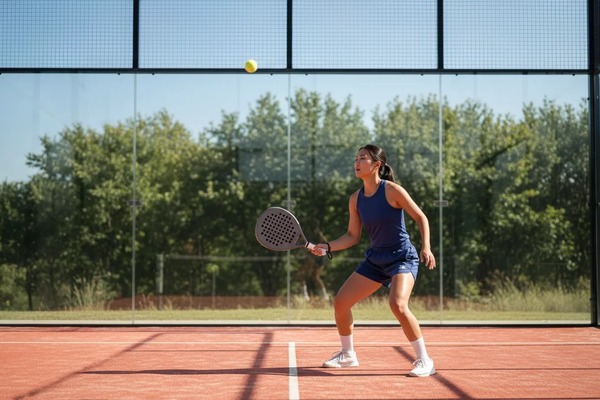
A better padel lob isn't just a higher one. The lob is one of the most important shots in the game, since it pushes opponents back from the net and gives you time and space to take the net yourself, but a poor lob simply hands the other team an easy overhead. This guide focuses on what separates a good lob from an average one: technique, quality markers, disguise, and targeting, plus drills to build all four.
Why the Lob Deserves Real Practice
A large share of points in padel are won at the net, and the lob is one of the most effective ways to dislodge an opponent who is volleying well. Many players spend most of their practice time on smashes and volleys and treat the lob as something that will take care of itself. In reality, a reliable lob is often what separates intermediate players from advanced ones, because it lets you defend, reset, and attack with the same basic shot.
What Makes a Lob "Better": Four Quality Markers
Height
The ball needs enough height to clear your opponents' reach comfortably. Extra height also tends to bring the ball down closer to the back glass, where there is less rebound for opponents to work with, which makes it harder to attack.
Depth
Depth is arguably the single most important quality. A lob should land beyond the service line, ideally deep enough that the bounce takes it toward the back wall. A lob that lands short, even if it's high, gives opponents time to move under it and hit a strong overhead.
Placement
Where the ball goes matters as much as how high it is. Aim for the player with the weaker overhead, which is often the one on the backhand side, and avoid lobbing toward the side where opponents have a clear angle to attack.
Disguise
A lob that looks exactly like your normal groundstroke until the last moment is much harder to read. When opponents can't tell a lob is coming, they stay close to the net, which makes it easier to get the ball over them.
Put it to the test with our free padel quiz — quick questions, instant results.
Note
Depth and height work together. A very high lob that lands short still gets smashed, and a deep but flat lob can be volleyed away. The best lobs combine both.

Technique: Low to High
Preparation and Stance
Prepare as you would for any other shot, taking the racket back and turning your body slightly, but get lower than usual. Bending your knees lets you swing up through the ball from beneath it, which is how the height is created.
Racket Path and Open Face
The swing travels from low to high. Start with the racket in a low position, make contact toward the bottom of the ball with a slightly open racket face, and finish with the racket high, above your head. Under pressure you may need to open the face more to get the height you need.
Use Your Legs, Not Your Whole Body
A common error is lifting the entire body to create height, which leaves you unstable and out of position for the next shot. Let the legs and the swing path produce the height while your upper body stays balanced.
Important
Avoid lobbing when you're badly out of balance if you have another option. A lob hit from an unstable position tends to be a poor one, and it leaves you even more off balance afterward.

Disguise: Same Preparation as Your Drive
The most reliable way to disguise a lob is to prepare exactly as you would for a drive, with the same shoulder turn and racket preparation, and then change only the final part of the swing, lifting the ball up and deep instead of driving it through. Opponents who read a drive will stay near the net, and that's precisely the position you want them in when the ball goes over their heads.
Choosing Your Target
Picking a target is a quick decision that pays off over a whole match. Look for the opponent with the weaker overhead, which is frequently the backhand side, and avoid lobbing the player who clearly has the stronger smash. Also avoid the side where the open angle gives opponents an easy way to hit past you. If you're worried about hitting the ball long, aim a couple of feet inside the back glass rather than at the very edge of the court.
| Quality | What to Check |
|---|---|
| Height | Clears opponents' reach with room to spare |
| Depth | Lands beyond the service line, close to the back glass |
| Placement | Targets the weaker overhead, usually the backhand side |
| Disguise | Preparation looks the same as a drive |
| Balance | You're stable at contact and ready to move forward |
Adjusting for Conditions and Opponents
A lob that works indoors can behave differently outside. Wind can push a high ball long or short, and low sun can make it harder for opponents to track the ball, which you can sometimes use to your advantage. Pay attention in the warm-up to how the ball carries, and adjust your height and depth accordingly rather than relying on how the shot felt on a different court.
Opponents matter too. A tall player with a strong overhead needs more height and better placement than a shorter one, while a team that retreats quickly after every lob may be better handled with more variety, mixing in a few drives and short balls to keep them guessing about what's coming.
Drills to Level Up Your Lob
Static Baseline Lob to a Target
Stand at the baseline and hit high lobs to the back of the opposite court, aiming for a target zone near the back glass. Track how many of ten land in the zone and focus on both height and depth.
Lobbing Under Pressure
Have a partner or coach press at the net while you try to lob over their head. This simulates the tension of a real match and teaches you to keep your disguise and technique when someone is actually threatening to volley your next shot.
Lobbing From an Awkward Position
Practice lobbing from slightly off balance or after a short run, since many real lobs happen under pressure rather than from a perfect setup. The goal is to stay compact and still get enough height and depth.
Common Reasons a Lob Stops Working
If your lobs keep getting punished, check the usual suspects: not enough height, landing short instead of deep, too much power sending the ball long, or a telegraphed swing that lets opponents back away from the net. Filming a few lobs from the side, ideally with a coach, often reveals which one it is faster than guessing.
Advice
Use the lob in rhythm with your other shots. Hit a few drives first so opponents stay close to the net, then lift the ball over them with the same preparation. The contrast is what makes the lob hard to read.

A better lob comes from refining four things at once: enough height, real depth, smart placement, and a swing that doesn't give the shot away. None of it requires extra power. It takes a low-to-high swing path, balanced legs, and a habit of choosing a target instead of just getting the ball over the net.
Treat the lob as a skill worth training in its own right, not a rescue shot. Players who invest in it find they can defend under pressure, reset rallies, and take the net more often, all with the same shot.
Progress with the lob is usually gradual. Track how many of your practice lobs land deep and over the right target each week, and you'll see consistency improve well before the shot feels natural in matches.