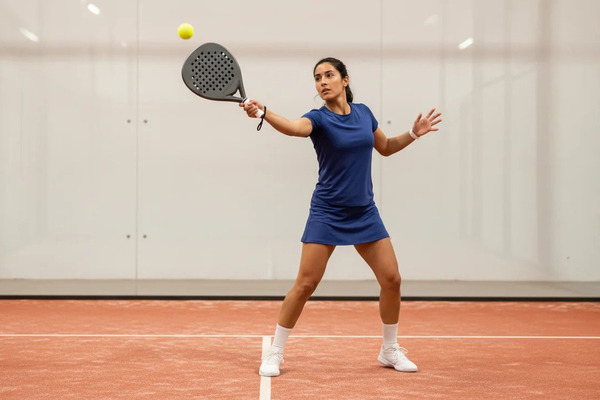
The bandeja is padel's most common overhead and one of the hardest shots for new players to learn. Its purpose isn't to win the point outright, it's to keep you at the net after a lob, deny your opponents an easy attack, and turn a defensive moment back into a controlled one. This guide breaks the bandeja down step by step, from the preparation to the recovery, so you can build it properly rather than guessing.
What Is a Bandeja and Why It Matters
The word "bandeja" is Spanish for "tray," a nod to the way the racket is held during the shot, flat and steady like a tray carrying a drink. It sits somewhere between a smash and a forehand volley: more controlled than a full smash, but struck from above, usually on a deep lob. Coaches often call it a "defensive smash" because its main job is keeping your net position rather than ending the rally.
That's why the bandeja matters so much. Pairs at the net win a much higher share of points than pairs stuck at the back, and the bandeja is the tool that lets you hold that position when opponents try to lob you out of it.
Note
Tennis players often find the bandeja especially tricky, since the technique, contact point, and even the goal of the shot differ from a tennis smash. Don't expect your tennis overhead to transfer directly.

When to Use a Bandeja
Use a bandeja when your opponents lob the ball over you and it drops deep enough that a full, aggressive smash would be risky, but high enough to hit from above. It's the standard answer to a decent lob when you want to hold the net and keep control of the point, rather than backing off into defense or forcing a low-percentage winner.
Step-by-Step Technique
Step 1: Turn Sideways Early
As soon as you see a lob coming, turn your body sideways, with your hitting shoulder pointing back toward the rear of the court. Preparing early is the foundation of the entire shot, since everything that follows depends on having time to get into position.
Put it to the test with our free padel quiz — quick questions, instant results.
Step 2: Take the Racket Back High
Raise your racket up and back, with the head high and pointing upward, rather than letting it drop low behind you. Starting the swing from above where you'll make contact is what allows you to come down and through the ball with a clean motion.
Step 3: Move Back Fast
A quick backstep to get behind the ball is essential. Move back using bigger, decisive steps rather than lots of tiny ones, and avoid simply watching the ball while it travels. Players who ball-watch usually end up contacting the shot too late and too far back.
Step 4: Make Contact in Front
Contact should happen out in front of your head, roughly at forehead or eye level, not directly above you and certainly not behind you. Contact that's too late robs the shot of forward momentum, and the ball tends to sit up in the middle of the court where opponents can attack it.
Step 5: Brush Through With a Little Slice
Come down and through the ball with a slightly open racket face to create a small amount of slice. You don't need heavy spin, a little is enough to keep the ball low and flat after it bounces. Speed and direction matter more than spin, but a touch of slice helps the ball stay awkward for opponents rather than sitting up.
Step 6: Recover to the Net
As soon as the ball leaves your racket, step forward and reclaim the net. The bandeja buys you time, but it doesn't end the point, so the recovery is almost as important as the shot itself. Every step you take backward past the service line makes getting back into position harder.
Important
If your bandeja has no slice, the ball tends to sit up and invite a counterattack. A small amount of slice isn't optional, it's what makes the shot work as a defensive-attacking hybrid.

Where to Aim a Bandeja
The most reliable targets are the corners and the sidelines, especially angles that force the ball off the side or back glass. A ball that hits glass slows down, which gives you more time to recover your net position, and it also pushes your opponents into an uncomfortable defensive position. Aiming deep, so the ball lands well beyond the service line, keeps opponents from stepping forward to attack.
Bandeja vs Smash vs Vibora
| Shot | Pace | Main Goal |
|---|---|---|
| Bandeja | Controlled, moderate | Hold the net and deny an easy attack |
| Vibora | Faster, sidespin slice | Attack while staying in control |
| Smash | Maximum | End the point outright |
Adjusting for Which Side of the Court You're On
The basic technique stays the same on both sides, but small adjustments help depending on where you're standing. From the right side of the court, for example, coaches often suggest making contact slightly closer to your body and a touch higher, coming around the outside of the ball with a slightly flatter swing. Paying attention to these small differences, rather than assuming one identical motion works everywhere, helps your bandeja feel more natural from both sides.
Staying Patient While You Learn
Few shots in padel take longer to feel natural than the bandeja. It combines precise footwork, early preparation, a specific contact point, and a quick recovery into one fast sequence, and any single piece breaking down can ruin the whole shot. Expect it to feel awkward for a while, and judge your progress over weeks of practice rather than a single session.
Common Bandeja Mistakes
Making Contact Too Late
Letting the ball drop behind your head removes all forward momentum from the shot, usually producing a weak, floating ball. Moving back early enough to meet the ball in front of you fixes most contact problems at the source.
Bending the Elbow and Going Up
Taking the racket back with a bent elbow forces you to swing upward to make contact, which makes producing slice nearly impossible. Keeping the racket above the contact point lets you come down and through the ball naturally.
Hitting Too Hard
Because the bandeja looks like a small smash, many players overswing. Direction and a controlled pace matter more than power, and an overhit bandeja often lands short or out.
Forgetting to Step Forward
Staying where you hit the shot instead of immediately recovering to the net leaves you exposed to the next lob or attack. Treat the step forward as part of the shot itself.
Advice
Film yourself hitting bandejas from the side. Video makes it easy to spot whether you're getting back quickly and making contact in front of your head, two details that are hard to feel in the moment.

Drills to Build Your Bandeja
Start with a partner or coach feeding slow, predictable lobs while you focus purely on the turn, backstep, and contact point, without worrying about target. Once the movement feels natural, add targets: hit ten bandejas down the line, then ten cross-court, then mix them. Finally, add a recovery step after every shot and play out short points, so the bandeja becomes part of a full sequence rather than an isolated skill.
The bandeja takes more repetition than most padel shots to feel natural, and a lot of it is about confidence as much as technique. Be patient with the early sessions, focus on early preparation and a front contact point, and the shot gradually shifts from something you fear into one of the most reliable tools for holding the net.
You can't simply bring a brand-new bandeja into a match and expect it to hold up under pressure. Build it in practice first, with fed balls and low stakes, so that when a real lob arrives mid-rally your body already knows the sequence and you can trust it.