Feeling stuck on the back foot whenever you're pushed back?
Defending in padel isn't about giving up on a point, it's an active skill that decides whether you survive pressure long enough to turn a rally back in your favor. Good defense relies on positioning, a handful of core techniques, and a patient mindset just as much as attacking play does. This guide covers the fundamentals of defensive padel: the basic rules that shape it, the core techniques, and the footwork and mindset that tie it together.

What "Playing Defense" Means in Padel
Defense in padel generally means responding to pressure, a smash, a strong volley, an attacking shot, in a way that keeps the ball in play and buys time to recover your position. Unlike attacking shots, which aim to win the point outright, defensive shots prioritize height, depth, and safety margin over pace and placement. Playing good defense is often what separates a competitive match from a lopsided one, since it forces opponents to keep working for points rather than winning them easily.
The Rules That Shape Defensive Play
A few specific rules make padel's defensive game different from other racket sports. Once the ball bounces once on your side of the court, it can touch the back wall, a side wall, or both, any number of times, and still be in play as long as you return it before a second bounce. That single rule is what makes padel's walls a genuine defensive tool rather than just a boundary, since a ball that would be a clean winner in an open-court sport often becomes returnable here.
It's also worth remembering that the ball must bounce on the court before touching a wall, not the other way around. A shot that hits the wall first, before bouncing, is a fault, which is why reading the sequence of a ball's path matters just as much as reacting to its speed.
The Basic Defensive Position
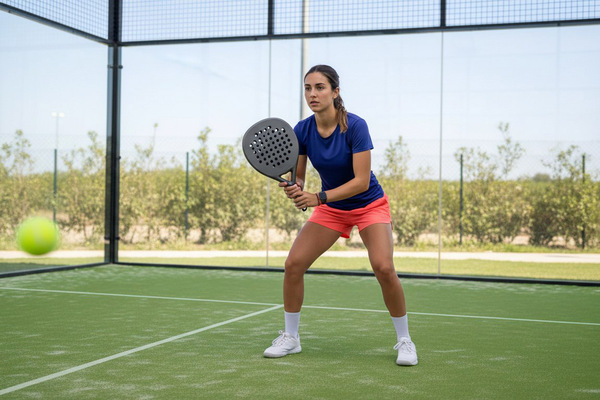
When defending from the back of the court, stand with your knees slightly bent, weight balanced on the balls of your feet, and your racket held up and ready in front of you rather than down at your side. This ready stance lets you react quickly in any direction, whether that means stepping forward for a short ball or moving back for one heading toward the wall.
Put it to the test with our free padel quiz — quick questions, instant results.
Note
Good defensive positioning isn't about standing as far back as possible. Staying a reasonable distance from the back wall gives you room to move both forward and backward as the situation demands.

Core Defensive Techniques
The Defensive Lob
A high, deep lob is the single most useful defensive shot in padel. It buys time by sending the ball up and back, forcing opponents away from the net, and gives you a chance to reset your position before the next shot arrives. Prioritizing height and depth over any attempt at precision or pace is what makes this shot reliably safe under pressure.
Blocking a Volley Under Pressure
When a fast ball arrives with little time to prepare a full swing, a short, compact block, essentially absorbing the pace rather than adding to it, is usually the safest response. Softening your grip slightly and presenting a stable racket face redirects the ball back into play without needing a large, risky swing.
Using the Walls
Padel's back and side walls are a defensive advantage most new players don't fully appreciate at first. A ball that would fly out of bounds in an open-court sport often stays in play here, bouncing off the glass and giving you extra time to track it and respond. Learning to let the wall do some of the work, rather than panicking and rushing a shot, is a core part of solid defensive technique.
Important
Defensive shots don't need to be perfectly placed. Getting the ball back in play safely matters far more than aiming for a specific target while under pressure.

Footwork for Defense
Defensive footwork is built around small, adjustable steps rather than long, committed strides. A split step just as your opponent makes contact keeps you balanced and ready to move in any direction the ball actually goes, rather than guessing early and getting caught moving the wrong way. After every defensive shot, recover to a central, balanced position instead of standing still to watch where the ball went.
| Situation | Defensive Response |
|---|---|
| Opponent smashing | Defensive lob, hit high and deep |
| Fast volley at close range | Short, compact block |
| Ball off the back wall | Let it rebound calmly, then controlled return |
| Caught off balance | Prioritize height and safety over placement |
The Mental Side of Defense: Patience Over Panic
Good defense depends as much on mindset as technique. Players under pressure often panic and go for a low-percentage shot to end the point immediately, when a patient, controlled defensive shot would have kept them in the rally and eventually created a better opportunity. Treating defense as a legitimate, valuable part of the point, not just a delay before losing it, is a mental shift that improves defensive results noticeably.
Defense as a Doubles Skill
Since padel is always played in doubles, defending well also means communicating with your partner about who takes which ball and staying connected in position as a pair. A defensive lob that repositions you but leaves your partner exposed, or a shout of "mine" that comes too late, can undo otherwise solid individual defensive technique. Treating defense as a coordinated team effort, not just an individual response, rounds out the skill.
When one player is pulled out of position defending a difficult ball, the other should adjust to cover the gap that movement creates, rather than staying fixed in a spot that made sense before the point developed. This kind of shape-shifting as a pair is what separates teams that defend well together from two individually good defenders who happen to share a court.
Advice
Practice defensive situations specifically, not just as a byproduct of general rallying. Have a partner feed smashes and hard volleys while you focus purely on getting the ball back safely and resetting your position.

Common Defensive Mistakes
Trying to Attack from a Defensive Position
Attempting a risky, aggressive shot while off balance or under heavy pressure usually ends the point immediately with an error. Save the aggressive options for once you've regained control of the point.
Standing Too Close to the Back Wall
Crowding the wall leaves no room to step into a shot or adjust to a ball that bounces closer than expected. A bit of distance from the wall gives you more usable space to work with.
Watching the Ball Instead of Moving Early
Waiting to see exactly where a shot will land before reacting wastes valuable time. Reading your opponent's setup and starting to move before contact gives you the head start good defense requires.
Tensing Up Under Pressure
A tight grip and a rushed swing when a hard shot arrives usually produces a worse result than staying relaxed and trusting a simple, controlled technique. Nerves often cause more defensive errors than the actual difficulty of the ball itself.
Defending well in padel comes down to a handful of reliable habits: a balanced ready position, prioritizing height and depth over risky placement, using the walls calmly rather than fearing them, and staying patient rather than panicking under pressure. None of it demands exceptional athleticism, just the discipline to treat defense as a genuine skill worth practicing on its own, not just something that happens when an attack has already gone wrong.
Strong defense also changes how opponents play against you. Once they realize a smash or a hard volley won't automatically win the point, they're forced to work harder and take more risks to actually finish a rally, which often produces the unforced errors that decide close matches in your favor.