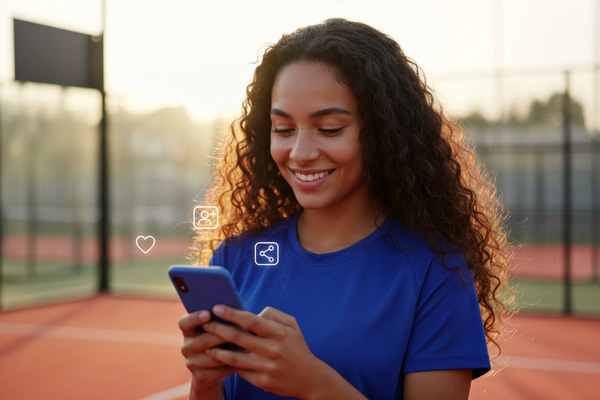
Wondering how padel suddenly ended up all over your feed?
Padel's global boom didn't happen in a vacuum, and a big part of the story is written in short, vertical videos. Instagram Reels and TikTok clips of dramatic smashes, trick shots, celebrity matches, and quick coaching tips have introduced the sport to millions of people who had never picked up a racket, turning padel from a regional pastime into one of the fastest-growing sports in the world.
This guide looks at why padel content performs so well on these platforms, who's driving it, and how that visibility has translated into real growth in players and clubs.

Why Padel Content Works So Well on TikTok and Instagram
Padel has almost everything short-form video rewards: fast movement, visually dramatic shots like smashes and lobs, a compact court that keeps the whole action in frame, and a social, doubles format that naturally produces reactions and celebrations. A ten-second clip of an impossible get or a between-the-legs trick shot needs no explanation to be entertaining, which makes it easy content for algorithms to push to people who have never heard of the sport.
That same format also works well for education. Quick technique tips, rule explainers, and gear comparisons fit naturally into a 30-to-60-second video, giving padel a steady stream of genuinely useful content alongside the highlight clips.
Note
TikTok's recommendation system shows videos based on what people watch, not just who they follow. That's a big reason padel clips reach non-players so effectively, since the algorithm doesn't require an existing fanbase to spread a good video widely.

The Numbers Behind the Boom
The growth shows up clearly in the data. Mentions of #padel on Instagram increased by 75 percent in 2024 compared to the previous year, a jump largely credited to celebrity involvement and the wave of content that followed it. National federations have noticed the same pattern: Britain's Lawn Tennis Association reported the country's padel-playing population climbing past 400,000 players, and later coverage put the figure at around a million, growth that coincided directly with a surge in dedicated padel content online.
That kind of increase in a single hashtag's usage says something concrete about visibility: it's not just existing players posting more, it's new accounts, new creators, and new audiences discovering the tag for the first time and joining the conversation around it.
Celebrities Made Padel Look Cool
Free tournament generator — Americano, Mexicano and more. Set it up in minutes.
Public figures sharing their own padel matches did a lot of the early heavy lifting. NBA star LeBron James was spotted playing padel during an offseason trip, and clips from the session drew millions of views. Fitness influencer Kayla Itsines posted a padel-themed workout challenge on Instagram that reached a similarly massive audience. Actress Eva Longoria and footballer David Beckham have also shared padel moments with their large followings, each post introducing the sport to fans who may never have encountered it through traditional sports media at all.
Seeing recognizable faces enjoying the sport gave it an instant credibility boost, especially with younger audiences who take cues from the people they already follow rather than from television coverage or magazine features.
Important
Celebrity attention opened the door, but it's the ongoing wave of dedicated padel creators, not just occasional star cameos, that has kept new players engaged and coming back to learn more about the sport.

A New Generation of Padel Content Creators
Coaching and Education Content
Platforms like The Padel School, founded in 2019 by British brothers and international-level coaches Sandy and Tom Farquharson, built a large following by turning genuine coaching expertise into short, accessible video lessons. Content like this gives new players a low-pressure way to learn technique and rules before ever stepping on a court.
Entertainment and Celebrity Formats
Other creators have leaned into entertainment. UK-based channel Big Smash Padel regularly features celebrity guests and professional players in stunt-style matches, pitting well-known personalities against pros using unconventional equipment for comedic effect. Formats like this make padel feel approachable and fun rather than intimidating, which matters for viewers deciding whether to try the sport for the first time.
Charity and Community-Driven Content
Some creators have used their platform for more than entertainment. One popular UK series pairs a celebrity guest with a professional padel player for a car ride and conversation before heading to the court, using the format to raise awareness and funds for a foundation that gives underprivileged children access to the sport.
Brands and Equipment Companies Followed the Trend
Racket and apparel brands moved quickly to capitalize on padel's social media momentum. Product reviews, unboxing videos, and creator collaborations showcasing new rackets have become a standard part of padel content, with brands actively partnering with creators for giveaways and sponsored posts. That commercial interest has, in turn, funded even more content, since brand deals give creators a reason to keep posting consistently rather than treating padel videos as an occasional hobby.
How National Federations and Clubs Joined In
Governing bodies noticed the trend and leaned into it directly. Britain's Lawn Tennis Association launched dedicated LTA Padel accounts on both Instagram and TikTok, publishing player tips, how-to guides, and updates on domestic competitions. That kind of official presence, alongside independent creators, has helped legitimize padel content as a genuine information source rather than just entertainment.
Short-Form Video vs Traditional Sports Media
Traditional sports coverage, television broadcasts, magazine features, newspaper columns, generally requires an audience that's already curious enough to seek it out. Short-form video flips that model. A padel clip doesn't need a viewer to search for padel content at all; it just needs to be entertaining enough to hold attention for a few seconds, at which point the platform's algorithm does the rest of the work introducing the sport to someone new. That difference in distribution is arguably the single biggest reason padel has grown faster through social media than it likely would have through conventional sports coverage alone.
The Algorithm Effect: Reaching New Markets First
This distribution model has been especially powerful for padel's expansion into countries where the sport barely existed a few years ago, like the United States and parts of Asia. Rather than needing an established local scene, clubs, leagues, media coverage, before people become curious, a viral clip can generate demand for courts and lessons in a market that has almost no existing padel infrastructure yet. In several fast-growing regions, online interest in the sport has visibly outpaced the number of courts available to meet it.
Advice
If a viral clip is what got you curious about padel, look past the highlight reels for creators who post genuine coaching content. It's a faster, lower-pressure way to learn the basics before your first lesson.

What This Means for New Players
For anyone discovering padel through a social media feed, the practical upshot is a genuinely useful head start. Between coaching accounts, federation channels, and entertainment creators, there's now a large, free library of content covering everything from basic rules to advanced technique, something that simply didn't exist for the sport a decade ago.
Instagram and TikTok didn't invent padel's appeal, the sport's fast, social, doubles format was always well suited to spreading by word of mouth. What short-form video did was remove the need for word of mouth entirely, letting a well-placed smash or a funny celebrity clip introduce the sport to millions of people in the time it takes to watch a single video.
That shift has real staying power too. As long as padel keeps producing dramatic points, entertaining creators keep experimenting with new formats, and brands keep funding the content ecosystem around it, the pipeline from a scrolling feed to a first padel lesson shows no sign of slowing down.