Padel agility drills are what separate players who look rushed on court from those who always seem to arrive at the ball early and balanced. Padel demands constant short bursts of movement — forward, backward, sideways, and around walls — rather than long sprints, so generic running speed only gets you so far. Building real agility means training your body to change direction quickly, stay low, and recover fast between shots.
This guide covers why agility matters so much in padel specifically, a set of drills you can start using right away, and the common mistakes that limit how much players actually improve from their training.
Why Agility Matters in Padel
Most points in padel involve short, sharp movements rather than sustained running. You might take two quick steps forward for a drop shot, immediately shuffle back for a lob, then push off sideways to cover an angled volley — often within the same rally. Agility is what lets you execute all of that cleanly instead of arriving late, off-balance, or lunging at the last second.
Better agility also reduces injury risk. Sudden direction changes put real stress on ankles, knees, and hips, and players with poor movement patterns tend to get hurt more often than those who've trained their bodies to change direction under control.
What Makes Padel Agility Different from Running Speed
Straight-line sprinting speed barely shows up in a padel match. What matters far more is how quickly you can decelerate, change direction, and accelerate again — sometimes multiple times within a single point. This is why padel-specific agility drills focus heavily on short, multi-directional movement rather than long sprints.
The court's walls and glass also add a layer most other racket sports don't have. Chasing a ball off the back glass and recovering to the net requires a completely different movement pattern than tracking a ball in open court, so agility training for padel should include drills that mimic that kind of quick reversal.
Warm-Up Before Agility Work
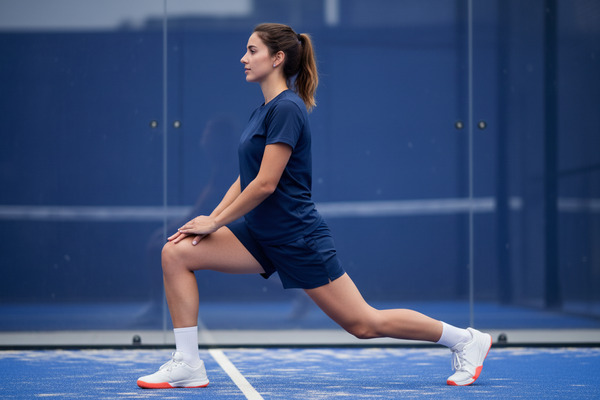
Jumping straight into fast direction changes on cold muscles is a common way to get injured. Spend five to ten minutes on dynamic movement first — light jogging, leg swings, walking lunges, and ankle circles — before adding any speed or intensity to the drills below.
Core Padel Agility Drills
Ladder Drills for Foot Speed
Agility ladder work builds the fast, precise foot placement padel constantly demands. Simple in-and-out steps, lateral shuffles through the ladder, and quick two-feet-per-square patterns all translate directly to the small adjusting steps you use to get into position for a shot.
Cone Shuffle Drill
Set up four cones in a small square, roughly 2-3 meters apart. Shuffle sideways from one cone to the next, touching each one, then reverse direction back to the start. This mimics the lateral movement needed to cover the width of the court without crossing your feet, which is a common cause of losing balance mid-rally.
Split-Step Reaction Drill
Have a partner or coach call out a direction — left, right, forward, back — right as you perform a split-step, and react as fast as possible toward that direction. This trains the same split-second reaction padel demands every time an opponent strikes the ball, connecting the split-step timing you already use with genuine reactive speed.
Lateral Shuffle with Recovery
Shuffle quickly to one side, simulate hitting a shot, then immediately recover back to a central ready position before repeating to the other side. This drill directly reinforces the habit of returning to a balanced stance after every shot instead of standing still admiring where the ball went.
Reactive Ball Drop Drill
A partner holds two balls at shoulder height and drops one without warning; you sprint forward to catch it before the second bounce. This builds explosive first-step quickness, which matters far more in padel than top-end sprint speed since most movements only need to cover a few meters at most.
| Drill | Main Focus | Equipment Needed |
|---|---|---|
| Ladder drills | Fast, precise foot placement | Agility ladder |
| Cone shuffle | Lateral movement without crossing feet | 4 cones |
| Split-step reaction | Reaction speed off the split-step | None (partner needed) |
| Lateral shuffle with recovery | Returning to balanced position after a shot | None |
| Reactive ball drop | Explosive first-step quickness | 2 balls (partner needed) |
How Often to Train Agility for Padel
Two short sessions a week of focused agility work, roughly 15-20 minutes each, is usually enough to see a real improvement without overloading your legs on top of regular match play. Quality matters more than volume here — sloppy, tired reps teach your body bad movement patterns rather than good ones.
Pairing agility work with actual court time, rather than doing it in isolation, also helps the improvements carry over faster into real matches.
Common Mistakes in Agility Training
Skipping the Warm-Up
Going straight into fast, sharp direction changes without warming up is one of the fastest ways to strain a muscle or roll an ankle. A proper warm-up isn't optional if the goal is actually improving, not just getting hurt.
Training Only in Straight Lines
Some players default to straight sprint drills because they're familiar from other sports, but padel rarely rewards straight-line speed. Prioritize lateral, backward, and multi-directional drills instead, since that's what the sport actually demands.
Ignoring Recovery Between Reps
Rushing from one repetition to the next without resetting to a balanced stance teaches sloppy habits that show up on court as poor recovery after shots. Treat the recovery step as part of the drill, not a pause between the real work.
Overtraining Volume Instead of Quality
More reps done poorly won't build better movement patterns — they'll just reinforce tired, careless technique. Stopping a session once form starts to break down is usually more productive than pushing through extra sets.
Combining Agility Drills With On-Court Practice
Agility work pays off fastest when it's connected directly to padel movement, not treated as a separate fitness task. After a set of ladder or cone drills, spend a few minutes doing the same movement patterns while actually hitting shots — shuffling to a volley, recovering after a lob, or sprinting in for a drop shot. This bridges the gap between generic athleticism and padel-specific speed.
Agility Drills for Doubles Partners
Since padel is almost always played in pairs, some agility work is more useful done together with your regular partner rather than alone. Mirror drills — where one player moves side to side and the other shadows the movement while staying aligned on the court — build the shared spatial awareness that makes doubles positioning feel automatic instead of constantly renegotiated mid-point.
Practicing recovery together after simulated shots also helps two players learn each other's movement habits, which reduces the awkward gaps or overlaps that show up when partners haven't trained their footwork as a unit.
Padel Agility Quick Checklist
- Warm up dynamically for 5-10 minutes before any agility work.
- Prioritize lateral, backward, and multi-directional drills over straight sprints.
- Use ladder drills to build fast, precise foot placement.
- Practice split-step reactions to sharpen your first-move speed.
- Always recover to a balanced stance between reps, not just after real points.
- Train agility 2 short sessions a week rather than one long, exhausting one.
- Connect drills to real court movement by finishing with actual shots.
Agility isn't about being the fastest runner on the court — it's about reacting quicker, changing direction cleaner, and getting back into position before the next shot arrives. A few focused sessions a week on the right drills will show up in your matches far faster than most players expect.