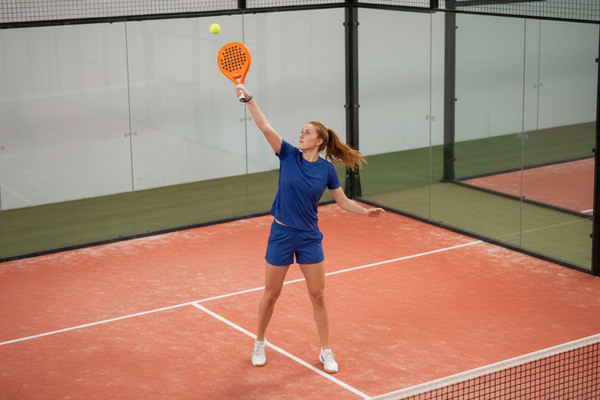
Struggling to make your vibora do anything the bandeja couldn't?
Vibora mistakes tend to show up quickly once a player attempts the shot, since its combination of spin, timing, and positioning leaves very little margin for error compared to a simpler overhead like the bandeja. Recognizing the specific technical breakdown behind an inconsistent vibora saves considerable time compared to just repeating the shot and hoping it improves.
This guide walks through the most common vibora mistakes, how to spot them, and the fixes that address each one directly.

Mistake 1: Attempting the Vibora Before the Bandeja Is Solid
The vibora builds directly on the overhead footwork, timing, and positioning developed through the bandeja, and trying to learn the spin-heavy technique before those fundamentals are consistent usually leads to a confusing mix of both shots done poorly.
Fix: Make sure your bandeja is reliable first. The vibora's added complexity is much easier to layer on top of solid overhead fundamentals than to learn alongside them.
Why the Vibora Punishes Small Errors More Than Other Shots
Because the vibora relies on generating specific sidespin rather than just making solid, controlled contact, small technical flaws — a slightly flat racket angle, a rushed wrist snap — have an outsized effect on the outcome compared to shots like the bandeja, which still work reasonably well even with a mildly imperfect swing. This lower margin for error is exactly why the shot rewards deliberate, isolated practice far more than most other parts of a padel player's game.
Test det med vår gratis padelquiz — raske spørsmål, umiddelbart resultat.
Mistake 2: Not Enough Sidespin
A vibora hit with a flat racket face, rather than a proper brushing motion across the ball, loses the low, skidding bounce that makes the shot effective in the first place — turning it into a weaker, more predictable version of a bandeja.
Fix: Focus on a swing path that brushes across the ball rather than driving straight through it, generating the sidespin that creates the characteristic skid off the bounce.
| Mistake | Symptom | Fix |
|---|---|---|
| Skipping bandeja fundamentals | Confused, inconsistent technique | Master the bandeja before adding vibora spin |
| Not enough sidespin | Ball bounces predictably, loses effectiveness | Brush across the ball rather than driving through it |
| Poor footwork under the ball | Weak, mistimed contact | Get positioned early before adding the spin motion |
| Overcommitting on low-reward balls | Unnecessary unforced errors | Reserve the vibora for situations worth the added risk |
| Inconsistent wrist snap | Unpredictable spin and direction | Practice the wrist motion in isolation before adding pace |
Mistake 3: Poor Footwork Getting Under the Ball
Because the vibora already asks for more precise timing than a standard bandeja, reaching or stretching for the ball rather than getting properly positioned underneath it makes an already demanding shot significantly harder to execute cleanly.
Fix: Prioritize quick, early footwork to get into a balanced position before adding any of the shot's spin-generating technique. A rushed setup undermines even a technically correct swing.

Mistake 4: Using the Vibora on Balls That Don't Need It
The vibora carries more technical risk than a standard bandeja, and using it on situations that don't call for the extra difficulty — an easy lob, plenty of time to set up — wastes the risk on a ball that would have been handled just as well with a simpler shot.
Fix: Reserve the vibora for moments where the added unpredictability genuinely matters, such as against opponents who struggle with low, skidding bounces, rather than defaulting to it on every lob.
Mistake 5: An Inconsistent Wrist Snap
The vibora's sidespin comes largely from a sharp, controlled wrist snap through contact, and inconsistency here produces unpredictable spin and direction from one attempt to the next, even when the rest of the swing looks similar.
Fix: Practice the wrist motion separately, at reduced pace, focusing purely on repeating the same snap each time before adding full swing speed back in.

Mistake 6: Rushing the Shot Under Pressure
Because the vibora already has a smaller margin for error than most shots, rushing it during a tense point often causes the same mistakes that seemed fixed in relaxed practice to reappear all at once.
Fix: Practice the shot under mildly pressured, competitive conditions rather than only in relaxed drills, so the added complexity holds up when it actually matters in a match.
How to Diagnose Your Own Vibora Errors
If the ball bounces predictably rather than skidding, suspect insufficient sidespin or a flat racket angle. If contact feels weak or rushed, check footwork and positioning first. If the shot works in practice but breaks down in matches, the issue is composure under pressure rather than the mechanics themselves.

Using Video to Catch Vibora Errors
Because the vibora's wrist snap and racket angle happen quickly and are hard to feel accurately in the moment, recording a practice session and reviewing it afterward often reveals whether you're genuinely brushing across the ball or just driving through it flat. Comparing your swing path side by side with a clean example makes subtle angle differences far easier to spot than trying to self-diagnose from feel alone.
Vibora Mistakes Quick Checklist
- Make sure your bandeja is solid before adding vibora technique.
- Focus on brushing across the ball to generate real sidespin.
- Get positioned early with good footwork before adding the spin motion.
- Reserve the vibora for situations that genuinely benefit from the extra risk.
- Practice the wrist snap in isolation to build consistency.
- Rehearse the shot under pressure, not just in relaxed drills.
Most vibora mistakes come down to skipping a step in the shot's natural progression — footwork, then bandeja consistency, then spin technique — rather than a fundamental lack of skill. Build it in that order, and the vibora becomes a genuine weapon instead of a shot that only works occasionally.