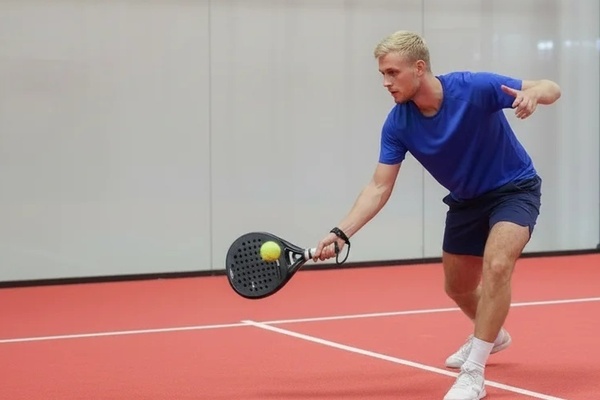
Ready to make your opponents' feet do the work instead of your power?
The chiquita in padel is one of the sport's most useful low-percentage-risk tools for breaking up an opponent's rhythm at the net, and it's a shot that genuinely separates intermediate players from beginners once it's added to a match. Rather than trying to overpower opponents, the chiquita uses touch and placement to create an awkward, low ball that's difficult to attack — a small piece of strategy that pays off constantly over the course of a match.
This guide covers exactly what the chiquita is, the technique behind hitting it well, when to use it, and the mistakes that keep it from working as intended.

What Is a Chiquita in Padel
Chiquita, Spanish for "little one," is a soft, controlled shot hit low and short, typically aimed at an opponent's feet from around the service line. The goal is to force a difficult low volley or half-volley in response, since a ball arriving near an opponent's shoes is far harder to attack than one sitting up at a comfortable height.
How the Chiquita Reflects Padel's Emphasis on Placement Over Power
Padel rewards patience and precision far more than raw pace, and the chiquita is one of the clearest examples of that philosophy in action. Rather than trying to overpower an opponent standing at the net, the shot works by exploiting positioning and timing instead, forcing a mistake through discomfort rather than sheer force. Players who lean too heavily on power shots often overlook this kind of tactical option, even though it's frequently more effective against a well-set-up opponent.

Why the Chiquita Works
Players positioned at the net expect to volley shots at a comfortable height, and a well-placed chiquita disrupts that rhythm by forcing them to bend down and improvise instead. Even if the shot doesn't win the point outright, it frequently produces a weak, defensive reply that sets up an easy follow-up for your team.
Grip and Basic Technique
Most players use a continental grip for the chiquita, the same grip common to volleys and other touch shots. The swing itself is short and soft, more of a controlled push or cushioned block than an actual stroke, since the goal is placement and low pace rather than power.

Contact Point
Test det med vår gratis padelquiz — raske spørsmål, umiddelbart resultat.
Make contact slightly in front of your body with a relaxed grip, guiding the ball downward and toward your target rather than punching through it. A tense grip or an aggressive swing tends to add unwanted pace, which defeats the purpose of the shot.
Where to Aim
The most effective target is directly at an opponent's feet or just in front of them, ideally landing short enough that they can't simply step forward and volley it comfortably. Aiming at a specific, weaker opponent when possible increases the odds of forcing a genuinely difficult reply.
| Element | What to Do | Common Mistake |
|---|---|---|
| Grip | Continental, relaxed | Gripping too tight, adding unwanted pace |
| Swing | Short, soft, controlled push | Full swing that turns it into a regular drive |
| Target | Opponent's feet, short and low | Hitting it too deep, giving an easy volley |
| Positioning | Around the service line | Attempting it from too far back to control placement |
| Follow-up | Move forward to attack the response | Standing still after the shot |
When to Use a Chiquita
The chiquita works best when opponents are positioned at the net and you have a moderate-paced ball to work with, giving you enough time to control the shot rather than being rushed. It's particularly effective against players who are strong at the net when given time to set up, since the low ball takes away their preparation time and forces an improvised response.
Common Mistakes With the Chiquita
Adding Too Much Pace
Trying to hit the chiquita with any real power turns it into a normal, attackable shot instead of the soft, awkward ball it's meant to be. Keep the swing controlled and restrained even when the temptation to add speed is there.
Hitting It Too Deep
A chiquita that lands too far into the court gives opponents time to step in and volley it comfortably, eliminating the advantage of the low, short placement. Depth control matters just as much as the low trajectory itself.
Telegraphing the Shot
Winding up noticeably differently for a chiquita compared to a regular shot gives opponents an early read, letting them adjust and cover the low ball before it even arrives. Try to keep the preparation looking similar to a normal shot for as long as possible.
Not Following Up
Hitting a good chiquita and then standing still wastes the advantage it creates. Move forward immediately to take advantage of whatever weak reply the low ball forces.
Chiquita vs Other Touch Shots
The chiquita is sometimes grouped with other soft, controlled padel shots, but its specific purpose — targeting an opponent's feet to disrupt their volley — sets it apart. Unlike a drop shot aimed at open space, the chiquita is aimed directly at the opponent's body position, making footwork and reaction time, not just court coverage, the primary challenge it creates.
Practicing the Chiquita
A simple way to build the shot is to have a partner or coach feed easy, moderate-paced balls while you focus purely on landing controlled, low shots at their feet, without worrying about disguise or pace variation at first. Once the basic placement feels consistent, add work on hiding your preparation and moving forward afterward, since both of those elements matter just as much as the contact itself in real match play.

Chiquita Quick Checklist
- Use a relaxed continental grip and a short, controlled swing.
- Aim directly at an opponent's feet, keeping the shot low and short.
- Use it when you have a moderate-paced ball and time to control the shot.
- Disguise your preparation so it doesn't telegraph the shot early.
- Move forward after hitting it to capitalize on the weak reply it often forces.
- Avoid adding pace — the shot's value comes from placement, not power.
The chiquita isn't about overpowering your opponents — it's about making a simple volley genuinely difficult by taking away their comfort at the net. Once the touch and placement come together, it becomes one of the sneakier, more effective tools in a padel player's arsenal.