Siux Electra Pro 2026 vs Siux Fenix Pro 2026
Trouvez la raquette idéale. Comparez les caractéristiques et les notes côte à côte.

Notes
Caractéristiques
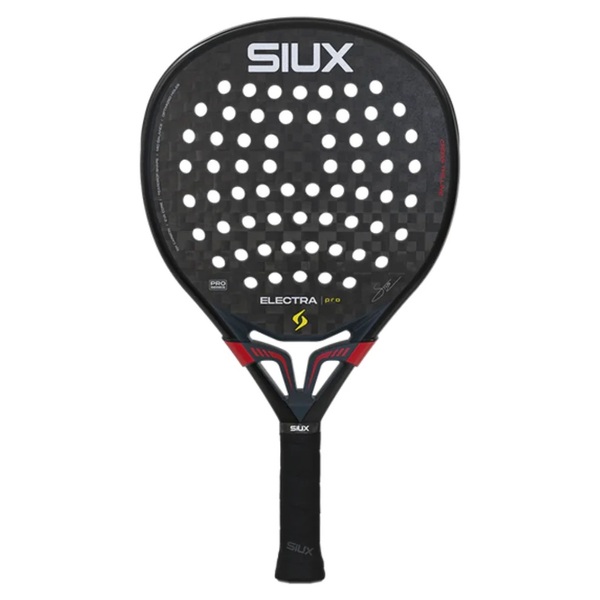
The Siux Electra Pro 2026 is positioned as an all-around racket rather than a specialist tool: solid net play, natural bandeja and víbora, and a build that moves well through transitions between defense and attack. Compared with the model it replaces, it trades some rebound and forgiveness for a firmer, more technical response and a higher power ceiling once the swing is up to it. The racket's forgiveness and smash power are both technique-dependent: sweet-spot access and smash pace open up considerably once technique is solid, while remaining demanding on less precise contact. It fits advanced players with decent timing who want a firm, direct racket that does not lean hard into either pure attack or pure defense. Players hoping for a guaranteed wide margin for error or maximum stability under pressure should weigh that trade-off before assuming this plays like a forgiving, all-purpose frame.
- Sharp, controlled response at the net.
- Natural bite and control on bandeja and víbora.
- Higher smash ceiling than the previous generation on committed swings.
- Handles well through transitions without feeling top-heavy.
- Versatile build covering both attack and defense.
- Harder blocks at the net can feel unstable; pure blocking produces less free depth than the previous generation.
- Sweet spot demands clean timing; off-center contact is penalised.
- Reaching the higher smash ceiling requires more technique than the more forgiving previous version.
- Hard feel limits comfort and offers little cushioning on mishits.
The Siux Fenix Pro 2026 is a specialist tool: clean preparation and a full swing unlock explosive smash and overhead output, but it does not disguise a late swing or a mistimed shot. Defense and off-center contact are where the trade-offs show up, and net play rewards early positioning over reactive blocking. It fits advanced, attacking players who already generate their own pace and want a racket that adds finishing weight to shots they can produce reliably. Anyone still building consistent mechanics, or looking for a racket to cover for imperfect contact, will find more resistance here than support.
- High power ceiling on smashes and overheads.
- Heavy, direct volley response with spin potential.
- Sharp bandeja and víbora on clean contact.
- Frame resists twisting structurally.
- Defensive lobs can land short; off-center contact is penalised quickly.
- Head-heavy balance slows reactions in fast net exchanges.
- Power needs active swing speed; little assistance on slower swings.
- Comfort declines under fatigue or mistimed contact.
- Stock grip described as thin; most players will want an overgrip.


Abonnez-vous aux nouveautés Padelmesh
Actus, tests de matériel et guides écrits par des joueurs et des coachs, directement dans votre boîte mail.
Recherches fréquentes
Les tests de matériel de padel sur Padelmesh sont réalisés raquette en main : chaque modèle est évalué selon les mêmes paramètres, ce qui permet de comparer puissance, contrôle, équilibre et confort côte à côte plutôt que de se fier aux arguments marketing.
Une fois la raquette choisie, il reste à trouver un terrain pour l’essayer. Padelmesh recense les clubs de padel, les coachs et les réseaux de clubs dans des dizaines de pays.
Trouver un club de padel
Trouvez le terrain idéal dans le club qui correspond à votre jeu, sélectionné pour son confort, la qualité de ses services et une expérience de match parfaite
Trouver un club