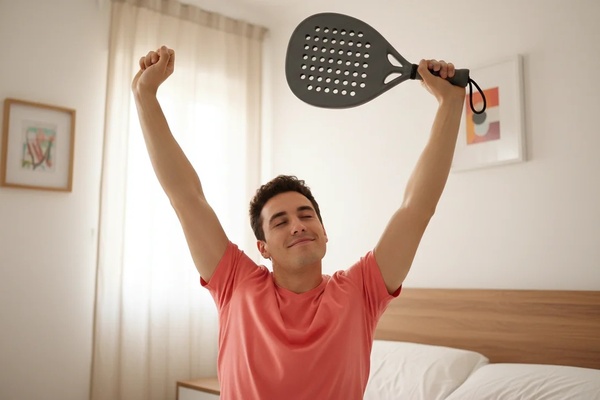
Trying to fit regular exercise into a busy week?
Padel fits into a healthy weekly routine more easily than most sports, since it delivers real cardiovascular and strength benefits while feeling more like a social outing than a workout. A couple of sessions a week can help meet standard exercise guidelines, build strength through natural movement rather than gym machines, and give you a genuine mental break from the rest of your week, all at once.

The Physical Benefits of Regular Padel
A padel match keeps you moving constantly, with short sprints, lateral shifts, and quick direction changes that work several muscle groups at once. Research on the sport has found that regular players typically maintain heart rates between 68 and 85 percent of their maximum, a moderate to vigorous intensity that helps strengthen the heart and lungs over time. The dynamic swinging, lunging, and pivoting involved also builds strength and endurance in the legs, glutes, core, and upper body without needing separate gym equipment.
How Padel Meets Weekly Exercise Guidelines
Health authorities generally recommend adults get at least 150 minutes of moderate exercise a week. Two one-hour padel sessions, or a slightly shorter third session, comfortably covers that guideline while feeling far less like a chore than logging the same time on a treadmill or exercise bike. Because padel combines aerobic effort with short bursts of anaerobic intensity, a single session touches on more types of fitness than most single-mode workouts manage in the same amount of time.
Note
An hour of padel can burn roughly 400 to 600 calories depending on intensity and how competitive the match is, though this varies significantly from person to person. Treat this as a general reference point rather than a precise number.

Cardio and Strength in One Session
Most fitness routines separate cardio days from strength days, but padel blends both into a single session. The constant movement builds aerobic capacity, the kind that improves your ability to keep going during a long match or a long day, while the explosive, repeated swings and direction changes build a form of functional strength and muscular endurance that carries over into everyday movement far more directly than isolated gym exercises.
Put it to the test with our free padel quiz — quick questions, instant results.
The Mental Health and Stress-Relief Side
The benefits of a regular padel habit go well beyond the physical. Like most forms of exercise, padel triggers the release of endorphins and other mood-supporting chemicals, and its social, doubles format adds a layer of connection and laughter that solo workouts rarely provide. Many players describe an hour on court as one of the most effective ways to switch off from work stress, precisely because the pace of the game demands enough focus to crowd out other worries for the duration of the match.
Important
Exercise supports mental wellbeing, but it isn't a substitute for professional support if you're dealing with ongoing stress, anxiety, or low mood. Treat padel as one healthy habit among several, not a cure-all.

How Many Times a Week Should You Play
Two to three sessions a week is a realistic target for most people looking to build padel into a genuinely healthy routine, balancing enough frequency to see real fitness benefits against enough recovery time to avoid overuse injuries. Complete beginners can start with one session a week and build up gradually as their fitness and confidence grow, since padel's movement demands, especially on the ankles and knees, take some adjustment for anyone coming from a more sedentary routine.
There's no need to chase a specific number just because it sounds impressive. A single consistent weekly session, kept up for months, does more for a healthy routine than an ambitious daily schedule that burns out after two weeks.
Combining Padel With Other Activities
Padel works well alongside other forms of exercise rather than needing to be your only activity. Pairing two padel sessions with a strength training day or a lower-intensity activity like walking or swimming rounds out a week nicely, covering cardio, strength, and recovery without over-relying on any single mode of movement. This kind of variety also reduces the repetitive strain that can build up from doing the same explosive movements every single day.
| Day | Activity |
|---|---|
| Monday | Padel session |
| Tuesday | Rest or light walking |
| Wednesday | Strength training |
| Thursday | Padel session |
| Friday | Rest |
| Weekend | Optional third padel session or another light activity |
Listening to Your Body: Rest and Recovery
Padel's quick sprints and sudden direction changes place real stress on the ankles, knees, and lower back, so at least one full rest day between sessions is worth building into your week, especially when you're new to the sport or increasing how often you play. Persistent soreness, unusual fatigue, or joint pain that doesn't ease with normal rest are worth paying attention to rather than pushing through, since padel is meant to support a healthy routine, not undermine it.
Padel and Better Sleep
Regular physical activity is well established as a support for better sleep, and many padel players report feeling pleasantly tired after a good session, in the way that comes from genuine physical exertion rather than mental fatigue alone. Playing too close to bedtime can have the opposite effect for some people, since the adrenaline of a competitive match takes a while to wear off, so scheduling sessions earlier in the day or evening, rather than right before sleep, tends to work better for most players.
Free tournament generator — Americano, Mexicano and more. Set it up in minutes.
Why Padel Sticks When Other Routines Don't
One of the biggest obstacles to any fitness routine is simply sticking with it, and padel has a real advantage here over solo workouts. Because a match needs three other people, there's a built-in accountability that a solo gym session doesn't have, canceling on a padel game means letting down your regular group, not just yourself. Combined with the fact that the format is genuinely fun rather than something to grit your teeth through, that social pressure quietly makes padel one of the easier fitness habits to actually maintain over months and years.
Padel Across Different Life Stages
One of padel's real strengths as a lifestyle sport is how well it adapts across ages and fitness levels. Younger, more competitive players can use it as serious cardiovascular and strength training, while older adults or those returning to exercise after time away often find its lower-impact, doubles-based format more sustainable than tennis or running. Research on padel's benefits for women in particular has pointed to improvements in bone density and cardiovascular health from playing just a couple of times a week, benefits that matter more, not less, as people get older.
Advice
If you're new to regular exercise, or returning after a break, ease in with one session a week and a proper warm-up rather than jumping straight to three competitive matches. Padel rewards patience with your body just as much as it rewards patience on the court.

Padel earns its place in a healthy weekly routine by covering more ground than most single activities: real cardiovascular effort, functional strength, a genuine social outlet, and a break from daily stress, all inside a game that rarely feels like exercise while you're actually playing it. Two or three sessions a week, balanced with rest and a bit of variety elsewhere in your routine, is enough to make it a meaningful, sustainable part of staying healthy.
The best fitness routine is ultimately the one you'll actually keep doing, and that's where padel quietly outperforms a lot of more conventional exercise plans. A sport that people look forward to, rather than push through out of obligation, tends to survive the busy weeks and low-motivation stretches that derail so many well-intentioned routines.