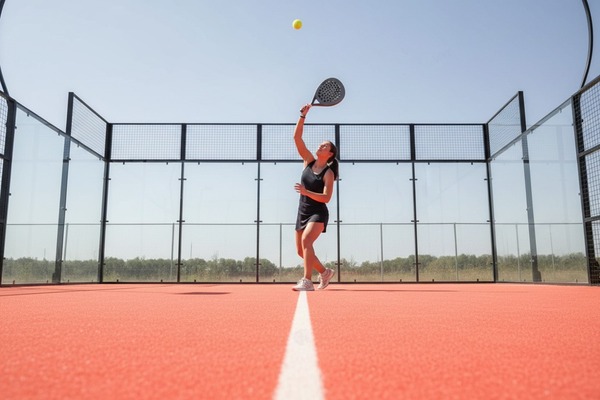
Stuck at the back of the court with no way out?
A defensive lob in padel is the shot you hit when your opponents are attacking and you need time to reset. It sends the ball high and deep, pushing your rivals away from the net so you and your partner can get back into a strong position. If you've ever been stuck under a smash with no good options, the lob is usually the shot that gets you out of trouble.
This guide breaks down exactly when to use a defensive lob, how to hit it with proper technique, and the common mistakes that turn a smart defensive shot into an easy point for the other team.

What Is a Defensive Lob in Padel?
A defensive lob is a high shot hit from a difficult position on the court, usually when your opponents control the net. Unlike a flat groundstroke, it doesn't aim to win the point outright. Its job is simpler: buy time, gain height, and force your opponents to move back from their attacking spot.
You'll usually hit a defensive lob from the back of the court, often right after returning a smash, a bandeja, or a hard volley. The ball travels in a high arc and lands deep near the back glass, giving you a few extra seconds to recover your position before the next shot arrives.
This shot works because of how padel courts are built. The back and side walls let the ball bounce again, so a deep, high lob doesn't just fly out the way it might on a tennis court. Instead, it gives your opponents an awkward decision: let it bounce off the glass or try to smash it while it's still dropping.
Why the Defensive Lob Matters in Padel Strategy
Padel courts are small, and the net is where most points get decided. Once your opponents take control there, they can volley, smash, and cut off angles until you make a mistake. The defensive lob is one of the few tools that lets you break that pattern without hitting a risky passing shot.
Every time you lob well, you force your opponents to leave the net and move back toward the baseline. That single movement resets the whole point. It also tires them out over a long match, since running back for lobs takes more effort than staying planted at the net.
Note
A good defensive lob doesn't need to be a winner. Its real job is to change the rhythm of the point and give your team a fair fight again.

When to Use the Defensive Lob
Teste es mit unserem kostenlosen Padel-Quiz — schnelle Fragen, sofortiges Ergebnis.
Under a Smash or Overhead
The most common moment for a defensive lob is right after your opponent hits a smash or an overhead shot like a bandeja. If the ball comes at you fast and low, trying to drive it back flat is risky. A lob gives you a safer margin, since it only needs to clear the net and land deep, not thread a narrow gap between two players.
When You're Off Balance or Out of Position
If you're stretched wide, running backward, or simply not set for a clean shot, a defensive lob is often your best option. It doesn't require perfect footwork or timing the way a passing shot does. You just need enough racket face and upward swing to send the ball high and deep.
When Your Partner Needs Time to Recover
Padel is a doubles game, so the lob isn't only about your own position. If your partner got pulled out of the net or is scrambling to get back, a well-placed lob buys both of you time to return to a solid defensive or attacking shape before the next shot arrives.
How to Hit a Good Defensive Lob
Grip and Preparation
Most players use a continental grip for the defensive lob, the same grip used for a volley or serve. This grip makes it easier to open the racket face and lift the ball without extra wrist movement. Prepare early: take your racket back low, since the swing path for a lob moves from low to high.
Contact Point and Swing Path
Let the ball drop slightly lower than you would for a flat shot, then brush upward through contact. Think of the swing as a smooth push rather than a hit. Too much power turns a defensive lob into a ball that flies past the baseline or slams into the back wall too hard, giving your opponents an easy smash on the rebound.
Aiming for Height and Depth
Depth matters more than direction for a defensive lob. Aim for the back third of the court, ideally close to the back glass. Height matters too: a lob that only clears the net by a meter gets smashed easily, while one that climbs three to four meters high is much harder to attack cleanly, even for a strong player at the net.
Important
A low, flat lob is more dangerous to you than to your opponents. If you can't get enough height on a given ball, it's often safer to switch to a block or a low return instead.

Defensive Lob vs Attacking Lob
Beginners often mix up the defensive lob with the attacking lob, but the two shots have different goals, different targets, and different risk levels. Here's how they compare:
| Aspect | Defensive Lob | Attacking Lob |
|---|---|---|
| Main Goal | Buy time and reset position | Win the point or force an error |
| When to Use | Under pressure, off balance, or defending a smash | When opponents are at the net but not fully set |
| Target Height | Very high, 3-4 meters | Lower and flatter, just clearing reach |
| Target Area | Deep, near the back glass | A precise corner or over a specific player |
| Risk Level | Low | Medium to high |
Common Mistakes with the Defensive Lob
Lobbing Too Short
A short lob that lands mid-court is one of the easiest balls to smash in padel. If your lob doesn't reach deep enough, you've basically fed your opponents a setup shot. Focus on depth first, then worry about exact placement once your height and distance are reliable.
Lobbing Straight Down the Middle
The middle of the court can create confusion between two opponents about who should take the ball, but it also means either player can step across and smash. Aiming slightly toward a specific side, especially a weaker backhand, usually gives you better odds.
Forgetting to Recover Position
Hitting a good lob is only half the job. Many players watch their own shot instead of moving back into position. Use the time your lob buys to reset your feet and get ready for the next ball, not to admire what you just did.
Overusing the Lob
The lob is a tool, not a whole game plan. If you lob every single ball, good opponents will read it early and either hold their ground or smash it aggressively before it climbs high enough. Mix your defense with occasional passing shots and low returns to keep opponents guessing.
Advice
Practice lobbing to both corners, not just down the middle. Being able to place a lob to either side makes your defense far harder for opponents to predict.

Defensive Lob Drills to Practice
You don't need a full match to build a reliable lob. These simple drills work well with a partner or a coach feeding balls from the net:
- Have a partner feed smashes from the net while you practice lobbing them deep and high.
- Practice lobbing from both the forehand and backhand side of the court.
- Set a target zone near the back glass and count how many lobs land inside it out of ten tries.
- Add movement: start from the middle of the court, sprint to a wide ball, then hit a controlled lob.
- Play out points where you're only allowed to defend with lobs and low shots, to build patience under pressure.
Repeating these drills builds the muscle memory you need to reach for a lob automatically when a point gets difficult, instead of panicking and going for a low-percentage shot you haven't practiced.
The defensive lob won't win you highlight-reel points, but it's one of the most reliable ways to survive pressure and stay competitive in a rally. Get comfortable with the technique, learn to recognize the moments that call for it, and it will quickly become one of the most trusted shots in your padel game.