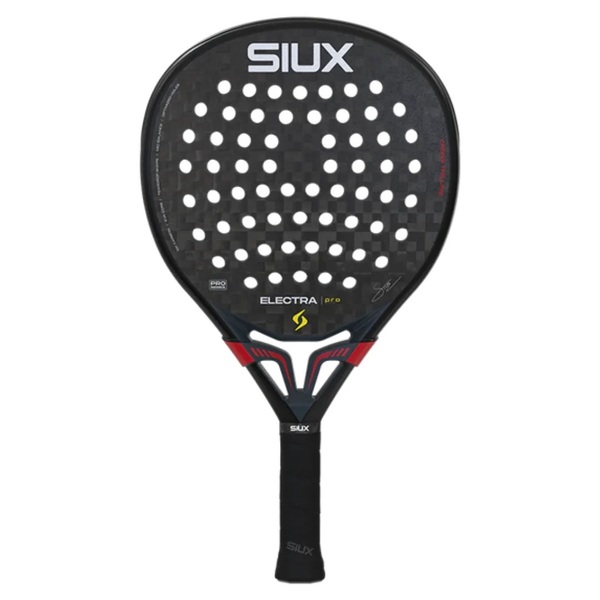

Het meest geschikt voor gevorderde all-court-spelers
Gevorderde spelers die één racket willen dat zowel aanvallende als verdedigende situaties aankan, in plaats van een frame dat puur is ontworpen voor afwerkingskracht. Het is geschikt voor spelers met een goede techniek en timing die op zoek zijn naar een responsief, direct gevoel. Een gewicht dichter bij 360–365 g wordt aanbevolen boven de zwaardere modellen uit het assortiment, aangezien de balans ervoor zorgt dat het racketkopje tijdens overgangen goed te hanteren blijft. Wie specifiek op zoek is naar pure smashkracht, moet die verwachting met de nodige voorzichtigheid benaderen: door de stevige kern en de techniekafhankelijke sweet spot moet de snelheid bij de smash worden verdiend in plaats van dat deze vanzelf komt.

Specificaties
- Vorm
- Hybride (druppelvorm)
- Gewicht
- 365 g (± 10 g)
- Aanraking
- Hard
- Kern
- EVA-rubber
- Vlakken
- 12K koolstofvezel
- Frame
- Koolstof
- Niveau
- Geavanceerd
Overzicht van de Siux Electra Pro 2026
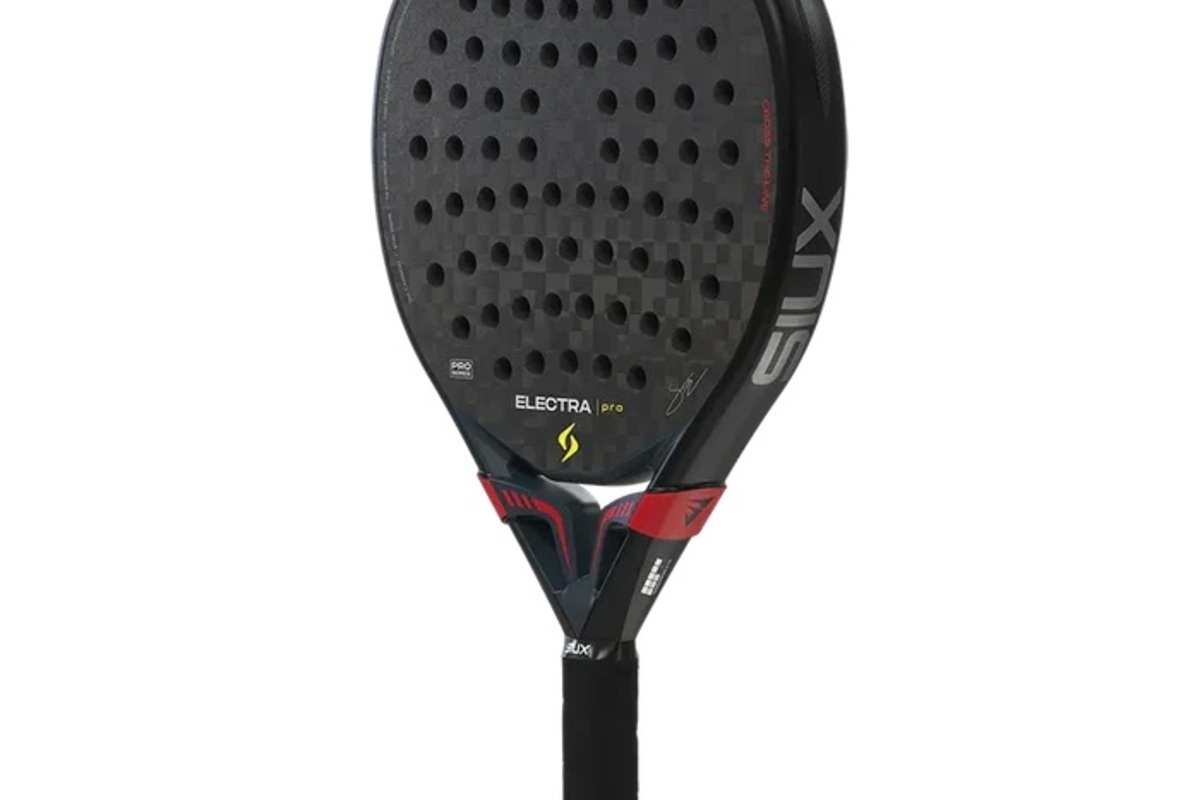
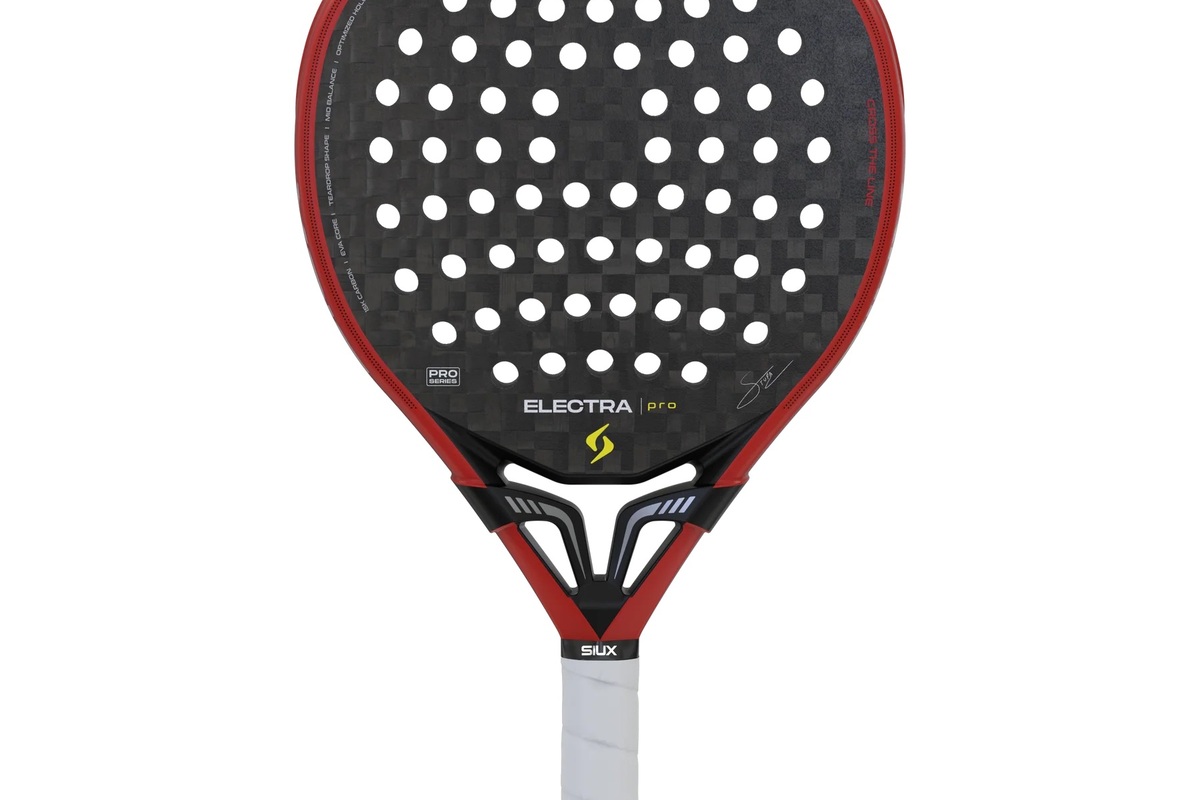
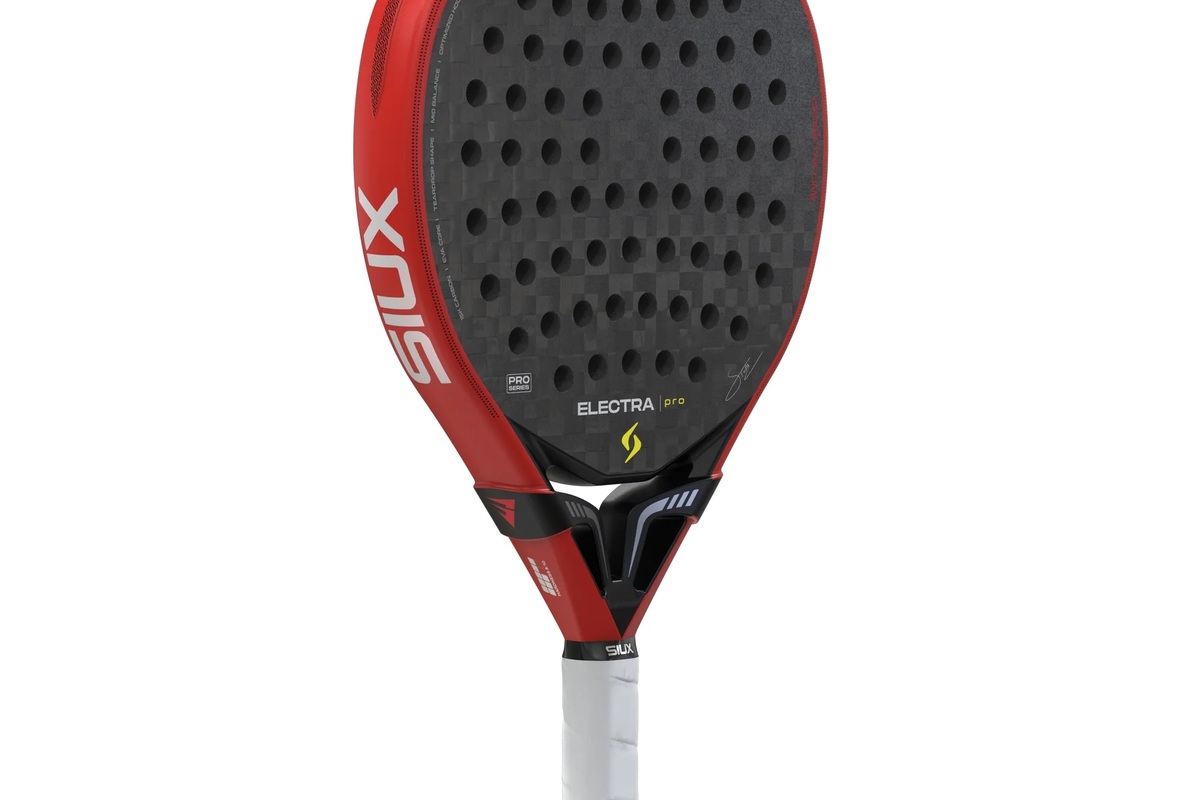
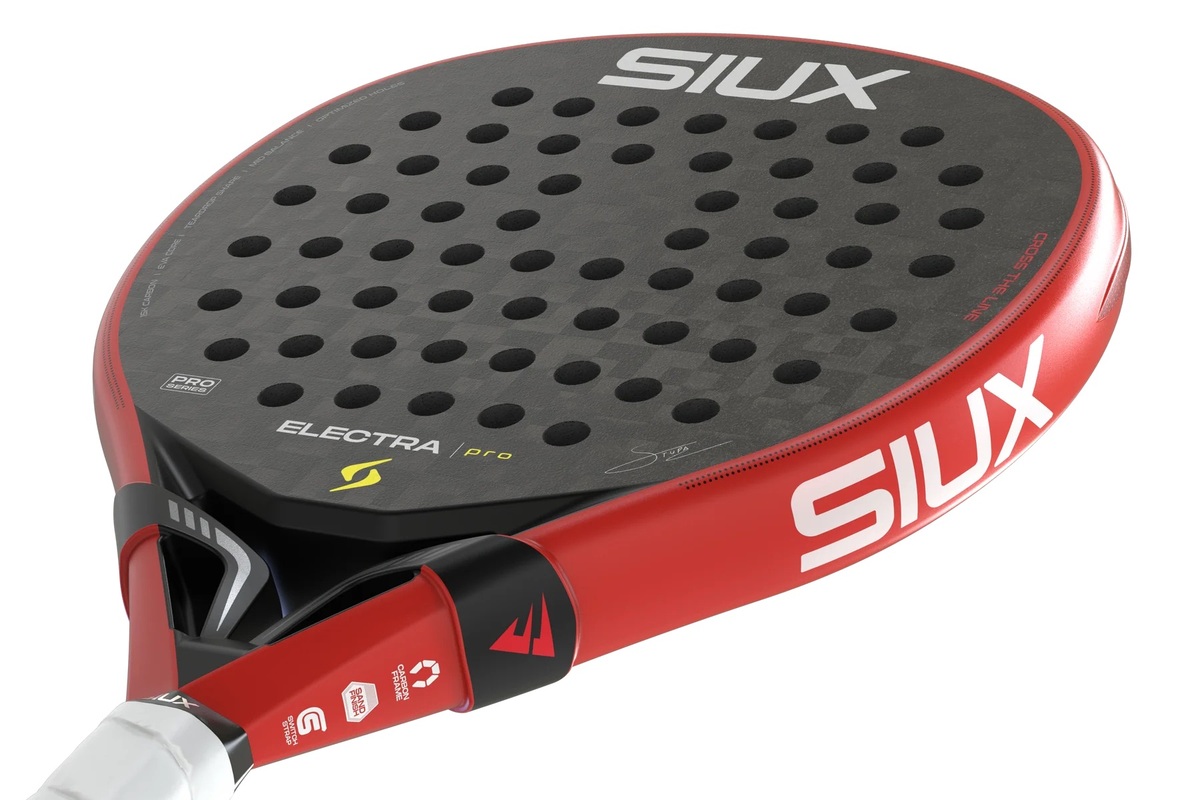
De Siux ST5 Electra Pro 2026 is een hybride teardrop-racket met een gemiddelde balans en een 12K-carbon slagvlak over een EVA-rubberkern, wat zorgt voor een stevige, directe respons. De sweet spot bevindt zich in het gedeelte van het slagvlak zonder perforaties en is geoptimaliseerd voor precisie en stabiliteit. Het contact voelt scherp aan in plaats van zacht, en het racket beloont een doortastende zwaai boven een passieve. Deze versie is steviger en technischer dan het model dat het vervangt, waarbij wat veerkracht en vergevingsgezindheid wordt ingeruild voor een hoger prestatieplafond zodra de techniek op orde is.
Voordelen en nadelen
Voordelen
- Scherpe, gecontroleerde respons bij het net.
- Natuurlijke grip en controle bij de bandeja en víbora.
- Hoger smashpotentieel dan de vorige generatie bij doortastende slagen.
- Goed te hanteren tijdens overgangen zonder topzwaar aan te voelen.
- Veelzijdige constructie die zowel aanval als verdediging dekt.
Nadelen
- Hardere blokken bij het net kunnen onstabiel aanvoelen; puur blokkeren levert minder vrije diepte op dan de vorige generatie.
- De sweet spot vereist een nauwkeurige timing; contact buiten het midden wordt afgestraft.
- Het bereiken van het hogere smash-plafond vereist meer techniek dan bij de meer vergevingsgezinde vorige versie.
- Het harde gevoel beperkt het comfort en biedt weinig demping bij misgeslagen ballen.
Technologieën en materialen
- 12K-koolstofvezeloppervlak — zorgt voor een stevige, directe respons waarbij de bal niet traag of trampoline-achtig wegvliegt;
- EVA-rubberkern — een hard gevoel (8/10), wat een gecontroleerde, verbonden respons oplevert die een doortastende zwaai beloont;
- Carbon frame — ontworpen om verdraaiing bij contact te weerstaan, waardoor het racket stabiel blijft terwijl je je tussen slagen verplaatst;
- Zandachtige, matte textuurafwerking — zorgt voor extra grip bij het genereren van spin, met name bij víbora-slagen en scherpere dropshots, mits het contact nauwkeurig genoeg is om hiervan te profiteren;
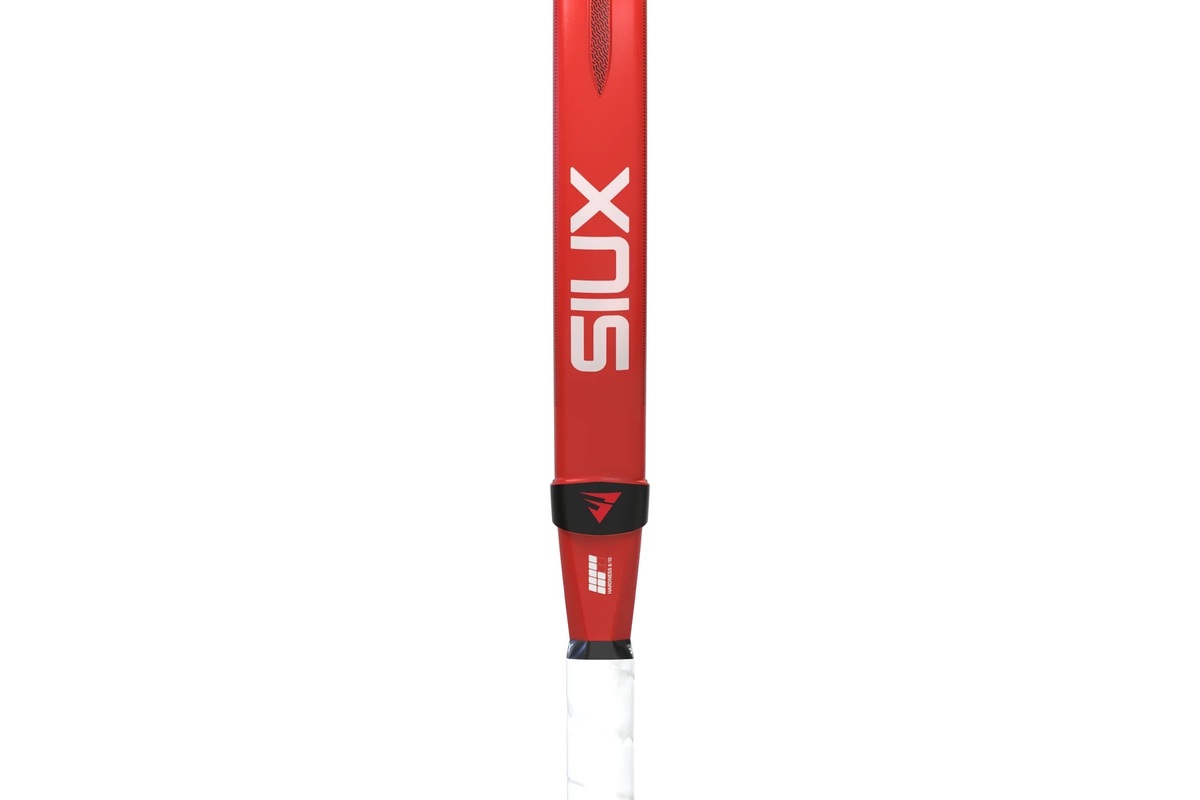
- U-vormige keelversterking — overgenomen van de vorige generatie voor structurele stabiliteit.
Wat de Siux Electra Pro 2026 zo bijzonder maakt
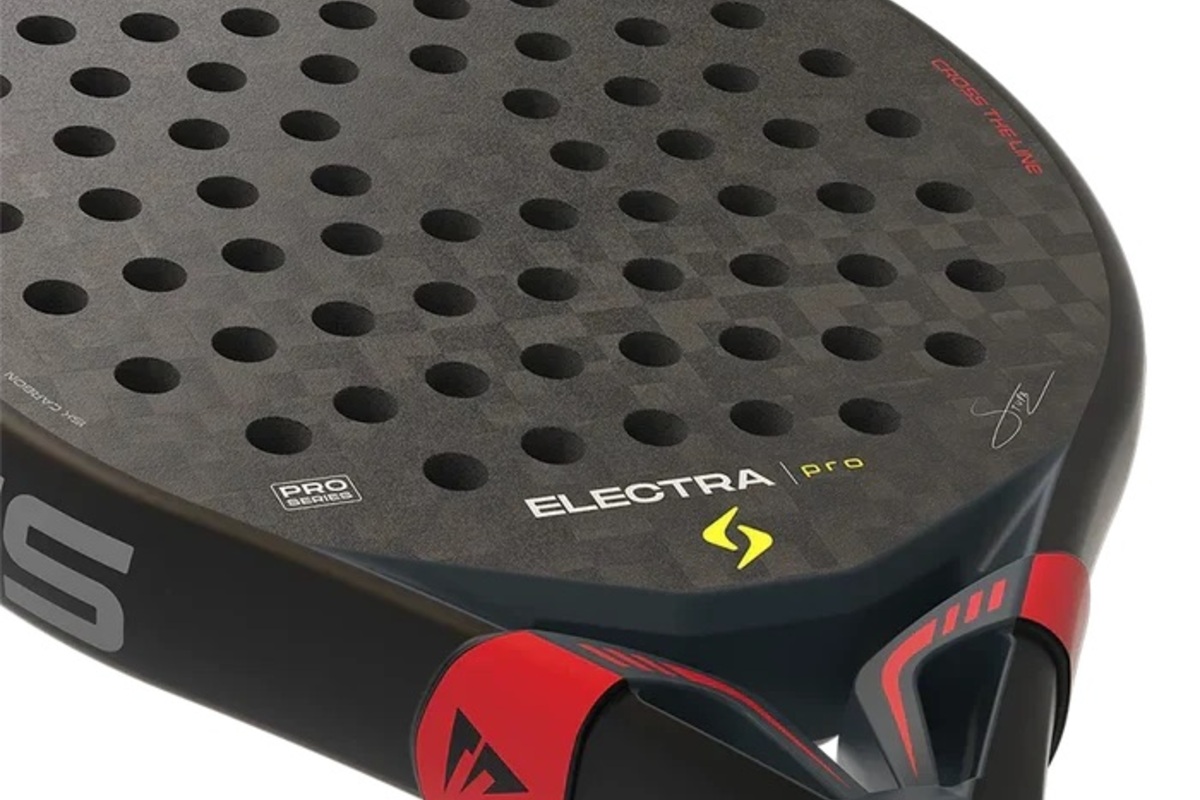
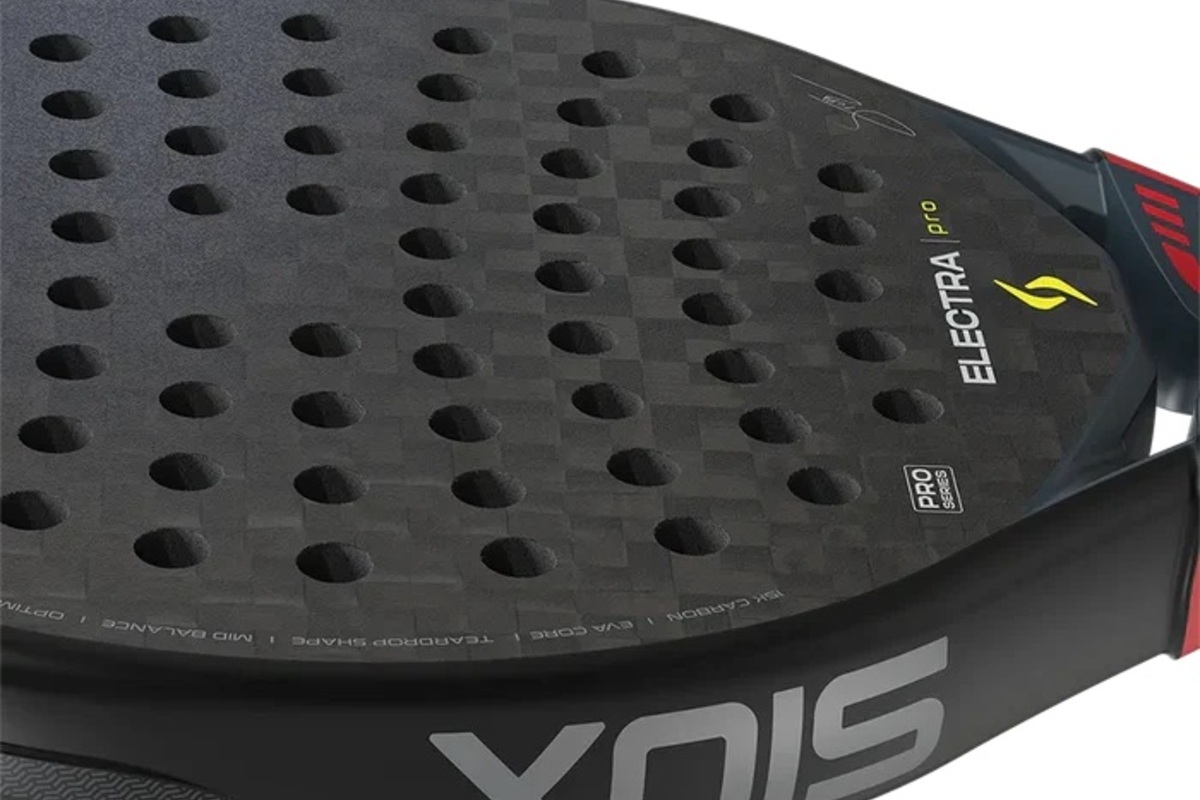
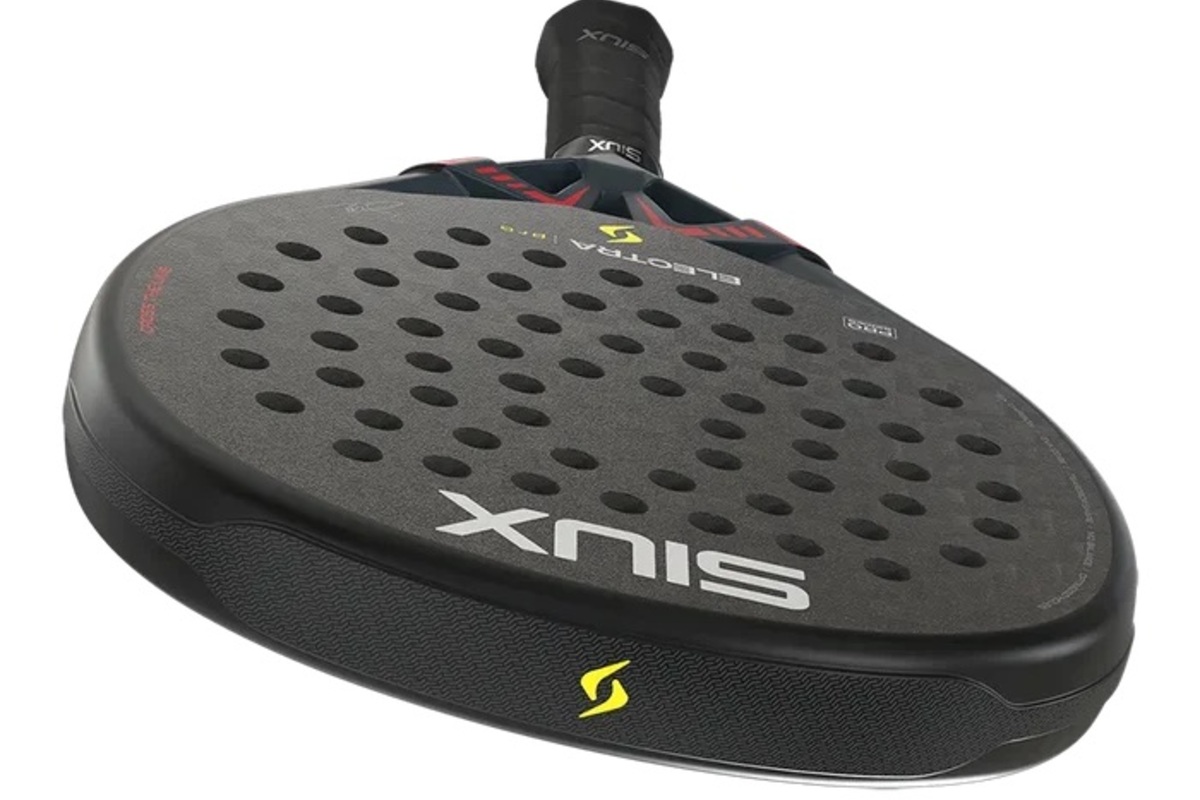
De kern van het racket biedt een evenwicht tussen verschillende functies: dankzij de medium balans en de hybride druppelvorm voelt het blad niet zwaar aan tijdens de overgang van verdediging naar aanval. De zandkleurige, matte afwerking zorgt voor extra spin zonder een opvallend 3D-patroon. Het frame is bestand tegen verdraaiing bij contact, wat belangrijk is bij een snelle overgang van een verdedigende blokkering naar een aanvallende bandeja. De hals is voorzien van een U-vormige versteviging uit de vorige generatie.
Galerij
Hoe het aanvoelt op de baan
Verdediging
Verdedigen is een sterk punt van het racket. Het blokkeren van harde ballen gaat met vertrouwen, het spelen van een verdedigende lob gaat soepel en het verdedigen van lage ballen en het hervatten van het punt levert een stabiele, voorspelbare reactie op. Bij aanzienlijke inkomende snelheid kan het racket in de hand verdraaien in plaats van zijn lijn vast te houden, vooral wanneer het contact niet in het midden plaatsvindt. Voorbereiding is belangrijk: een slechte opstelling wordt snel blootgelegd door de stevige kern, en de sweet spot is, hoewel bruikbaar, niet groot genoeg om late of ongeorganiseerde voetenwerk te compenseren. Contact dat net buiten die zone plaatsvindt, voelt vaak afgekapt aan in plaats van zuiver geraakt. Bij gemiddelde en gemiddeld-lage snelheid vereisen slagen een vollere, langere zwaai dan voorheen om de verminderde baluitkomst te compenseren. Bij snellere verdedigingen laat de 2026-uitvoering verbetering zien, aangezien een geringere terugkaatsing van het slagvlak zich vertaalt in een stabielere, beter controleerbare reactie onder druk.
Netwerk
Bij het net presteert het racket het best. Volleys komen los met een scherpe, stevige respons waardoor het gemakkelijk is om tegenstanders onder druk te zetten, en agressieve eerste volleys houden de bal laag en onder controle. Het variëren van het tempo werkt goed: zowel een zachtere blokvolley als een plotseling versnelde vervolgvolley komen van het slagvlak zonder onvoorspelbaar aan te voelen. Bij puur blokkeren is de generatiewisseling het meest merkbaar: het racket voor een stevige inkomende bal plaatsen zonder extra zwaai levert minder vrije diepte op dan de vorige versie, en contact buiten het midden in die situatie verkort de bal merkbaarder. Versnelde, aanvallende volleys vertonen betere controle dan de zachtere, veerkrachtigere vorige versie, aangezien er minder risico is dat de bal te ver weg zweeft.
Belangrijk
Hardere blokken aan het net kunnen minder stabiel aanvoelen, waarbij het frame lichtjes verdraait bij zwaardere inkomende snelheid.

Bandeja & Víbora
Deze slagen passen van nature bij het racket. De stevige kern helpt de bal onder controle te houden bij de bandeja, en het gestructureerde oppervlak geeft de víbora extra grip zonder de spin te forceren, mits de onderliggende techniek in orde is. Het frame blijft tijdens het contact verbonden in plaats van weg te draaien, waardoor herhaalde overhead-uitwisselingen niet chaotisch aanvoelen. De gemiddelde balans helpt bij het genereren van een hefboomeffect tijdens de afwerking, waardoor het racketblad aan het einde van de zwaai naar beneden trekt om meer kracht aan de slag te geven. In vergelijking met de vorige generatie is er minder veerkracht maar betere controle bij een hoog tempo, samen met het vertrouwen om de arm vrijer te laten loslaten zonder dat de bal oncontroleerbaar van het slagvlak afschiet. De afweging komt naar voren bij gehaast of geforceerd contact, waarbij de oudere, zachtere versie meer hulp bood.
Advies
Beide slagen vragen om je eigen techniek om spin en controle te ontketenen, in plaats van dat dit automatisch voortkomt uit een passieve zwaai.

Smash
De stijve structuur zorgt voor krachtige, explosieve smash-kracht bij zuiver, vastberaden contact, met name bij vlakke en driekwart-smashes. Die kracht is techniekafhankelijk: het racket levert pas bruikbare snelheid als de techniek volledig op orde is, en blijft anders achter bij de verwachtingen. De 2026-uitvoering bereikt zowel bij vlakke als driekwart-smashes een hoger potentieel dan het model dat het vervangt, maar dankzij de grotere sweet spot en extra rebound van de vorige versie konden spelers met minder technische precisie met minder inspanning een vergelijkbare effectieve kracht bereiken. Een volledige, doortastende zwaai en echte versnelling zijn hier belangrijker dan enige hulp van het racket zelf.
Wendbaarheid
De gemiddelde balans en de hybride druppelvorm zorgen ervoor dat het blad niet doorschiet bij overgangen tussen verdediging en aanval. Met 365 g is het zwaaigewicht eerder passend dan opvallend: het frame beweegt zonder traag aan te voelen, en het herpositioneren tussen een verdedigende blokkering en een netaanval vereist geen aanpassing van grip of timing. Bij snelle rally’s aan het net volgt het racket de bal soepel zonder van de lijn af te wijken. Spelers die van een lichter ‘diamond’-model komen, zullen het verschil merken; voor een all-court-model met dit gewicht en dit balanspunt is de hantering goed afgestemd op wat het racket van je vraagt.
Foutvergeving
De vergevingsgezindheid ligt onder het gemiddelde, hoewel de effectieve zone hoog op het slagvlak ligt — beter geschikt voor overheads dan voor verdedigende blokken — en de respons bij zuivere volley’s en overheads is zo beheerst dat de sweet spot in die situaties niet zo streng aanvoelt als het algemene profiel doet vermoeden. Centraal contact is zuiver en snel, maar een matige zijdelingse misser zorgt onmiddellijk voor minder diepte en snelheid, en het racket verdoezelt geen verkeerd getimed contact of beloont passieve voorbereiding. Het frame is bestand tegen verdraaiing bij contact buiten het midden, maar die stabiliteit draagt niet bij aan de vergevingsgezindheid, aangezien de energieoverdracht nog steeds afneemt zodra het contact buiten de effectieve zone plaatsvindt.
Comfort
Het harde gevoel is overal consistent en het dempt mis-slagen niet op dezelfde manier als een zachter racket dat zou doen.
Opmerking
Trillingen bij contact buiten het midden zijn een reële factor, hoewel de algehele ervaring bij een gematigd tempo en met een zuivere slagtechniek minder belastend is dan de harde kernspecificaties doen vermoeden.

Conclusie
De Siux Electra Pro 2026 is gepositioneerd als een allround racket in plaats van een gespecialiseerd instrument: solide netspel, natuurlijke bandeja en víbora, en een constructie die soepel meebeweegt bij overgangen tussen verdediging en aanval. In vergelijking met het model dat het vervangt, ruilt het wat rebound en vergevingsgezindheid in voor een stevigere, meer technische respons en een hoger vermogensplafond zodra de zwaai op niveau is. De vergevingsgezindheid en smashkracht van het racket zijn beide afhankelijk van de techniek: de toegang tot de sweet spot en de snelheid van de smash nemen aanzienlijk toe zodra de techniek solide is, terwijl het racket veeleisend blijft bij minder nauwkeurig contact. Het is geschikt voor gevorderde spelers met een goede timing die een stevig, direct racket willen dat niet sterk neigt naar pure aanval of pure verdediging. Spelers die hopen op een gegarandeerde ruime foutmarge of maximale stabiliteit onder druk, moeten die afweging maken voordat ze ervan uitgaan dat dit racket speelt als een vergevingsgezind, allround frame.
Waar Siux Electra Pro 2026 kopen
- Racket
- Siux
- 7 minuten
- John Macallan