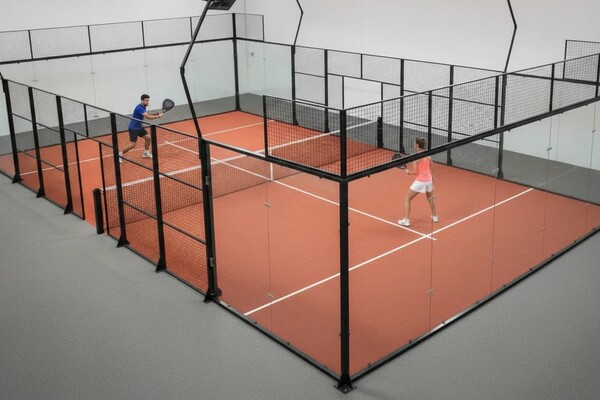
Wondering why coaches keep telling you to play cross court?
Cross court padel shots are usually the first tactical concept a beginner needs to actually understand, rather than just execute. Anyone can be told to "hit it diagonally," but knowing why that diagonal shot matters, and when it matters most, is what turns a random shot choice into a real strategy. For new players, leaning on cross-court shots is one of the fastest ways to cut down errors and start winning more points.
This guide looks at what a cross-court shot actually is, why it suits beginners so well, the situations where it's almost always the right call, and the mistakes that trip up players who are still building this habit.

What Does "Cross Court" Mean in Padel?
A cross-court shot travels diagonally from one side of the court to the opposite side, rather than straight ahead down the same line you're standing on. Since padel is played almost exclusively in doubles, this diagonal path naturally connects you with the opponent standing on the far side of the net, rather than the one directly in front of you.
The geometry matters here. A diagonal line across a rectangular court is longer than a straight line covering the same depth, which means the net looks a little lower and the court looks a little bigger when you aim cross-court. That extra room is exactly why beginners are told to favor this direction.
Why Beginners Should Rely on Cross-Court Shots
New players often want to copy the flashy down-the-line winners they see in highlight clips, but those shots only work once your control is solid. Cross-court play builds that control first.
More Margin Over the Net
Because the diagonal path is longer, you can hit with a bit more pace or a slightly flatter trajectory and still clear the net safely. Beginners who try the same pace down the line often catch the net or send the ball long, simply because there's less room for a small error to be forgiven.
Fewer Decisions Under Pressure
Padel moves fast, and beginners already have plenty to think about: footwork, contact point, where their partner is standing. Defaulting to cross-court removes one more decision from a crowded mental list, letting you focus on simply making clean contact with the ball.
Aligns With Doubles Positioning
In doubles, you and your partner are meant to move and cover the court as a unit. Cross-court shots naturally keep the point moving between the two players on the other side, which mirrors the positioning patterns you're also learning as a beginner. Down-the-line shots, by contrast, can pull you out of position if the return comes back quickly.
Note
Cross-court isn't a rule written into padel — it's a percentage play. Nothing stops you from hitting down the line, but as a beginner, the odds favor the diagonal shot in most situations.

Common Situations Where Cross-Court Is the Right Choice
A few recurring moments in beginner matches are almost always better played cross-court.
- Returning a serve, since the serve itself is hit diagonally and continuing that direction keeps the point simple
- Replying to a deep lob when you're not yet confident enough for an attacking overhead
- Rallying from the baseline while you and your partner settle into position
- Hitting a defensive shot off the back glass, where a controlled diagonal ball buys time to recover
None of these situations demand a spectacular shot. They call for a reliable one, and cross-court is almost always that reliable option.
Cross-Court vs Down-the-Line for Beginners
Here's a simple way to compare the two directions while you're still building consistency.
| Aspect | Cross-Court | Down-the-Line |
|---|---|---|
| Margin for error | Higher | Lower |
| Skill needed | Lower, good starting point | Higher, needs precise control |
| Effect on positioning | Keeps doubles shape intact | Can pull you out of position |
| Best used by beginners | As the default shot | Occasionally, once control improves |
Why the Serve Already Points You Cross-Court
Padel rules require the serve to be hit diagonally, bouncing into the service box on the opposite side of the court. That single rule quietly sets the tone for the whole point: the returner is already receiving the ball on a diagonal path, and continuing that same direction on the return is usually the simplest, safest reply.
This is part of why cross-court habits form naturally around the serve and return, even before a coach explains the tactical reasoning. Beginners who notice this pattern and lean into it, rather than fighting it by trying to redirect the ball down the line immediately, tend to settle into rallies more smoothly.
How Cross-Court Shots Fit Into a Beginner's Game Plan
Think of cross-court as your baseline strategy, not a shot you consciously choose every single time. If you're not sure what to do with a ball, hitting it cross-court is rarely the wrong answer. This gives you a default that keeps rallies alive, avoids unforced errors, and buys time to read what your opponents are doing before you commit to anything riskier.
As matches go on, you'll notice that a steady cross-court rally often pressures the weaker of your two opponents, since the ball keeps returning to whichever side you're aiming at. Simply staying consistent cross-court can be enough to force a mistake without you needing to do anything dramatic.
Advice
If you're ever unsure which direction to hit, choose cross-court. It's a simple rule that removes hesitation and keeps your shot selection consistent during a match.

Mistakes Beginners Make When Trying to Play Cross-Court
Understanding the concept is one thing; executing it consistently is another. These are the slip-ups that show up most often.
Gratis bracketgenerator — Americano, Mexicano en meer. Klaar in een paar minuten.
Overcorrecting Into the Middle
In an effort to avoid the sideline, beginners sometimes aim too conservatively and end up hitting toward the center of the court. This gives up the angle advantage that makes cross-court shots effective in the first place. Aim for the outer portion of the diagonal side, not the middle.
Trying to Hit Winners Down the Line Too Early
It's tempting to go for a spectacular down-the-line winner before your technique can support it. Most of these attempts end up in the net or wide, handing the point away. Save that shot for later once your control has caught up with your ambition.
Forgetting Partner Positioning
Cross-court play only works as intended if you and your partner move together. A beginner who hits cross-court but stays frozen in one spot loses much of the tactical benefit, since the team isn't covering the court as a unit.
Important
Cross-court consistency matters more than power at the beginner stage. Focus on landing the ball in play before worrying about hitting it hard.

When Beginners Can Start Adding Down-the-Line Shots
Once cross-court shots feel automatic and your unforced error count drops, it's a good sign you're ready to mix in occasional down-the-line shots, mainly as a surprise rather than a default. A well-timed change of direction against opponents who've settled into a cross-court rhythm can be very effective, but only because the cross-court pattern set that trap up in the first place.
Cross court padel shots aren't the most exciting part of the game to learn, but they're the fastest route to fewer unforced errors and more consistent rallies as a beginner. Build that habit early, and the rest of your game has a much sturdier foundation to grow from.