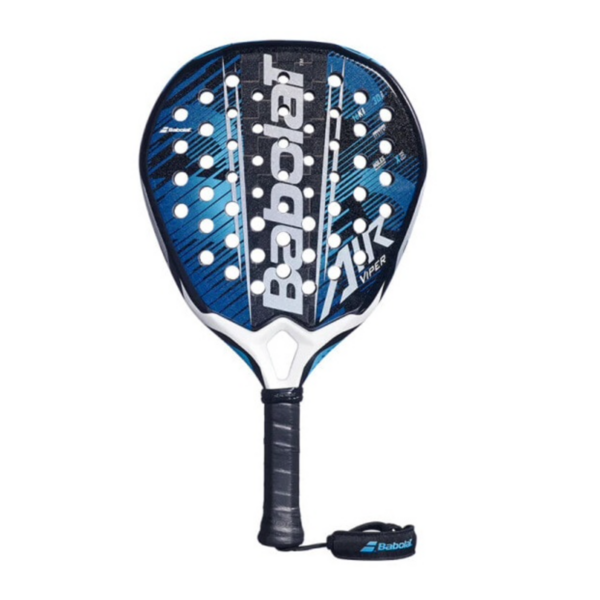

Best for attacking players who want speed at the net
This racket suits attacking players who already hit clean and want to live at the net, using quick hands and fast transitions rather than brute force to close out points. It fits a player whose game is built around speed, early preparation and overhead pressure. Anyone who wants a wide, forgiving sweet spot, or a racket that compensates for late or rushed contact, should look elsewhere, since the sweet spot here is narrow and demanding. Players who prefer a neutral, all court head shape may also find the racket's identity too specialized for their timing. This racket suits upper intermediate players moving toward a more attacking game, not only established advanced players, since it is quick to adapt to.

Specifications
- Shape
- Teardrop
- Weight
- 355 g (± 10 g)
- Touch
- Medium–Hard
- Balance
- Medium
- Core
- X-EVA
- Faces
- 16K Carbon
- Frame
- Carbon
- Level
- Intermediate / Advanced
Overview of the Babolat Air Viper 2.6 2026
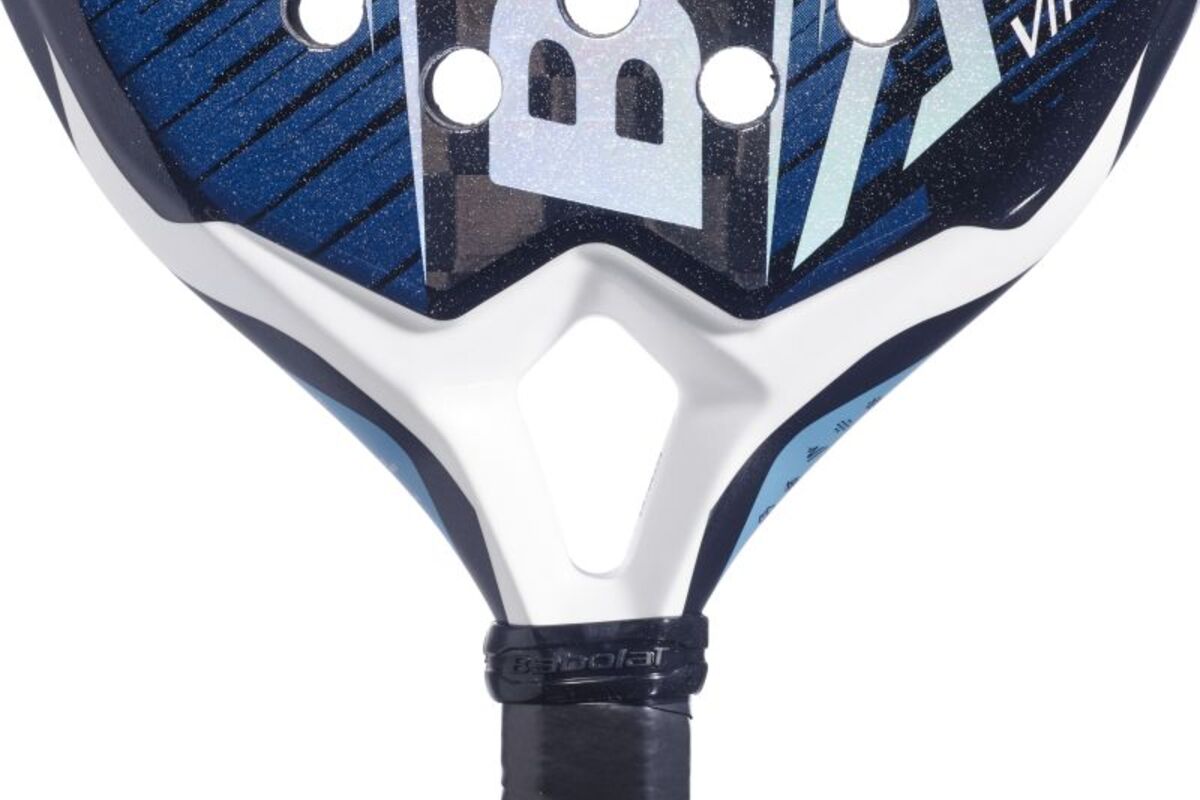
The Babolat Air Viper 2.6 2026 is built around a different idea than the rest of Babolat's Viper family. Instead of a heavy, stiff diamond meant to overpower, it is Babolat's dedicated Air Striker racket, built for speed and maneuverability first. The specification lists a teardrop head shape, a carbon frame, 16K carbon faces and an X-EVA core, all wrapped into a light 355 gram build with a medium balance point. The result is a racket meant to get to the net fast and finish points on the move rather than to grind opponents down with raw stiffness.
Pros & Cons
Pros
- Fast, light swing that keeps up with quick hands at the net.
- Strong ball exit and useful punch on smashes and overheads.
- Effective vibration filtering for a firm feeling racket.
- Forward balance without the sluggishness of a heavier diamond.
Cons
- Sweet spot is narrow and consistently flagged as demanding.
- Flat overhead smashes ask for more swing effort given the light weight.
- Not the ideal choice for players wanting a wide margin for error.
Technologies & Materials
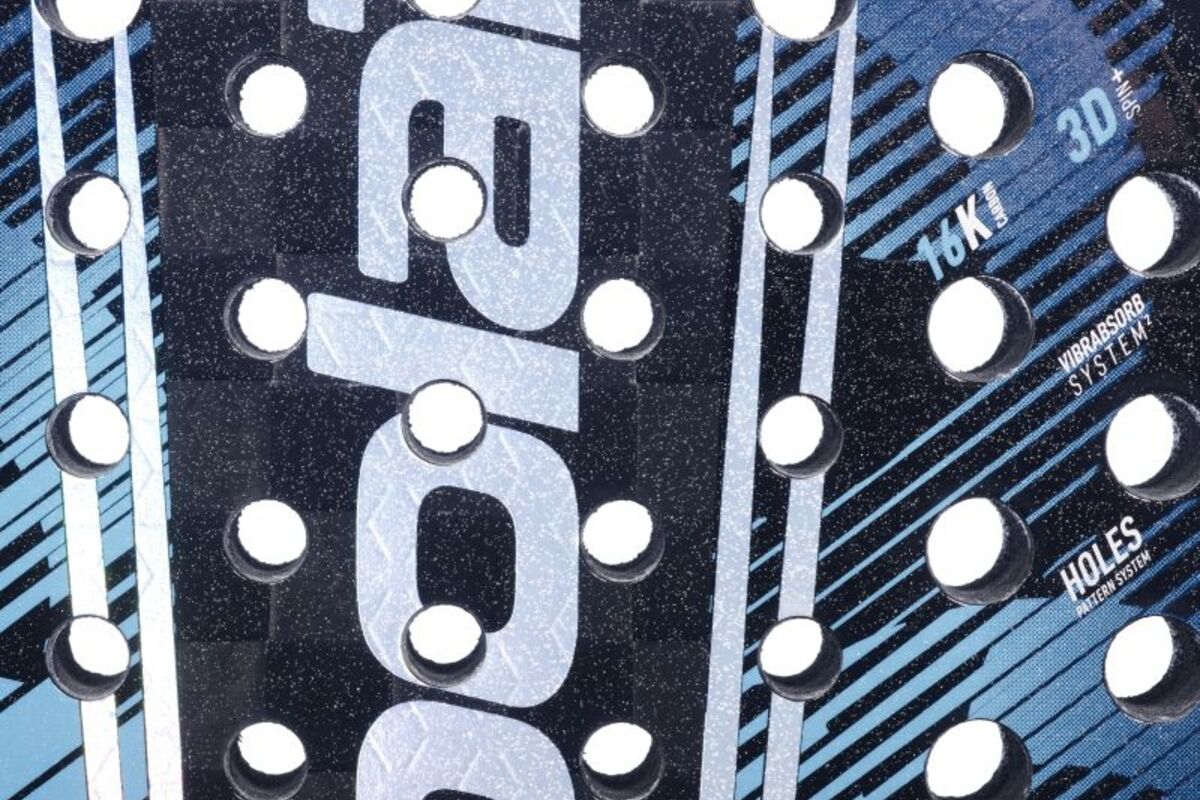
- Frame — carbon, with faces using 16K Carbon for a firm, direct response;
- Core — X-EVA, layering a softer inner foam with firmer outer layers to balance a reactive ball exit against a feel that never turns brick hard;
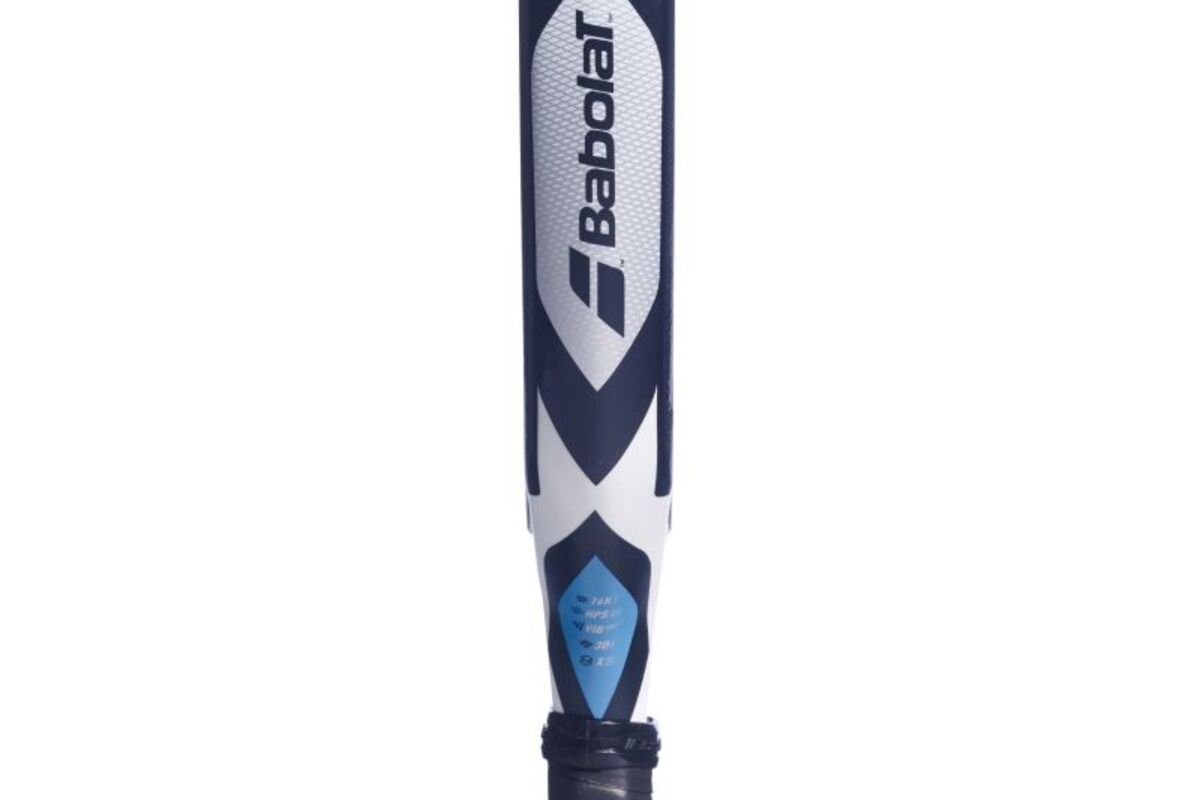
- Handle — approximately 14.5 cm, longer than typical for this shape, adding extra reach on stretched shots at the net;
- Vibrabsorb System — places elastomers inside the carbon fibers at the heart and handle of the racket, filtering vibration at the source rather than only after impact;
- 3D Spin+ — raised surface patterns combined with a rough finish to increase bite on the ball for spin and control;
- Smart Buttcap — a versatile system that lets a player adjust or fully remove the wrist strap;
- Syntec Team grip — the base grip the racket is built around.
What Makes the Babolat Air Viper 2.6 2026 Special
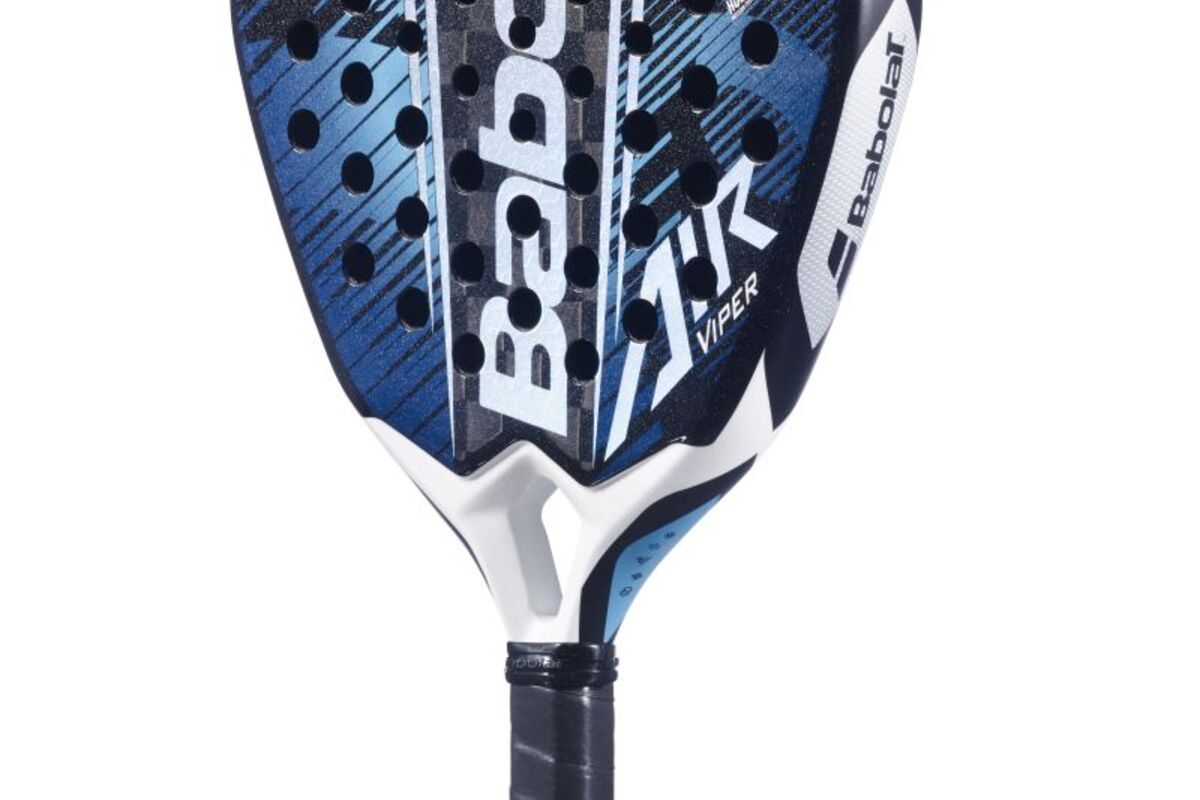
The defining idea behind the Air Viper is combining a light build with a forward balance without losing maneuverability, an unusual pairing that lets a player swing fast while still generating real pace on overheads. The head shape is teardrop. The Vibrabsorb System, powered by SMAC, integrates elastomers into the carbon fibers at the racket's core and handle, aimed at cutting vibration without adding the bulk of a heavier frame.
Gallery
How it Feels on the Court
Defense
From the back of the court, the racket is more useful than its speed focused identity suggests. Defensive lobs come out with decent depth, and the ball exit stays strong enough to help reset a point under pressure. This is not a control-first racket built to make defense effortless, but it does enough to keep a player in the rally. What it will not do is rescue rushed mechanics. The sweet spot is not wide, so a stretched, late, or off balance contact shows up immediately in reduced depth and direction. On centred hits, though, the response stays solid and the ball travels with real intent even from a defensive position.
Net Play
This is where the racket is most natural. Volley exchanges move quickly because the frame swings so easily, which makes small adjustments at the net far less tiring than on a heavier, stiffer attacking racket. Touch on chiquitas and short exchanges is solid without inviting a purely finesse based game, since the racket is built to pressure rather than to finesse. Blocks carry decent depth, and the appeal is less about raw power here and more about how easily the racket keeps the rhythm high without feeling stuck. The racket performs well on flat, fast volleys and blocks that stay deep at the glass, with the longer handle adding useful reach on shots that would otherwise be just out of range.
Advice
A player can get the racket in position early, block fast balls, and still add pace when the opening appears.

Bandeja & Víbora
Both shots suit the racket well. The bandeja comes off with useful depth, and the víbora carries enough acceleration to bother opponents without feeling difficult to swing through the preparation phase, so a player rarely feels late when the point speeds up. The limit shows up again at the sweet spot. Centred contact keeps these overheads lively and sharp, but missing the centre drops the response off faster than on a more forgiving shape, and this is the racket's clearest weak point. The víbora in particular is a strength: the ball stays controlled and easy to feel through contact, even where flat overhead smashes ask for more raw mass than the racket carries.
Smash
The smash behaves like a proper attacking shot, with enough punch to finish points on clean contact and a forward balance that helps load the swing. It is not the single most powerful smash in its category, but it is strong enough for a player who regularly finishes from above the net.
Maneuverability
Maneuverability is the racket's clearest strength. The light overall weight keeps the swing fast through the air, and the racket never feels sluggish even with its forward balance, letting a player move quickly between defense and attack.
Forgiveness
Forgiveness is the racket's weakest area. The sweet spot is narrow and demanding. Centred contact rewards the player with real pace and depth. The sweet spot has grown more generous with each generation; earlier versions had a far smaller usable zone. Even with that improvement, the sweet spot remains tight next to broader, more forgiving shapes, so this is a racket that asks for clean, repeated timing rather than one that compensates for imperfect contact.
Important
Off centre contact loses quality quickly; the small sweet spot is the racket's main drawback despite otherwise strong power and control.

Comfort
The medium hard feel stays firm without tipping into an overly dry, stiff sensation, thanks in part to the Vibrabsorb System filtering vibration at the core and handle. It is comfortable enough for repeated attacking play, though it is still built around speed and pace rather than maximum cushioning.
Note
This year's version is also slightly less dry than earlier Air Viper generations, making the ball easier to get moving without needing to push as hard.

Conclusion
The Babolat Air Viper 2.6 2026 delivers on its Air Striker identity. A light racket built around a 16K Carbon face, an X-EVA core and a carbon frame, all aimed at getting to the net fast and finishing points on the move. Maneuverability and net play stand out as clear strengths, and the smash and overheads carry real pace when contact is clean. The tradeoff is forgiveness, since the sweet spot is narrow and off centre contact costs depth and direction quickly. Attacking players who already hit clean and want speed at the net are the clearest fit.
Where to buy Babolat Air Viper 2.6 2026

- Racket
- Babolat
- 7 minutes
- John Macallan