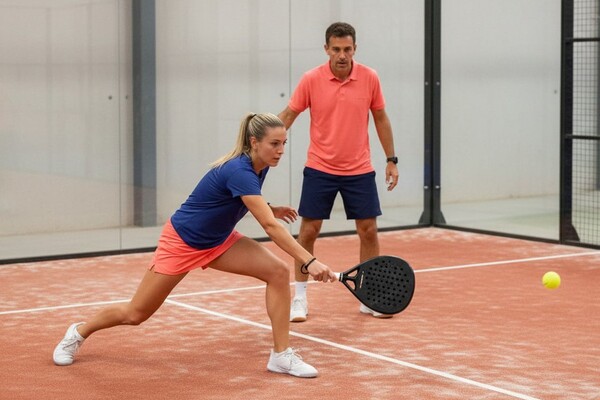
Trying to actually build a reliable chiquita instead of stumbling into one by accident?
Chiquita drills are how the shot actually becomes a reliable weapon rather than something you only pull off occasionally by accident. The chiquita is padel's controlled, low, drop-shot-style volley or half-volley aimed at forcing opponents at the net into an uncomfortable low ball — and like most touch shots, it depends on precise repetition to develop consistently.
This guide covers a set of drills that build the chiquita step by step, from isolated technique work to realistic point-based practice.

A Quick Reminder of What the Chiquita Is
The chiquita is a soft, low shot hit toward an opponent's feet, typically from around the service line, designed to force a difficult low volley or half-volley in response. Unlike a hard-driven shot, the chiquita relies on touch and placement rather than pace, making it one of the trickier shots to build real consistency with.
Where the Chiquita Fits Into a Player's Overall Skill Set
Most players don't start working on the chiquita until they already have reasonably solid volleys and groundstrokes, since it's really a variation built on top of those fundamentals rather than a standalone beginner shot. Trying to learn a soft, controlled touch shot before the basic swing mechanics are consistent usually leads to frustration, so it's worth treating this as an intermediate addition to your game rather than something to prioritize from day one.

Why Dedicated Drills Matter for the Chiquita
The chiquita depends on subtle racket control and precise depth judgment, both of which are difficult to develop while also managing the pressure and unpredictability of a live point. Isolating the touch and placement elements in a drill setting lets you build real feel for the shot before adding the complexity of match play.
Beginner Chiquita Drills
Shadow Swing for Touch
Without a ball, practice the compact, controlled swing the chiquita requires, focusing on a soft, cushioned motion rather than anything resembling a drive or a punch. This helps build the feel for a slower, more delicate swing before adding a moving ball into the mix.
Put it to the test with our free padel quiz — quick questions, instant results.
Fed Ball Target Practice
Have a partner or coach feed easy, moderate-paced balls while you practice hitting soft, low chiquitas toward a specific target zone near their feet. Focus purely on getting the ball low and short at first, without worrying about disguising the shot or adding variation.
Net-Adjacent Positioning Drill
Practice moving into position around the service line, since the chiquita is typically hit from this general area rather than right at the net or deep in the backcourt. Getting comfortable with this specific positioning helps you recognize when a chiquita opportunity is actually available during a point.
| Drill | Skill Focus | Level |
|---|---|---|
| Shadow swing for touch | Soft, compact swing mechanics | Beginner |
| Fed ball target practice | Depth and low placement near feet | Beginner |
| Net-adjacent positioning | Recognizing the right court position | Beginner |
| Disguise drill | Hiding shot intention until the last moment | Intermediate |
| Chiquita-to-net transition | Following the shot forward to attack the response | Intermediate |
| Live-point chiquita drill | Recognizing real opportunities under pressure | Intermediate |
Intermediate Chiquita Drills
Disguise Drill
Practice starting the chiquita with a preparation that looks similar to a regular drive or volley, only softening the swing at the last moment. This makes the shot far more effective in real play, since opponents who see it coming early have time to adjust and cover the low ball comfortably.
Chiquita-to-Net Transition
After hitting the chiquita, immediately practice moving forward to capitalize on the difficult response it forces. A chiquita that isn't followed by a quick move toward the net wastes much of the advantage the shot was designed to create in the first place.
Live-Point Chiquita Drill
Play short, competitive points that start from a neutral rally, specifically looking for and taking chiquita opportunities as they naturally appear. This builds the recognition skill of spotting the right moment for the shot, which is just as important as the technique itself.
Common Issues These Drills Help Fix
Hitting It Too Hard
A common mistake is adding too much pace, turning what should be a soft, controlled shot into an easy, attackable ball for opponents. Drills that isolate touch over power directly address this habit.
Poor Depth Judgment
A chiquita that lands too shallow or too deep loses much of its effectiveness, either sitting up for an easy response or sailing long entirely. Target-based drills help calibrate exactly how much touch a given shot needs.
Telegraphing the Shot
Winding up differently for a chiquita compared to a normal shot gives opponents an early read, letting them adjust before the ball even arrives. The disguise drill specifically targets this issue.
Structuring a Chiquita Practice Session
A reasonable session might start with shadow swings to build touch, move into fed ball target practice for depth and placement, add disguise work once contact feels consistent, and finish with live-point drills that force real decision-making. Repeating this structure regularly builds both the mechanics and the judgment the chiquita actually requires in a match.
Practicing Without a Regular Partner
Shadow swings can be practiced entirely solo, but most of the drills above genuinely need someone feeding balls consistently to be effective. If a coach isn't available every session, pairing up with another player working on their own net game and trading feeding duties is a practical way to keep building this shot without needing formal lessons every time.

Chiquita Drills Quick Checklist
- Start with shadow swings to build a soft, controlled motion.
- Practice hitting low, short targets with fed balls before adding pace or variety.
- Get comfortable recognizing the right court position for the shot.
- Work on disguising the shot so it doesn't telegraph early.
- Practice moving forward immediately after hitting a chiquita.
- Finish with live-point drills to build real recognition and decision-making.
The chiquita rewards patient, deliberate practice far more than trying to force it during competitive points. Work through these drills in order, and the shot goes from something you occasionally stumble into to a genuine, repeatable tool in your game.