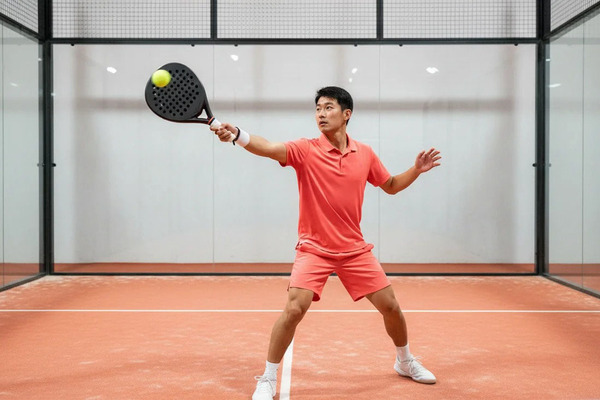
Not sure whether that high ball calls for a bandeja or a vibora?
Bandeja and vibora are the two overhead shots every padel player reaches for when a smash isn't on the table. If you've watched a match and wondered why the player at the net didn't just smash a high ball, the answer is usually one of these two shots. The bandeja vs vibora question comes up constantly for players moving past the beginner stage, because both shots look similar at first glance but do very different jobs on court.
This guide breaks down what each shot is, how the technique differs, and when to reach for one over the other. By the end, you'll understand the mechanics behind both, the mistakes that trip up most players learning them, and a simple way to decide which one your next lob calls for.

What Is a Bandeja in Padel?
A bandeja is a controlled overhead shot played with backspin. The name comes from the Spanish word for "tray," which describes how the paddle face stays open and carries the ball rather than smashing through it. Players use the bandeja when a lob lands deep enough that a full smash is too risky, but the ball still sits high enough to attack from above.
The point of a bandeja isn't to end the rally outright. It's to keep control of the net position while pushing your opponents back. A well-placed bandeja lands deep in the backcourt, often in a corner, and bounces low enough that the opponent has to hit their next shot from below net height. That gives your team time to stay at the net and keep pressure on.
Technically, the bandeja is hit with a relatively short, controlled swing. The paddle face stays slightly open at contact, the wrist stays firm rather than snapping through the ball, and the shot finishes with a smooth follow-through instead of a violent one. This is what separates it from a smash, where the goal is raw power.
What Is a Vibora in Padel?
A vibora, meaning "viper" in Spanish, is also an overhead shot, but it's hit with sidespin instead of backspin. Instead of carrying the ball with an open face, you brush across it, which makes the ball kick sideways after it bounces or hits the glass. That unpredictable bounce is what makes the vibora such an effective attacking option.
Players typically choose a vibora when the lob is a bit shorter or lower than ideal for a bandeja, giving them a chance to add some pace while still keeping the shot safer than a full smash. The sideways kick off the back glass or side wall makes it genuinely hard to read, especially for opponents who aren't used to facing it.
The swing for a vibora involves more wrist rotation than a bandeja. You brush the outside of the ball from high to low, generating spin rather than pure downward force. It's a shot that rewards timing and feel over strength, which is part of why it takes longer to develop than a basic smash.
Bandeja vs Vibora: The Core Difference
Both shots exist to solve the same problem: what to do with a high ball that isn't quite a smash opportunity. The difference is in how each shot solves it. A bandeja prioritizes control and depth. A vibora prioritizes disruption through spin. Neither is "better" in a general sense — they're tools for different situations.
Put it to the test with our free padel quiz — quick questions, instant results.
Trajectory and Spin
A bandeja flies with backspin, which makes the ball sit up slightly after the bounce but keeps it low and predictable in direction. A vibora flies with sidespin, so after it bounces or touches the glass, it can kick left or right unexpectedly. This is the single biggest difference between the two, and it's why a vibora feels harder to defend against even when it isn't hit particularly hard.
Speed and Risk
The bandeja is the safer of the two shots. Because the swing is shorter and the goal is placement rather than power, there's less room for error. The vibora carries more speed and more spin, which raises the ceiling on how disruptive it can be, but also raises the chance of a mishit if your timing is off. Most coaches introduce the bandeja first for exactly this reason.
Grip and Swing Path
Both shots typically use a continental grip, similar to a serve or volley, but the swing path diverges from there. The bandeja swing moves through the ball in a fairly straight line with an open paddle face. The vibora swing moves across the ball, almost like slicing sideways, which is what produces the sidespin. Players sometimes describe the vibora motion as "painting" the ball rather than hitting it.
Note
Both shots come from the same overhead position and the same basic ready stance. The difference is entirely in the swing path and paddle face angle at contact, not in where you stand or when you jump.

Bandeja vs Vibora at a Glance
Here's a quick side-by-side comparison to keep the two shots straight while you're learning them.
| Aspect | Bandeja | Vibora |
|---|---|---|
| Type of spin | Backspin | Sidespin |
| Main goal | Control and depth | Disruption and pace |
| Risk level | Lower | Moderate to higher |
| Bounce behavior | Predictable, stays low | Kicks sideways, hard to read |
| Best against | Deep, well-placed lobs | Shorter or lower lobs |
| Learning difficulty | Easier to start with | Takes longer to master |
| Typical use | Maintaining net position | Taking the initiative |
When to Use a Bandeja
Reach for a bandeja whenever you want to stay patient. It's the right shot when:
- The lob lands deep, giving you little margin for a risky attacking shot
- You and your partner are already controlling the net and don't need to force anything
- The sun, wind, or a difficult bounce makes timing unreliable
- You want to buy time to reposition before the next shot
Think of the bandeja as the shot that keeps the score of the rally in your favor without gambling on a single point. It's especially useful in doubles, where padel is played almost exclusively, since it lets your team hold the net position that decides most points.
Advice
If you're unsure which shot to hit, default to the bandeja. A safe bandeja that keeps you at the net beats a risky vibora that sends the ball long or into the net.

When to Use a Vibora
Reach for a vibora when you want to change the rhythm of the point. It fits best when:
- The lob is shorter than ideal for a bandeja but still too deep for a clean smash
- You want to catch an opponent off guard with an unpredictable bounce off the glass
- Your team needs to break a defensive pattern the opponents have settled into
- You've already built confidence with the bandeja and want to add variety
The vibora shines against opponents who read shots well and anticipate a straightforward bandeja. The sideways kick forces a split-second adjustment that many players simply don't have time to make.
Important
Don't attempt a vibora under pressure until you've drilled it enough to trust your timing. A mishit vibora often lands short or wide, handing the point straight back to your opponents.

Common Mistakes with Both Shots
Most players struggle with the same handful of issues when they're first learning bandeja and vibora. Here are the three that show up most often.
Turning the Vibora into a Wild Swing
Because the vibora involves more wrist and racket-head speed, beginners often swing too hard, trying to force spin instead of letting the brushing motion create it naturally. This usually sends the ball long or into the net. The fix is to slow the overall swing down and focus on the angle of contact rather than raw speed.
Letting the Bandeja Sit Up
A bandeja hit with too flat a paddle face loses its backspin and bounces up high, giving your opponent an easy shot to attack. Keep the face slightly open through contact and aim for depth rather than trying to add pace.
Ignoring Footwork Before Contact
Both shots depend on getting your body sideways and behind the ball early. Players who rush toward the ball and hit it while still moving forward lose control over both spin and direction. Set your feet, get your paddle up in position, and then commit to the swing.
How to Practice Bandeja and Vibora
Both shots improve quickest with repetition against a feeder, whether that's a coach, a partner, or a ball machine. A simple progression looks like this:
- Start with high, easy feeds and practice the bandeja motion without worrying about placement — just get the open paddle face and backspin feel consistent
- Add a target zone in the backcourt corner and work on landing the bandeja there consistently
- Switch to the vibora with the same easy feeds, focusing purely on the brushing motion and sidespin, not power
- Introduce a target near the side wall or glass so you can see and feel the sideways kick after the bounce
- Mix feeds randomly between short and deep lobs and practice deciding, in real time, which shot fits each one
This kind of deliberate, low-pressure repetition builds the muscle memory that lets you make the right call during an actual match, when there's no time to think through the mechanics.
Which Shot Should Beginners Learn First?
If you're new to padel, learn the bandeja first. It's more forgiving, teaches the fundamentals of overhead control, and gives you a reliable shot to fall back on in almost any rally. Once the bandeja feels natural, moving on to the vibora becomes much easier, since you'll already understand the footwork, the open stance, and the timing that both shots share.
In the end, the bandeja vs vibora decision isn't about picking a favorite. It's about reading the ball as it comes off the lob and choosing the tool that fits that exact moment. Players who master both shots simply have more answers on court, and that's often what separates a solid intermediate player from someone still figuring out what to do with a high ball.