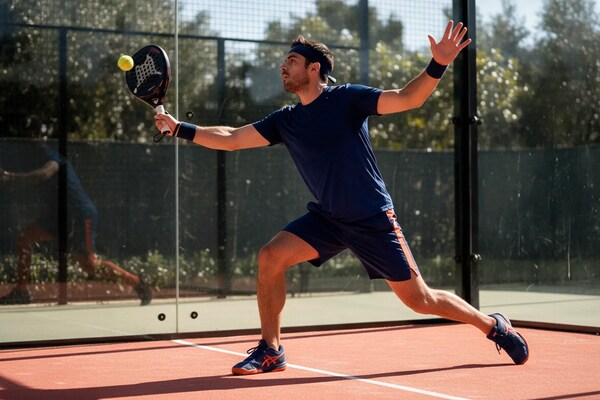
The bajada is one of padel's most distinctive shots, and it's a good example of how the sport's walls create attacking opportunities that simply don't exist in tennis. Once you understand when and how to use it, the bajada becomes a genuine weapon for turning a defensive lob from your opponents into an aggressive winner off the back wall.
This guide covers what a bajada actually is, the technique behind hitting it well, when it makes sense to use, and the mistakes that trip up players learning the shot for the first time.
What Is a Bajada in Padel
Bajada is Spanish for "descent" or "coming down," and it refers to a shot hit after the ball bounces off the back wall and is now dropping down in front of you, rather than rising. Instead of playing it safe with a defensive lob or a simple reset, the bajada attacks that dropping ball with a downward, aggressive swing aimed at putting the point away or forcing a weak reply.
It's typically used against a lob that your opponents have hit deep, one that bounces off the back glass and starts coming down within your reach before it bounces a second time.
Where the Bajada Fits Into a Player's Skill Progression
Most players learn the bajada after they're already comfortable with basic groundstrokes and reading back wall bounces, since it combines both skills into a single, more demanding shot. It's generally considered an intermediate technique rather than something absolute beginners need to prioritize. Building solid fundamentals first makes learning the bajada's timing and swing path considerably easier.
Why the Bajada Exists as a Shot
In tennis, a deep lob that clears you is simply a lost point. In padel, that same lob rebounds off the back wall, giving you a second opportunity to deal with it, and the bajada is one of the more aggressive ways to capitalize on that opportunity rather than just surviving it. It's a direct result of padel's enclosed court design, and it's part of what makes the sport's back-wall play so different from anything in tennis.
When to Use a Bajada
The bajada works best against a lob that's landed deep and is coming off the back wall with a predictable, moderate trajectory, not one that's still rising sharply or one you're badly out of position for. If you have time to set up, read the bounce, and swing with control, it's a strong option. If you're rushed or off-balance, a safer defensive shot is usually the better call.
| Situation | Good Time for a Bajada? | Why |
|---|---|---|
| Deep lob, ball dropping predictably off the wall | Yes | Enough time to set up and attack with control |
| You're rushed or off-balance | No | A poorly hit bajada often sails long or wide |
| Ball still rising sharply off the wall | No | Timing is too difficult; wait for it to descend further |
| Opponents are camped at the net | Yes | A well-placed bajada can be a genuine winner |
Technique for the Bajada
Technique for the bajada breaks down into a handful of pieces that build on each other, starting with recognizing when the ball is actually ready to attack.
Reading the Descent
The key skill is recognizing exactly when the ball has started coming down after its rebound off the back wall, rather than trying to hit it while it's still rising. Watching the full arc, up off the wall, then curving downward, gives you the timing window needed to attack it properly.
Positioning and Setup
Move to a spot where the ball will be roughly waist to shoulder height as it descends, giving you a comfortable striking zone rather than reaching up or down awkwardly. Getting into position early, rather than adjusting at the last second, makes a noticeable difference in how clean the contact feels.
The Downward Swing
Unlike a flat groundstroke, the bajada uses a swing path that comes down and through the ball, similar in spirit to a smash but generally less extreme in angle since you're not hitting from as high up. The goal is to drive the ball down into the court on your opponents' side, ideally with enough pace and placement to make it difficult to return.
Target Selection
Aiming at open space, a weaker opponent, or a sharp angle toward the sidelines tends to produce the best results. Going straight at an opponent standing at the net can work too, but leaves less margin for error if your placement is slightly off.
Common Mistakes With the Bajada
A handful of recurring errors account for most missed bajadas, and each one is easy to spot once you know what to look for.
Attacking Too Early
Trying to hit the bajada while the ball is still rising off the wall, rather than waiting for it to start descending, is one of the most common timing errors. Give the ball a moment to reach its peak and begin dropping before committing to the swing.
Overcommitting From a Poor Position
Not every lob off the back wall is a good bajada opportunity. Forcing an aggressive shot when you're rushed, off-balance, or poorly positioned usually leads to more unforced errors than it's worth. A controlled defensive shot is often the smarter choice in those situations.
Swinging Too Flat
Treating the bajada like a standard groundstroke, with a flat swing path instead of a downward one, often sends the ball long since it doesn't account for the ball's height and descending trajectory. The downward swing path is what gives the shot its attacking angle.
Ignoring Opponent Positioning
Hitting the bajada without checking where your opponents are standing wastes an opportunity to target open space or a weaker returner. A quick look before committing to your target makes the shot far more effective.
Practicing the Bajada
A useful drill is to have a partner or coach feed deep lobs toward the back wall while you focus purely on timing, waiting for the ball to descend before swinging, without worrying about precise placement at first. Once the timing feels consistent, add target practice by aiming for specific zones on the court to build both accuracy and confidence under more realistic conditions.
Bajada vs Other Wall Attacking Shots
The bajada is often mentioned alongside other advanced padel shots like the bandeja and vibora, but it serves a different purpose. Where those shots are typically hit from an offensive position near the net against a ball coming toward you, the bajada specifically targets a ball that's already rebounded off your own back wall. Understanding this distinction helps avoid confusing the timing and swing path needed for each shot.
Bajada Quick Checklist
- Wait for the ball to start descending off the back wall before attacking it.
- Position yourself so the ball reaches a comfortable waist-to-shoulder striking height.
- Use a downward swing path rather than a flat groundstroke motion.
- Aim at open space or a weaker opponent rather than hitting blindly.
- Only attempt it when you have time and balance: default to a safer shot otherwise.
- Practice the timing separately from placement before combining both under pressure.
The bajada is a great example of how padel's walls turn defense into offense. Once you can reliably read the ball's descent and commit to the downward swing, it becomes one of the most satisfying ways to punish a poorly placed lob.