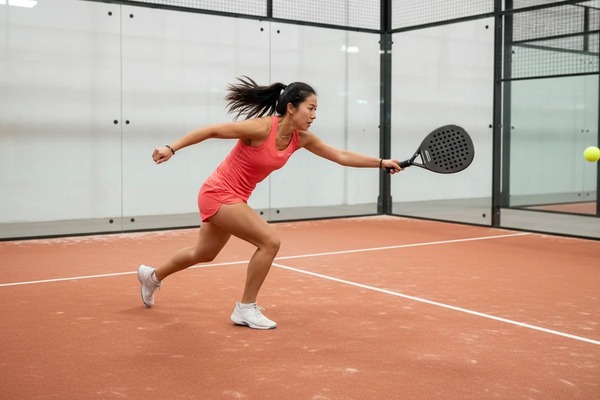
Running out of legs by the third set?
Endurance training for padel players is about more than just being able to run for an hour. Matches are built around short, explosive bursts of movement separated by brief recovery windows, repeated over dozens of points and sometimes well over an hour of play. Building the right kind of endurance means training both your aerobic base and your ability to recover quickly between sprints, not just logging long, steady runs.
This guide covers why endurance matters more in padel than it might look from the sideline, the specific types of endurance worth training, and a mix of on-court and off-court methods to build them.

Why Endurance Matters More in Padel Than It Looks
A padel point rarely lasts more than a few seconds of hard running, but a match is made up of dozens of these bursts strung together with short breaks in between. Fatigue doesn't usually show up as an inability to keep moving, it shows up as slower recovery between points, late reactions, and technique that starts to break down in the final stages of a close match.
Because points restart quickly and matches can run long, especially in best-of-three formats, players with better conditioning tend to maintain their shot quality deeper into a match than players who rely purely on skill.
Note
This article covers general training principles. If you're new to structured exercise or have any health concerns, check with a doctor or qualified trainer before starting a new conditioning program.

The Two Types of Endurance Padel Players Need
Aerobic Base for Long Matches
Your aerobic base is the foundation that lets you sustain effort across a long match without your overall energy levels crashing. A solid aerobic base also helps you recover faster between points, since your body clears fatigue byproducts more efficiently when your cardiovascular system is well conditioned.
Repeated Sprint Ability for Point-to-Point Recovery
Padel rarely asks for one long sustained sprint. Instead, it demands the ability to repeat short, intense bursts of movement over and over, with only a few seconds of rest between them. This quality, often called repeated sprint ability, is what lets you explode for a wide ball late in the third set with roughly the same speed you had in the first game.
On-Court Endurance Drills
Multi-Ball Rally Drill
Test det med vores gratis padelquiz — hurtige spørgsmål, øjeblikkeligt resultat.
Have a coach or partner feed balls continuously for two to three minutes without stopping, mixing volleys, smashes, and defensive shots. This builds match-specific conditioning far more directly than generic cardio, since it trains your body to move and recover under the exact demands padel places on it.
Continuous Point Play with No Rest Between Games
Play several games back to back with minimal rest between them, rather than the usual break between games in a set. This mimics the cumulative fatigue of a long match and helps you get comfortable performing technically demanding shots while tired, which is exactly when matches are often decided.
Off-Court Cardio Training
Steady-State Cardio for Base Fitness
Thirty to forty-five minutes of running, cycling, or swimming at a moderate, sustainable pace, once or twice a week, builds the aerobic foundation that supports everything else in your conditioning. This kind of training doesn't need to be intense, the goal is time under sustained effort rather than maximum output.
Interval Training for Match-Specific Conditioning
Short, intense intervals, such as 20 to 30 seconds of hard effort followed by 30 to 40 seconds of rest, repeated for 15 to 20 minutes, closely mirror the stop-start nature of a padel point. This type of training is more specific to match demands than steady cardio and should make up a larger share of your conditioning as your season approaches.
Important
Build your aerobic base before adding heavy interval work. Jumping straight into intense intervals without a fitness foundation increases your injury risk and usually leads to burnout before the benefits show up.

Strength and Muscular Endurance
Endurance isn't only about your lungs and heart. Your legs and core need the muscular endurance to keep decelerating, changing direction, and generating power in your shots for the full length of a match. Bodyweight circuits involving lunges, squats, and core work, done for higher repetitions with shorter rest, build this kind of durability without adding excessive muscle mass that could slow you down.
Matching Endurance Training to Your Level
Recreational Players
If you play once or twice a week for fun, one or two short conditioning sessions alongside your regular matches is usually plenty. The goal at this level is simply to avoid fading in the final games of a match, not to peak for a competitive season.
Competitive Players
Players training for tournaments benefit from a more structured split between aerobic base work, interval sessions, and on-court conditioning, adjusted as competition dates approach. Volume typically builds in the weeks before a season and tapers slightly as matches get closer, so legs feel fresh rather than fatigued on competition day.
Sample Weekly Endurance Training Plan
| Day | Focus | Example Session |
|---|---|---|
| Monday | Steady-state cardio | 30-40 minutes easy running or cycling |
| Wednesday | Interval training | 15-20 minutes of 20/30-second work-rest intervals |
| Friday | On-court conditioning | Multi-ball rally drills plus continuous point play |
| Saturday or Sunday | Muscular endurance | Bodyweight circuit: squats, lunges, planks |
Recovery and Avoiding Overtraining
Endurance gains happen during recovery, not during the session itself. Leave at least one full rest day in your weekly schedule, and pay attention to signs of overtraining, like persistent soreness, declining performance despite consistent effort, or trouble sleeping. Pushing through these signals usually sets your progress back further than it advances it.
Hydration and Fueling for Longer Sessions
Endurance work and long matches both increase how much fluid and energy your body uses. Drinking water regularly throughout a session, rather than only when you notice thirst, helps maintain the concentration and reaction speed that fatigue and dehydration tend to erode first. For sessions longer than an hour, a light snack or a sports drink beforehand can help keep energy steady, though exact needs vary from person to person.
Gratis lodtrækningsgenerator — Americano, Mexicano og mere. Klar på få minutter.
Common Mistakes in Endurance Training for Padel
Only Doing Steady-State Cardio
Long, slow cardio builds a useful base, but it doesn't train the repeated sprint ability that padel actually demands during a match. Balance steady cardio with interval work rather than relying on one type of training alone.
Skipping On-Court Conditioning
Off-court fitness only translates to matches if you also practice moving and recovering with a racket in hand. On-court drills that combine movement with actual shot-making are what connect general fitness to real performance improvements.
Ignoring Recovery Between Sessions
Training hard every day without adequate rest tends to produce diminishing returns and a higher risk of injury. Structured rest days are part of the training plan, not a break from it.
Training in Isolation from Your Actual Matches
A conditioning program that never accounts for how often and how intensely you actually play can leave you either undertrained for competition or overtrained on top of a busy match schedule. Adjust your off-court volume based on how many matches or sessions you're already playing each week.
Advice
Track how you feel in the third set of longer matches over a few weeks of training. A noticeable improvement in your legs and focus late in matches is one of the clearest signs your endurance work is paying off.

Endurance training for padel isn't about becoming a distance runner, it's about being able to repeat explosive movements and recover quickly between them for the full length of a match. A mix of aerobic base work, interval training, on-court conditioning, and proper recovery will do more for your game late in a tight third set than any amount of extra technical practice alone.