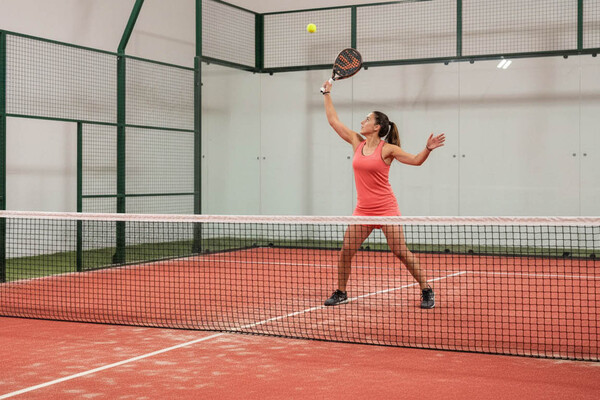
The bandeja in padel is one of the sport's defining shots, and it's often the moment where players start to feel like they're actually playing padel rather than just hitting a tennis ball on a smaller court. It's a controlled overhead used against a lob, built around holding your net position rather than trying to end the point outright. Understanding when and how to hit it well opens up a much smarter, more patient style of play at the net.
This guide covers exactly what a bandeja is, the technique behind hitting one cleanly, when to choose it over a smash, and the mistakes that trip up most players learning it for the first time.
What Is a Bandeja in Padel
Bandeja is Spanish for "tray," a reference to the way the racket seems to carry the ball on a smooth, controlled path rather than smashing it aggressively. It's an overhead shot hit against a lob, using less pace and a shorter swing than a full smash, with the goal of keeping your team at the net rather than forcing a risky winner.
Unlike a smash, which prioritizes power and trying to end the point immediately, the bandeja prioritizes control, consistency, and depth — it's a defensive-minded shot dressed up as an attacking one.
How the Bandeja Reflects Padel's Overall Style
Padel as a sport tends to reward patience, positioning, and consistency more than raw power, and the bandeja is a perfect example of that philosophy in a single shot. Rather than chasing a spectacular winner on every lob, top players use the bandeja to grind out an advantage over the course of a rally, which reflects how much of padel strategy revolves around court position rather than one big shot deciding everything.
Why the Bandeja Matters So Much in Padel
Holding the net is one of the biggest tactical advantages in padel, and lobs are the most common way opponents try to take that position away from you. Smashing every single lob at full power sounds appealing, but it's a low-percentage strategy that leads to plenty of unforced errors and, when missed, hands the net right back to your opponents. The bandeja solves this by giving you a reliable way to handle a lob without abandoning your position or taking excessive risk.
Grip and Setup for the Bandeja
Most players use a continental grip for the bandeja, the same grip commonly used for volleys and serves. Before the shot, get your body sideways to the ball and track its trajectory early, since a bandeja hit late or off-balance loses much of its control.
Technique for Hitting a Bandeja
Hitting a clean bandeja comes down to four things: getting under the ball, keeping the swing short, angling the contact correctly, and recovering back to position afterward.
Getting Under the Ball
Move quickly to a position where the ball will be slightly in front of and above you, rather than directly overhead or behind you. Good footwork here matters more than the swing itself — poor positioning is the single most common reason a bandeja goes wrong.
A Shorter, Controlled Swing
Unlike a smash's full, aggressive swing, the bandeja uses a shorter, more compact motion. Bring the racket back to a comfortable position, then swing through the ball with moderate pace rather than maximum force, focusing on control over power.
Contact and Racket Angle
Make contact slightly in front of your body with a racket face angled to send the ball with a controlled, moderate trajectory rather than a flat, hard-driven one. This angle is part of what keeps the bandeja from becoming an accidental smash attempt.
Follow-Through and Recovery
Keep the follow-through short and balanced, and immediately move back into your net position afterward. A bandeja that isn't followed by quick recovery gives up exactly the advantage the shot was designed to protect.
| Element | Bandeja | Smash |
|---|---|---|
| Swing | Short, controlled | Full, aggressive |
| Goal | Hold net position, stay consistent | End the point immediately |
| Risk level | Lower | Higher |
| Typical trajectory | Moderate, controlled depth | Flat, aggressive, downward |
| Best used when | Lob is deep or you're not in a strong attacking position | Lob is short and you have a clear opening |
Bandeja vs Smash: When to Choose Each
A good general rule: if the lob is deep, well-placed, or you're not in a strong position to attack, the bandeja is the smarter choice. If the lob is short, sits up nicely, and you have a genuine opening to finish the point, a smash may be worth the extra risk. Confusing these situations — smashing a difficult ball or playing a bandeja on an easy sitter — wastes opportunities in both directions.
Where the Bandeja Came From
The bandeja developed as padel players realized that constantly smashing lobs, especially deep or well-placed ones, was costing them the net position far more often than it was winning points outright. Over time, this more controlled overhead became a standard part of the sport's shot vocabulary, distinct enough to earn its own name rather than being treated as just a "softer smash." Its Spanish name, referencing a tray carrying the ball smoothly, reflects that controlled, deliberate character.
Common Mistakes With the Bandeja
A few mistakes come up again and again: swinging too hard, getting caught out of position, forgetting to recover, and using the shot without reading the situation first.
Turning It Into an Accidental Smash
Swinging too hard or too flat on a ball that called for a controlled bandeja often results in an unforced error, since the shot loses the margin for error that makes it reliable in the first place. Stick to the shorter, more restrained swing even when the temptation to go for a winner is strong.
Poor Positioning Under the Ball
Reaching or stretching for a lob rather than getting properly positioned underneath it leads to mishits and weak, unpredictable shots. Prioritize quick, early footwork over trying to compensate with the swing.
Forgetting to Recover
Standing still after hitting the bandeja, rather than moving back toward the net, undermines the entire point of the shot. Recovery is just as important as the contact itself.
Using It on Every Lob Without Judgment
Defaulting to a bandeja even when a clear smash opportunity is available leaves easy points on the table. Read each lob individually rather than applying the same response automatically every time.
Bandeja Quick Checklist
- Get under the ball early with good footwork, positioned slightly in front and above you.
- Use a shorter, more controlled swing than a full smash.
- Angle the racket face for a moderate, controlled trajectory rather than a flat, aggressive one.
- Choose the bandeja over a smash when the lob is deep or you're not in a strong attacking position.
- Recover immediately back to the net after hitting the shot.
- Judge each lob individually rather than defaulting to the same response every time.
The bandeja is really about patience dressed up as an attacking shot — it lets you handle a lob confidently without gambling your net position on a low-percentage smash. Once the technique and judgment come together, it becomes one of the most useful tools in a padel player's toolkit.