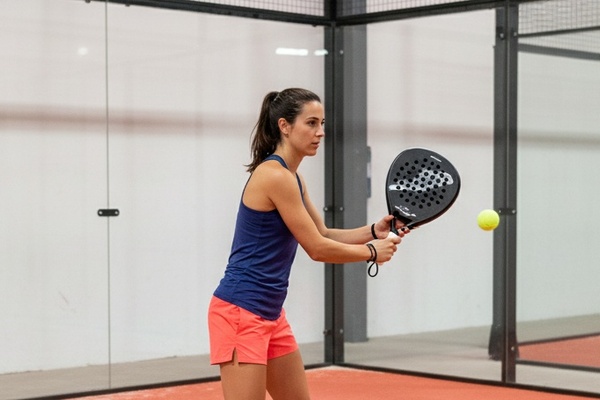
Wondering why your backhand keeps letting you down at the worst moments?
Padel backhand mistakes tend to be some of the most persistent technical issues players carry for years, mostly because the backhand feels less natural than the forehand and gets fewer repetitions in casual play. Recognizing the specific error behind an inconsistent backhand — rather than just hitting more of them and hoping it improves — is what actually fixes the shot.
This guide walks through the most common backhand mistakes in padel, how to spot them, and the fixes that address each one directly.

Mistake 1: Avoiding the Backhand Entirely
Many players run around their backhand to hit a forehand instead, especially under pressure, which might work occasionally but creates a glaring weakness opponents will eventually find and exploit. This habit also means the backhand never gets the repetitions it needs to actually improve.
Fix: Deliberately practice backhands rather than avoiding them, even in low-pressure rallies. The more comfortable the shot becomes through repetition, the less tempting it is to run around it during real points.
Why Backhand Mistakes Compound Each Other
These errors rarely happen in isolation — a player avoiding the backhand gets fewer repetitions, which means the swing never gets refined, which makes the shot feel worse, which makes avoidance even more tempting the next time. Breaking this cycle usually requires addressing the avoidance habit first, since technical fixes don't have much chance to take hold if the shot barely gets used in actual play.
Проверьте себя в бесплатном тесте по паделу — короткие вопросы, результат сразу.
Mistake 2: An Overly Long Backswing
Taking a big, tennis-style backswing on the backhand often leads to late contact and rushed, inconsistent shots, since padel's smaller court and faster exchanges don't leave the same time a longer swing needs.
Fix: Shorten the backswing significantly, bringing the racket back to roughly hip height rather than winding up above the shoulder. Shadow swings focused purely on backswing length help rebuild this habit.
| Mistake | Symptom | Fix |
|---|---|---|
| Avoiding the backhand | Weak, underdeveloped shot; running around it constantly | Deliberately practice backhands rather than avoiding them |
| Long backswing | Late contact, rushed swings | Shorten the backswing to around hip height |
| Late contact point | Shots go wide or lack control | Make contact further out in front of the body |
| Weak grip or wrist | Ball lacks direction, mishits | Firm up grip pressure through contact |
| Poor footwork/turn | Reaching, off-balance shots | Turn shoulders and get sideways early |
Mistake 3: Making Contact Too Late
Letting the ball get too close to the body before making contact reduces both power and control, often sending backhands wide or into the net. This is frequently connected to the long-backswing issue, since a bigger swing takes longer to complete, pushing the contact point later than it should be.
Fix: Focus on making contact further out in front of your body. Fed-ball drills specifically targeting contact point help recalibrate the timing.

Mistake 4: A Loose Grip or Wrist at Contact
A grip or wrist that's too relaxed at the moment of contact lets the racket face wobble unpredictably, leading to mishits and shots that lack direction. This is a common issue for players still building strength and confidence on their non-dominant side.
Fix: Firm up the grip specifically through the point of contact, even if the rest of the swing stays relatively relaxed. Wall or rebounder drills, where quick feedback on direction is immediate, help build this awareness.
Mistake 5: Poor Footwork and Shoulder Turn
Failing to turn the shoulders and get sideways to the ball early often forces a backhand to be hit while still facing the net, leading to weak, reaching contact rather than a stable, balanced swing.
Fix: Practice the shoulder turn and footwork separately from the swing itself, focusing purely on getting into a sideways-facing position before the ball arrives. This foundational positioning makes the rest of the technique far easier to execute cleanly.

Mistake 6: Tensing Up Under Pressure
Because the backhand already feels less natural for many players, it's especially prone to breaking down further when nerves or pressure increase during a match, even after looking solid in relaxed practice.
Fix: Build confidence through repetition in slightly pressured drills, not just relaxed rallying, so the technique holds up when a match actually gets tense.
How to Diagnose Your Own Backhand Errors
If your backhand consistently sails wide or lacks pace, suspect late contact or a loose grip. If it feels rushed or mistimed, check your backswing length first. If you're reaching or off-balance on contact, the issue is likely footwork and shoulder turn rather than the swing itself. Matching the specific symptom to its likely cause saves considerable time compared to guessing.

Why the Backhand Takes Longer to Feel Natural
Most players are naturally more coordinated on their dominant side, and the backhand asks the body to move in a less familiar pattern from the very first swing. This isn't a sign of poor athleticism or a shot you're simply not suited for — it's a normal part of learning any stroke that isn't your dominant-side motion, and it typically just needs more deliberate repetition than the forehand ever did to catch up.
Padel Backhand Mistakes Quick Checklist
- Avoiding the backhand? Deliberately practice it instead of running around it.
- Backswing too big? Shorten it to roughly hip height.
- Contact point too late? Focus on hitting further out in front.
- Mishits or weak direction? Firm up your grip through contact.
- Reaching or off-balance? Work on shoulder turn and footwork separately.
- Technique breaking down under pressure? Practice in competitive, pressured conditions.
Most backhand mistakes trace back to a handful of specific, fixable causes rather than a vague sense that the shot "just doesn't work." Diagnose the actual symptom, apply the matching fix, and the backhand stops being the shot you avoid and starts becoming a reliable part of your game.