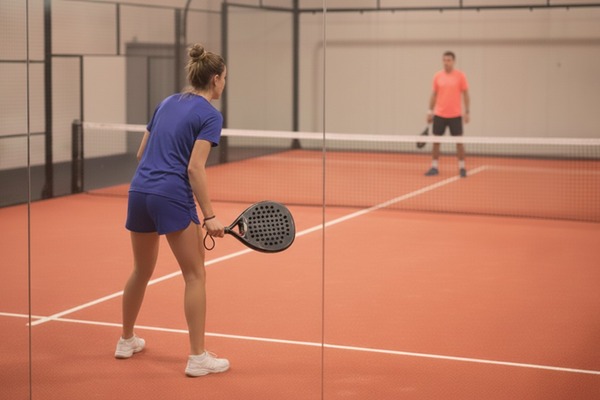
Still carrying over tennis instincts that just don't hold up in padel?
Padel rule mistakes are almost a rite of passage for beginners, since several of the sport's rules genuinely contradict instincts carried over from tennis or other racket sports. Most of these mix-ups aren't about complicated technicalities — they're simple misunderstandings that clear up quickly once someone points them out clearly.
This guide walks through the rule mistakes beginners make most often, why the confusion happens, and what the actual rule is in each case.

Mistake 1: Thinking You Can Volley the Serve
Because padel's underhand serve is slower and easier to reach than a tennis serve, beginners often assume it's fine to volley it out of the air. In reality, the serve must bounce once on the receiver's side before it can be returned — volleying it results in a fault, awarding the point to the server.
Why These Confusions Cluster Around the Serve
A striking number of beginner rule mistakes happen specifically around the serve rather than anywhere else in a point. This makes sense once you consider how many small, padel-specific requirements are packed into a single moment — underhand contact, a height limit, a diagonal target, a required bounce before return, and a distinct exception for net contact. Nowhere else in the game do this many rules apply within a single, brief action.
Mistake 2: Assuming Any Fence or Glass Contact on Serve Is Legal
Kokeile ilmaisella padel-visallamme — nopeat kysymykset, tulos heti.
Since the ball is allowed to bounce off the fence and glass constantly during a normal rally, players often assume the same applies to the serve. In fact, the serve must bounce once inside the correct service box before touching any wall — if it hits the fence or glass first, it's a fault.
Mistake 3: Confusing a Let With a Fault
A serve that clips the net and still lands in the correct box is a let, meaning it gets replayed with no penalty. Beginners sometimes assume any net contact automatically counts against the server, when it only becomes a fault if the ball then lands outside the correct box or touches something else first.

| Mistake | What Beginners Assume | Actual Rule |
|---|---|---|
| Volleying the serve | It's fine since the serve is slow | Must bounce once before being returned |
| Fence/glass contact on serve | Same as during a rally, always fine | Must bounce in the box first, or it's a fault |
| Let vs fault | Any net contact is a fault | A let only applies if the serve still lands correctly |
| Golden point side choice | No special rule applies | Receiver can choose which side to receive on |
| Ball hitting a partner | Just replay the point | Usually results in a lost point for the team it hits |
Mistake 4: Not Knowing About the Golden Point Side Choice
Many matches use golden point scoring at deuce, where the next point decides the game outright. A rule beginners frequently miss is that the receiving team gets to choose which side, forehand or backhand, they want to receive the serve on — a strategic detail that's easy to overlook if you don't know it exists.
Mistake 5: Assuming a Ball Hitting Your Partner Just Gets Replayed
If the ball touches you or your partner before you've hit it — including brushing against clothing or the body, not just the racket — it typically results in a lost point for your team, not a simple replay. This is a common source of confusion, especially in fast exchanges near the net.
Mistake 6: Thinking the Serve Can Be Hit at Any Height
Padel's serve must be hit underhand and below waist height, similar to some tennis serve variations but stricter in enforcement. Beginners coming from other racket sports sometimes serve with a higher contact point out of habit, not realizing this makes the serve illegal regardless of where it lands.

Mistake 7: Not Realizing the Serve Must Be Diagonal
Like tennis, padel serves must travel diagonally into the correct service box on the opposite side of the court. Serving straight across, even if it lands inside a box, is illegal if it isn't the correct diagonal target.
Why These Rule Mix-Ups Are So Common
Many beginners come to padel with some racket sports background, whether tennis, squash, or badminton, and naturally apply those rules where they don't actually belong. Padel borrows pieces from several sports while adding its own specific twists, which is exactly why assumptions carried over from elsewhere trip up so many new players in predictable, recurring ways.
Ilmainen turnauskaavion luoja — Americano, Mexicano ja muut. Valmis minuuteissa.
How to Avoid These Mistakes Going Forward
Rather than assuming a rule works the same way it did in a sport you already know, it's worth deliberately learning padel's specific serve, let, and scoring rules early on, since they cover the vast majority of beginner confusion. Playing a few matches with someone experienced, or asking questions when something feels off, clears up most of these misunderstandings quickly.
What Happens When a Rule Dispute Comes Up Mid-Match
In casual, unofficiated matches, rule disputes are usually settled by mutual agreement between the two teams, ideally by calling the issue immediately rather than waiting until after the point is decided. If neither team is fully sure of the correct ruling, defaulting to a simple replay of the point is often the most practical way to keep the match moving without lingering disagreement.

Padel Rule Mistakes Quick Checklist
- The serve must bounce once before being returned — no volleying it.
- The serve must bounce in the correct box before touching any fence or glass.
- A let only applies if the serve still lands correctly after clipping the net.
- On a golden point, the receiver can choose which side to receive on.
- A ball touching you or your partner before your shot usually loses the point.
- The serve must be hit underhand, below waist height, and diagonally.
Most padel rule mistakes come from carrying over assumptions from other sports rather than from the rules themselves being especially complicated. Once these specific points click, the game becomes a lot less confusing — and a lot fewer points get lost to simple misunderstandings.