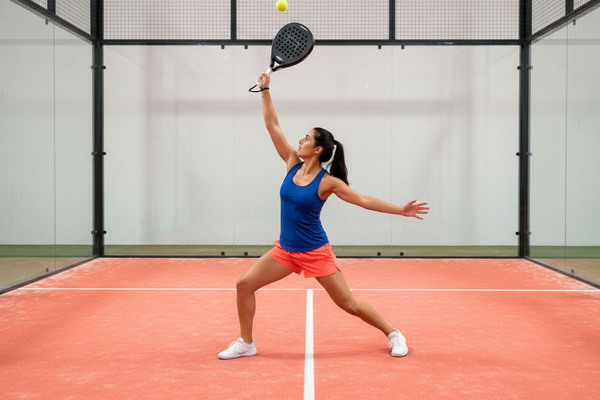
Not sure why your bandeja keeps breaking down under pressure?
Padel bandeja mistakes tend to follow a small set of predictable patterns, and recognizing which one is affecting your shot makes fixing it far faster than just hitting more repetitions and hoping it improves. Since the bandeja is meant to be a controlled, dependable overhead rather than a smash, even small technical errors show up quickly as inconsistency, lost net position, or unnecessary unforced errors.
This guide walks through the most common bandeja mistakes, how to recognize them, and the specific fixes that address each one.

Mistake 1: Turning the Bandeja Into an Accidental Smash
One of the most frequent errors is swinging too hard on a ball that called for a controlled bandeja, effectively turning it into an unintentional, low-percentage smash attempt. This usually happens when a lob looks tempting to attack, and the extra swing speed removes the margin for error that makes the bandeja reliable in the first place.
Fix: Consciously shorten the swing and remind yourself the goal is depth and consistency, not pace. Practicing bandejas at reduced speed in drills helps rebuild the restraint the shot requires.
Why These Mistakes Are So Common
Most bandeja errors trace back to a single underlying instinct: the temptation to treat every ball above shoulder height as an opportunity to attack. Since a smash and a bandeja start from a similar overhead position, the body's natural impulse under pressure is often to add power rather than hold back, which is exactly why so many of the mistakes below share a common root cause even though they show up as different symptoms on the court.
Teste es mit unserem kostenlosen Padel-Quiz — schnelle Fragen, sofortiges Ergebnis.
Mistake 2: Poor Footwork Getting Under the Ball
A bandeja hit while reaching or stretching, rather than from a balanced position underneath the ball, tends to produce weak, unpredictable results regardless of how clean the swing technique is. This mistake is often more about positioning than the actual stroke.
Fix: Prioritize quick, early footwork to get properly positioned before worrying about the swing itself. Drilling footwork separately, without hitting a ball, helps isolate and correct this habit.

| Mistake | Symptom | Fix |
|---|---|---|
| Swinging too hard | Ball sails long or lands in net, low consistency | Shorten the swing, prioritize depth over pace |
| Poor footwork | Weak, off-balance contact | Get under the ball early with quick positioning |
| Flat racket angle | Ball flies long consistently | Angle the racket face for a controlled, moderate trajectory |
| No recovery after the shot | Team loses net position immediately after | Move back to the net right after contact |
| Using it on every lob | Missed smash opportunities | Judge each lob individually before choosing the shot |
Mistake 3: A Racket Angle That's Too Flat
A bandeja hit with a completely flat racket face, similar to a smash, tends to send the ball long since it doesn't account for the shot's more moderate, controlled trajectory. This mistake often overlaps with the "too much power" issue, since both come from treating the bandeja like a smash rather than its own distinct shot.
Fix: Angle the racket face slightly to produce a more controlled arc rather than a flat, driven trajectory. Practicing against a target zone helps calibrate the right angle through feel.
Mistake 4: Forgetting to Recover to the Net
Hitting a clean, well-placed bandeja and then standing still afterward wastes much of the shot's purpose, since the entire point of the bandeja is to maintain your team's net position. Standing flat-footed after contact leaves you vulnerable on the very next shot.
Fix: Treat the recovery step as part of the shot itself, not a separate action. Drilling a bandeja followed immediately by a forward recovery step builds this habit until it becomes automatic.

Mistake 5: Using the Bandeja on Every Lob Without Judgment
Defaulting to a bandeja regardless of the situation means missing genuine smash opportunities on short, easy lobs that call for a more aggressive response. This mistake usually comes from over-correcting after learning to avoid reckless smashes.
Fix: Practice reading each lob individually — depth, height, and your own positioning — rather than applying the same response automatically every time. Live-point drills that mix both shot options help build this judgment.
Mistake 6: Rushing the Shot Under Pressure
Many players hit clean bandejas in low-pressure drills but rush the shot during actual matches, especially in tense moments, leading to a return of the earlier mistakes even after they seemed fixed in practice. This is less about technique and more about composure under pressure.
Fix: Practice the shot in slightly pressured, competitive conditions rather than only in relaxed drills, so the technique holds up when it actually matters in a match.
How to Diagnose Your Own Bandeja Errors
Before assuming a mistake is purely technical, check footwork and positioning first, since a poor base often causes symptoms that look like a swing problem. If the ball consistently goes long, suspect either too much pace or too flat a racket angle. If contact feels weak or mishit, suspect footwork. If you're winning the point but immediately losing the net afterward, the issue is recovery, not the shot itself.

Using Video to Catch Errors You Can't Feel
Some of these mistakes are genuinely hard to notice from feel alone, especially recovery footwork, since it happens right after the shot when your attention is still on where the ball went. Recording a practice session and reviewing it afterward often reveals patterns — a consistently flat racket angle, a slow first step back to the net — that are much easier to spot on video than to diagnose in the moment.
Padel Bandeja Mistakes Quick Checklist
- Ball going long? Check for excess swing speed or a too-flat racket angle.
- Weak or mishit contact? Check your footwork and positioning under the ball.
- Losing net position after the shot? Add a deliberate recovery step.
- Missing easy smash chances? Practice judging each lob individually.
- Mistakes reappearing under pressure? Practice the shot in competitive, pressured drills.
Most bandeja mistakes come down to a handful of recurring patterns, and matching the right fix to the right symptom clears them up far faster than generic repetition. Diagnose the specific issue first, then drill the targeted correction — the shot tends to stabilize quickly once the actual cause is addressed.